A teak-house hotel on the riverside near Wat Gate, about a 10 to 15 minute walk from the Old City, for a calm luxury stay.
Riverside, Wat Gate
Search Expedia for this hotelpartner siteCity guide / Thailand
Chiang Mai is northern Thailand's walled old city of temples, night markets and cooking schools. Our guide covers who it suits, when to go, the transport, the airports and where to stay.
The review
A walled temple city with cheap, excellent food and mountains at the edge of town, as long as you dodge the smoke months.
Chiang Mai is worth it for travelers who like temples, food and slow days more than beaches or nightclubs. Reports from 2025 and 2026 describe a walkable moated Old City, cafes on every corner, markets that fill each evening and mountains, waterfalls and national parks within a day trip. Even a returning visitor after ten years said it was still worth it, and a solo traveler wanted to move there after half a day.
The hard truth is air and traffic. From about February to April, crop and forest fires fill the valley with smoke, and a 2026 writer who knows the city well calls that season trip-ruining. The ring road around the moat is dense with cars and scooters and lit crossings are scarce, some cafes now charge Bangkok prices, and one 2026 visitor calls tuk-tuks tourist traps. There is also no beach, and day trips such as Chiang Rai are long.
The fix is timing and choices. Come between November and January when the air is clean, base yourself in the Old City on a first stay, and add one mountain day and one cooking class. Choose elephant visits by asking what happens at the camp, not by the word sanctuary. For a wider Thailand plan, pair it with Bangkok or a beach week in Phuket.
The long read
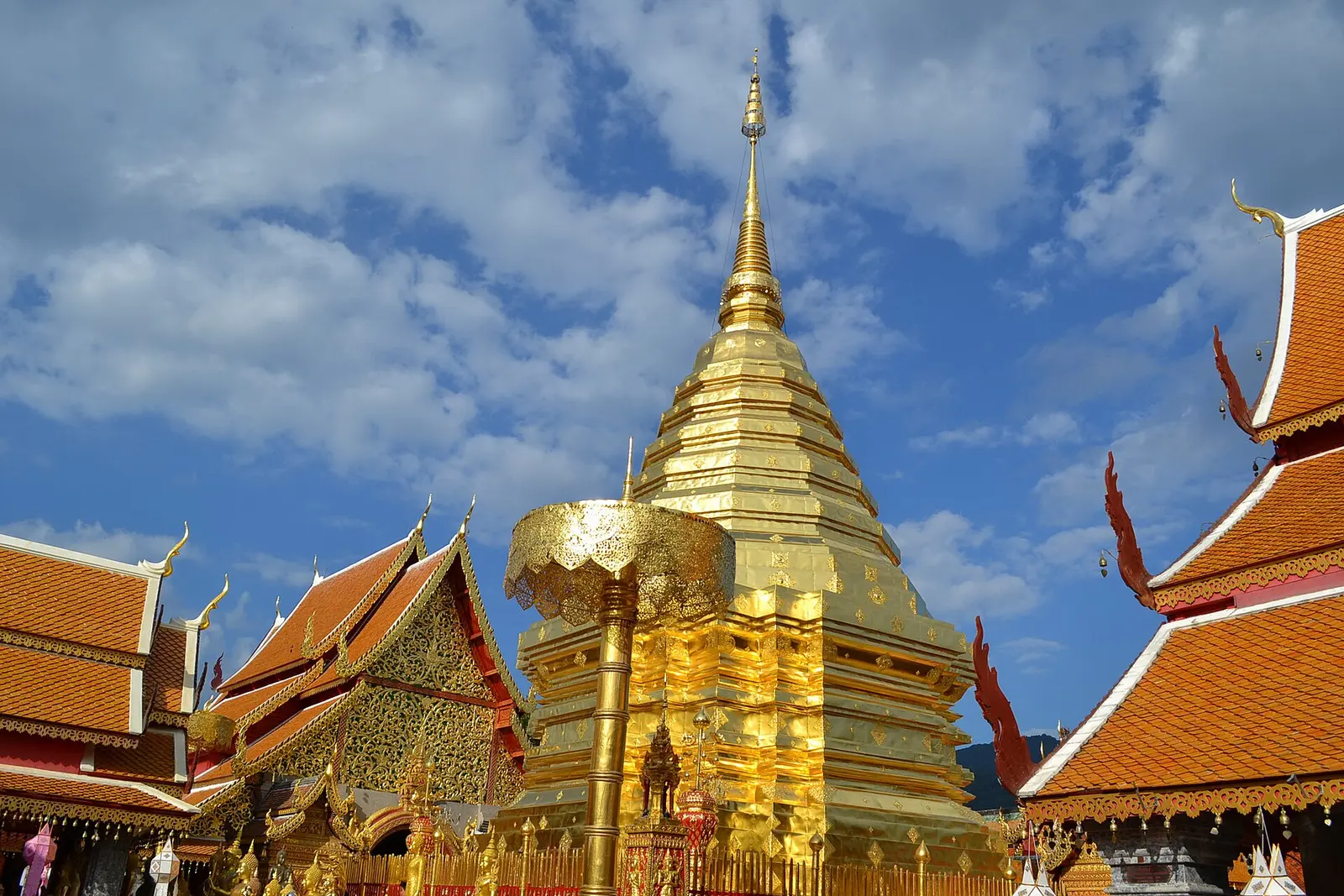
The moated Old City is where most first-timers start, and the reports explain why. Temples sit a few minutes apart, so a morning can cover Wat Chedi Luang, Wat Phra Singh, Wat Phan Tao with its teak hall and Wat Chiang Man with its elephant-based chedi without a single transfer. One writer who also knows Bangkok said the temples here felt far less crowded than the big ones there, and the gardens around the golden chedis make slow wandering easy.
The temples also offer something the capital rarely does. Some run free chats with monks and short meditation sessions, and a traveler who spent half a day at Wat Suan Dok called it one of the more interesting parts of the stay. A donation afterward is the polite way to say thanks. Dress to cover shoulders and knees.
Evenings are the other draw. The Sunday Walking Street and the night markets along Ratchadamnoen Road fill with grilled corn, spring rolls and mango sticky rice, and travelers describe a relaxed, walkable crowd rather than a loud one. The catch is the traffic ring around the moat. A five-day visitor counted exactly two crossings with working lights where cars stopped, so cross where locals cross and keep a hand free.
Travelers mostly split three ways. The Old City suits a first stay: temples at the door, quiet side streets and the widest range of cheap rooms and small hotels. Some streets carry scooter noise into the night, so light sleepers should ask for a room on a quiet soi.
Nimman, the grid of cafes, design shops and rooftop bars west of the Old City, suits people who care more about coffee and evenings than temples. A 2026 trip report describes great flat whites at roughly half the Bangkok price, though some brunch spots now charge Bangkok money. Expect more noise from bars and a short Grab ride to the temples.
The Ping riverside holds several of the larger hotels and suits slower stays, but the Old City temples are a ride away. A common compromise is two or three nights in the Old City, then a move to Nimman or the river for a change of pace. The hotel picks below are spread across all three so you can match the area to the trip.
Northern Thai food is the quiet star. Khao soi, a coconut curry noodle soup topped with crispy noodles, shows up everywhere, and one 2026 report put a noodle bowl at around THB 70 (about EUR 1.88 at the ECB rate of 37.242 THB per EUR on 2026-11-23). The same writer went to the weekend Jing Jai Market for breakfast and found specialty coffee easy to come by in both Nimman and the Old Town.
A cooking class is a common pick, and it doubles as an indoor plan for a smoky or rainy day. Ask before booking whether a market visit is included and how many dishes you cook yourself.
One caution on cost. A 2026 visitor says the city is still good value, with cheap noodles and massages, but noticed some cafes and brunch spots charging as much as in Bangkok. Ride-hailing apps are the easiest way to know the fare in advance, and one traveler called tuk-tuks tourist traps.
Wat Phra That Doi Suthep is the mountain temple everyone is told to see: a naga-flanked staircase, a gold chedi and a view over the basin. Travelers reach it by Grab, shared red songthaew or scooter, and fog or rain can erase the view. One August visitor skipped it entirely for weather. Keen walkers take the Monk's Trail from Wat Pha Lat; since 1 October 2025 the national park charges foreign adults THB 100 (about EUR 2.69) for the trail and waterfall areas, per the Department of National Parks order and local news, while the main road to the temple carries no park fee.
Doi Inthanon, Thailand's highest peak, is the bigger day. Foreign adults pay THB 300 (about EUR 8.06) at the park gate under the Department of National Parks order dated June 2022, plus separate vehicle fees. A 2026 trekker liked the Kew Mae Pan trail and the twin pagodas, and warned to read the itinerary closely, since a similar tour included a swim stop and hers did not.
Elephant visits divide opinion, and the reports gathered here do not back any one camp, so this guide does not name one. A family with a 12-year-old enjoyed an elephant camp, and a several-week visitor found a rescue sanctuary about an hour out one of the most moving parts of the trip. Before paying, ask whether there is riding, bathing or any show, and how large the groups are.
The White Temple, Blue Temple and Black House are the draw, and the tours are long. A 2026 traveler on a group tour was picked up around 7:15 and returned 12 to 13 hours later, paying THB 2,375 (about EUR 63.77). A couple who chose to stay three nights in Chiang Rai instead worked out that a round trip by bus leaves only five or six hours at the sights, and that the big temples are best early or late, after the tour buses leave.
The rule of thumb in the reports is simple. If you have one spare day, the tour works but it is a long sit in a van. If you have two or more, go by local bus, sleep over, and see the White Temple at opening time. Leave Chiang Rai out of a short stay rather than rush it.
Pai is a different bet. It is a winding minivan ride on Highway 1095, and a December 2025 forum writer calls motion sickness the real hazard. The same writer found the valley full of long-stay Western visitors, hostels that could be noisy and prices that were not especially cheap. Pai suits slow days; skip it on a short trip built around temples.
Chiang Mai has one big timing risk. From about February to April, crop and forest fires fill the basin with smoke. IQAir reported the city's air at unhealthy levels, with an AQI above 150, on 4 March 2026, and a 2026 traveler said you literally cannot see the mountains on the worst days. Travelers with asthma, young children or plans for hiking should treat these months as a no-go and look at November to January or the green months instead.
The cool season is also festival season. Yi Peng and Loy Krathong follow the lunar calendar and fall around the November full moon; check each year's dates and the lantern rules with the Tourism Authority of Thailand or the city before you book. A Christmas 2025 forum report found prices in the north not especially cheap, so book rooms early for the festival and holiday weeks.
The green season from June to October brings showers and low cloud over the hills. A five-day August 2026 visitor had rain and fog that made her skip Doi Suthep, though the Old City and the cafes carried on as normal.
The one-hour flight from Bangkok is the cheap, fast default. A 2026 blogger flew from Don Mueang for about THB 4,300 return (about EUR 115.46) and called it the best way, while a Thai Airways passenger was charged for a bag three kilos over the 23 kg limit. Airports of Thailand lists shuttle vans from the international terminal to Nimman and the Old City moat for THB 40 (about EUR 1.07) each way.
The overnight train is the romantic alternative, and reports back the romance with caveats. Second-class air-conditioned berths on the newer trains are described as clean, curtained and more comfortable than the name suggests, a trip of 12 to 13 hours, and travelers report roughly THB 880 to 1,050 for second class depending on berth (about EUR 24 to 28) and from THB 1,450 for a first-class cabin (about EUR 39). Those fares are traveler-reported with no official source, since no fare appeared on a State Railway page that could be read for this guide. Check the official booking site.
First class has just one carriage per train and sells out, and a first-class traveler warned that reseller sites do not sync with the railway, so a confirmed seat may not exist. Book through the official channel as early as the booking window opens, take a layer because second class turns cold around 2 a.m., and arrive at Krung Thep Aphiwat in good time.
The pitfalls
From about February to April the valley fills with smoke, and IQAir reported unhealthy air above AQI 150 on 4 March 2026. A 2026 traveler said she would avoid the city entirely in these months, and mountain views can vanish. Plan around November to January, or accept the risk.
Four lanes of cars and scooters circle the moat, and a five-day visitor in 2026 found only two lit crossings where traffic actually stopped. Zebra crossings without lights are often ignored. Cross with locals, expect scooters behind you even on Old City streets, and use a ride app for longer hops.
Group tours leave around 7:15 and return 12 to 13 hours later, and a couple who stayed three nights calculated only five or six hours at the sights on a day trip. The big temples are busiest when the tour buses arrive, so overnight stays beat them.
Highway 1095 to Pai is a winding minivan ride, and a December 2025 forum writer calls motion sickness the real hazard. Take medicine before boarding, ask for a front seat and keep the meal before it light.
A first-class traveler reports there is a single first-class carriage on the train, so cabins sell out fast, and says third-party booking sites are not synced to the railway, which can leave you without a confirmed seat. Use the official channel and book early.
Doi Suthep-Pui charges foreign adults THB 100 for trail and waterfall zones from 1 October 2025, while the main road to the temple stays free. Doi Inthanon charges THB 300 under the 2022 order. An August 2026 visitor skipped Doi Suthep because fog covered the mountain, so go early and keep a plan B.
When to go
Best time
November to early February
The cool, dry, clear months, with comfortable temple days and the cleanest air of the year; a repeat visitor recommends November to February.
Peak season
Late December and early January
Christmas and New Year are the busiest weeks. A Christmas 2025 forum report found Pai full of long-stay visitors and prices not especially cheap, so book rooms and sleeper berths ahead.
Shoulder season
May to October, the green season
Showers and low cloud with greener hills. An August 2026 visitor lost the Doi Suthep view to rain and fog, so keep the mountain days flexible.
Off season
February to April
The hot, smoky stretch when crop fires fill the basin; IQAir placed the city among the ten most polluted in the world in early March 2026. Most travelers advise skipping it, and a couple who came in March 2025 saw no mountain views.
November to early February is cool, dry and clear, and is the usual advice from travelers, with Yi Peng and Loy Krathong around the November full moon. February to April is the smoke season and is best avoided, and the green season from June to October is cheaper with showers and cloud over the hills.
Getting there and around
| Airport | Distance | To the centre | How |
|---|---|---|---|
| CNX Chiang Mai International Airport | 4 km | about 15 min | The airport is close to the center (about 4 km by road, an approximate figure, not an official one). The airport operator lists city buses on a red and a yellow line from 06:00 to 23:30, red songthaews, and shuttle vans from Gate 12 of the international terminal: line A1 to Nimman, Huay Kaew and the Old City moat for THB 40 (about EUR 1.07), line A2 to the Night Bazaar and Chang Klan hotels for THB 40, and line A3 to the 700th Anniversary Stadium area for THB 60 (about EUR 1.61), at the ECB rate of 37.242 THB per EUR on 2026-11-23. The airport lists taxis as a service but no fare appeared on the pages that could be read, and traveler sources quote a counter flat fare of roughly THB 150 to 160 (about EUR 4.03 to 4.30), which is unconfirmed. (source, checked Nov 2026) |
From the airport, shuttle vans to Nimman and the Old City moat cost THB 40 (about EUR 1.07 at the ECB rate of 37.242 THB per EUR on 2026-11-23), per Airports of Thailand. In town, travelers use Grab, shared red songthaews and scooters, and call tuk-tuks overpriced. Doi Suthep-Pui park charges foreign adults THB 100 (about EUR 2.69) for trail areas, and Doi Inthanon charges THB 300 (about EUR 8.06), per Department of National Parks orders.
Where to stay
We earn a commission if you book through our links. It never changes a verdict. How this works
High-end stays whose guests report the setting and service earn the rate.
A teak-house hotel on the riverside near Wat Gate, about a 10 to 15 minute walk from the Old City, for a calm luxury stay.
Riverside, Wat Gate
Search Expedia for this hotelpartner siteA resort on the Ping River outside the Old City walls, suited to slow days by the water; plan on a short ride to the temples.
Riverside, Ping River
Search Expedia for this hotelpartner siteA full resort among rice fields in the Mae Rim valley north of the city rather than a city base, so plan on a car or transfers.
Mae Rim valley, north of the city
Search Expedia for this hotelpartner siteA boutique hotel on Nimman Soi 9 (formerly Akyra Manor, renamed in 2025) with cafes and bars a short walk away, so evenings can be busy.
Nimman, Soi 9
Search Expedia for this hotelpartner siteThe comfortable middle: well placed, well run, priced for a normal trip.
A hotel inside the Old City on Intawarorot Road, with Wat Phra Singh and the central temples on foot.
Old City, Intawarorot Road
Search Expedia for this hotelpartner siteA small hotel in the Si Phum corner of the Old City, with temples and restaurants on foot.
Old City, Si Phum
Search Expedia for this hotelpartner siteAn art-themed hotel in Nimman among the cafes and shops, a short ride from the Old City temples.
Nimman
Search Expedia for this hotelpartner siteA hotel on Nimman Soi 12 with cafes steps away and the Old City temples a short ride off.
Nimman, Soi 12
Search Expedia for this hotelpartner siteCheaper beds that travelers still rate well for location and cleanliness.
A small hostel inside the moat on Samlarn Road, a few minutes on foot from Wat Phra Singh.
Old Town, Samlarn Road
Search Expedia for this hotelpartner siteA social hostel just east of Tha Phae Gate that suits a younger crowd; expect noise early in the evening.
Just east of Tha Phae Gate
Search Expedia for this hotelpartner siteA guesthouse in Chang Phueak just north of the Old City, a cheap private-room alternative to the hostels.
Chang Phueak, north of the Old City
Search Expedia for this hotelpartner siteA small hotel inside the walls near Tha Phae Gate, a cheap base with the temples and the Sunday market on foot.
Old City, near Tha Phae Gate
Search Expedia for this hotelpartner siteQuestions
Reports suggest three to five nights for the city, temples, a cooking class and one mountain day trip. Add two or three more if you plan Chiang Rai overnight or Pai, and stay longer if you want a slow, cafe-filled week.
Under a Thai government notice of 4 September 2026, travelers from 60 listed countries can enter visa-free for 30 days from 15 September 2026, replacing the earlier 60-day exemption. The list can change, so check your passport against it before booking. Everyone must also file the free Thailand Digital Arrival Card online within three days before arrival.
It remains cheaper than Bangkok for most things. A 2026 visitor reports noodle bowls around THB 70 and flat whites at about half the Bangkok price, but some cafes and brunch spots now charge Bangkok money and tuk-tuks are called tourist traps, so use ride apps and budget a little more than older blogs say.
Solo reports from 2025 and 2026 describe the city as easy and relaxed, and one solo traveler walked from the airport to an Old City hotel. The common complaints are heavy traffic, hard-to-cross roads and tuk-tuks that charge tourists too much, so use ride apps at night and cross with care.
Fly if time or budget is tight, since the flight takes about an hour. Take the train if the journey is part of the trip: second class lower berths are the usual pick, and first-class cabins sell out. Confirm fares and book on the official railway channel.
How this guide was written. We read 17 traveler reports about Chiang Mai published between Mar 2025 and Oct 2026, and checked the facts against official sources in Nov 2026. Nobody on the team claims a visit; hotel picks are chosen from what guests report, never from what they pay us. How we judge.
Our first Chiang Mai verdicts are on the way.
Plan your Chiang Mai trip
Where to stay
12 hotel picksLuxury, mid-range and budget, cross-checked against traveler reports
Getting there
Airports near Chiang MaiDistances, transfer times and the options that work
Book a private transfer partner site
Keep exploring
Gear verdicts from our sister site, Real Buyer Experiences: