Barnsley, near Cirencester
Barnsley HouseCountry house hotel with a spa, kitchen garden and highly rated restaurant, set in a village near Cirencester, suited to a quiet couples base.
Search Expedia for this hotelpartner siteCity guide / England
The Cotswolds are the honey-stone villages and rolling hills west of Oxford, easy by car and awkward without one. Our guide covers who it suits, when to go, the transport, the airports and where to stay.
The review
Honey-stone villages, pub fires and hill walks, best enjoyed early, late and with a plan for the crowds.
Yes, the Cotswolds are worth it for couples, walkers, photographers and anyone who wants an easy English countryside break. The villages look the way the photos promise, and traveler reports praise the stone lanes, tearooms, pubs and footpaths.
The hard truth is crowding and transport. Bibury and Bourton-on-the-Water fill with coaches and cars by late morning in season, parking is tight, and public transport thins out on Sundays. Reports describe summer weekends as more theme park than village.
The fix is simple. Visit early or stay overnight, pick one area instead of the whole map, base in Stow, Chipping Campden or Cirencester, and use footpaths and a small-group tour or the Pulhams 801 bus if you do not drive.
The long read
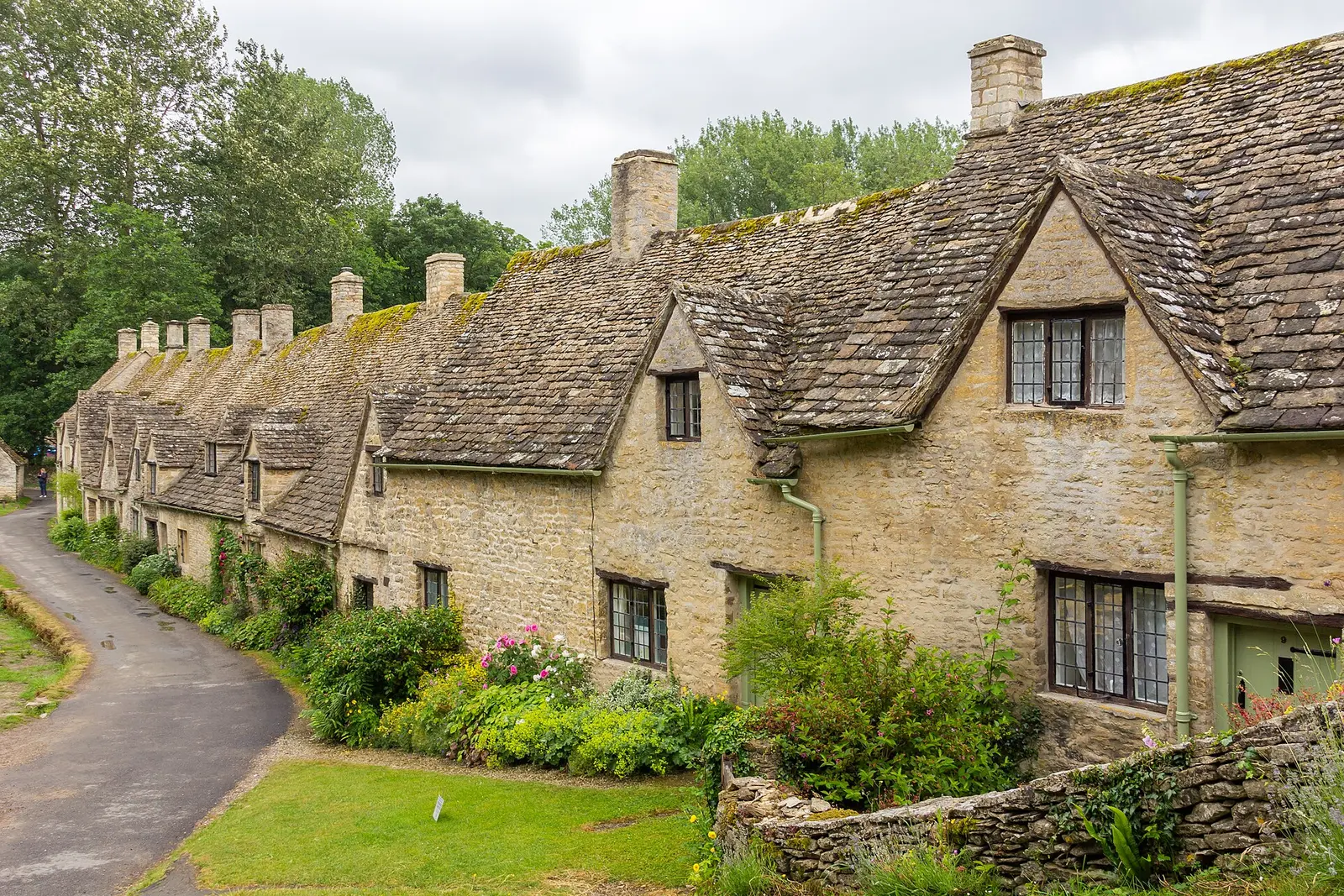
The Cotswolds are a run of honey-colored stone villages and market towns across rolling limestone hills, and the postcard version is accurate. Travelers describe lanes of tidy cottages, village greens, tearooms and pubs with log fires, and a landscape made for walking between them. It is a place for wandering rather than ticking off sights.
The catch is that the same handful of villages appear in every photo, so they draw the same crowds. Reports are consistent: the famous names are lovely early and late, and strained at midday in season. The region rewards people who treat it as a slow base with a few walks, not a checklist.
Six places make a good map. Bourton-on-the-Water is the busiest and most commercial. Bibury is the most photographed. Stow-on-the-Wold is a calm market town and a handy base. Chipping Campden and Broadway sit in the north, near the Cotswold Way. Cirencester is the largest town, with Roman history and real shops.
Bourton-on-the-Water has a shallow river, low stone bridges and a cluster of family attractions, including a model village, a bird park and a motoring museum. It is the village most often called a tourist trap, and the district council now runs a tourism charge at the Rissington Road car park to pay for bigger bins, bollards against illegal parking and extra peak-season officers. Go early, stay for the evening after the coaches leave, or choose a quieter neighbor.
Bibury is a short stretch of river, a trout farm and the row of weavers' cottages known as Arlington Row. Guides advise arriving before 9:30am on busy days, and one photographer waited nearly an hour for a clear shot on a summer weekend. County authorities have been moving coaches to drop-off points and adding parking limits, so check current rules if you arrive by tour.
The reward for timing is real. One April visitor on a damp morning found Bibury manageable and took a five-mile circular walk to leave the day-trippers behind. If your only chance is a summer weekend, accept the crowd and lower your photo expectations.
Stow-on-the-Wold sits on a hilltop around a big market square, with antique shops, pubs and several roads meeting at the center. A family itinerary found it calm and postcard-pretty once away from the famous stops, and its position makes it a practical base for buses and drives.
Chipping Campden is the town many planners single out for its high street of honey-stone buildings and its restaurants. It is the start of the Cotswold Way, and walkers can climb toward Broadway Tower along a five-mile route that ends at a pub. Broadway is mostly one long street of tearooms, galleries and inns, with the tower on the ridge above.
Broadway Tower is popular. A July visitor found Broadway packed and the parking by the tower restaurant full. The fix is the same as everywhere: start before day visitors arrive, and walk up from Campden or Broadway rather than driving to the top.
Cirencester is the biggest town in the area and is often called the capital of the Cotswolds. It was a major Roman city, and its museum holds mosaics and finds, while the grassed-over amphitheater is free to see. A Monday and Friday market fills the Market Place, with a farmers' market on the second and fourth Saturdays.
It is also the practical choice for budget stays and for families. The Cotswold Water Park suits children, and the town has a hostel, chain hotels and plenty of pubs. It feels like a working town, not a film set, which many travelers count as a plus.
The villages were laid out long before cars, and public transport is thin. Rail reaches Moreton-in-Marsh on the Cotswold Line for the north, and Kemble station serves Cirencester with a bus link into town. The Pulhams 801 bus links Moreton-in-Marsh with Stow and Bourton, with an expanded timetable from May 2026. Beyond that, car-free guides warn about Sunday gaps and hourly gaps, and Bibury has no bus on Sundays.
Three workable plans appear in reports. Base in Moreton-in-Marsh and use buses and footpaths, as one May traveler did. Choose two stops a day rather than the whole map. Or join a small-group minibus tour, which one couple judged good value at about 80 GBP per person, though the schedule is fixed and stops often last about an hour.
Drivers get more freedom but face narrow lanes and full village car parks in season. Park outside the center, arrive early and walk the last stretch.
Couples, walkers and photographers get the most from the Cotswolds, ideally across two or three nights so evenings are quiet. Families do well around Bourton and Cirencester, where there are attractions beyond the lanes. Solo travelers without a car should pick a single base and lean on tours or the 801 bus.
A sensible first trip is two to three days in the north (Stow, Campden, Broadway) or in the south and center (Cirencester, Bibury, Bourton), not both. Pick a pub for dinner early, since the popular ones fill up, and keep one flexible afternoon for a footpath.
The pitfalls
Guides advise arriving before 9:30am on busy days, and a photographer waited nearly an hour for a clear shot of Arlington Row on a summer weekend. Car parks fill, and coach crowds have led county authorities to move coach drop-offs and add parking restrictions.
Bourton is the village most often described as crowded and commercial. The district council charges 50p per stay at the Rissington Road car park to fund bins, bollards and extra peak-season officers. Reports advise starting by 9am, staying for the evening, or skipping summer weekends.
Car-free guides warn that Bibury has no Sunday bus and that other villages see only a few buses a day. The Pulhams 801 serves Moreton-in-Marsh, Stow and Bourton, so build the plan around it and check Sunday timetables first.
Reviewers of day tours wanted more than the usual hour per village, and a no-car itinerary advises choosing two stops rather than chasing the whole map. A rigid schedule also suited some travelers less than wandering independently.
A July visitor found Broadway packed and the parking beside the tower restaurant full, and paid for a field space nearby. Start before day visitors arrive or walk up from Chipping Campden or Broadway.
When to go
Best time
late April to June, September to early October
Green or golden countryside, open gardens and pubs, and crowds that are lighter than high summer, especially on weekdays.
Peak season
July and August, plus bank holidays and school holidays
Reports describe full car parks at Bibury, crowded pavements at Bourton and a packed Broadway, so go early or stay overnight.
Shoulder season
March to mid April, October
Quieter lanes and easier parking, with changeable weather. An April morning in Bibury was manageable before crowds.
Off season
November to February
Cheaper stays and empty lanes, with short daylight and some smaller attractions closed, so check opening times before you go.
Late April to June and September to early October balance green or golden scenery with manageable crowds. July and August and school holidays bring the heaviest traffic at Bibury, Bourton and Broadway. Winter is quiet and cheaper, with Christmas events in towns such as Cirencester.
Getting there and around
| Airport | Distance | To the centre | How |
|---|---|---|---|
| BHX Birmingham Airport | n/a | n/a | A direct train from the airport station reaches Birmingham New Street in about 10 minutes, with frequent departures. From New Street, continue by rail toward the northern Cotswolds (Moreton-in-Marsh or Honeybourne) and check live times for the onward leg. (source, checked Nov 2026) |
| LHR London Heathrow Airport | n/a | n/a | National Express coaches run around the clock between Heathrow and Oxford; the operator page lists no journey times or fares, so check its booking tool. From Oxford, the Cotswold Line train reaches Moreton-in-Marsh for the northern villages; see the station page for services. (source, checked Nov 2026) |
| BRS Bristol Airport | n/a | about 45 min | The A1 Airport Flyer bus runs to Bristol Temple Meads from about 45 minutes, with a 15 GBP return fare listed on the airport transport page at the last check. From Temple Meads, rail reaches Kemble, where a bus link serves Cirencester; there is no direct public service to Bibury, so many visitors hire a car. (source, checked Nov 2026) |
Rail reaches Moreton-in-Marsh on the Cotswold Line for the north, and Kemble station has a bus link to Cirencester for the south. The Pulhams 801 bus connects Moreton-in-Marsh with Stow-on-the-Wold and Bourton-on-the-Water, with evening journeys added from 3 May 2026; check the operator timetable for fares. Sunday service is thin, and Bibury has none. Drivers should park outside village centers and arrive early; small-group tours are the common car-free option.
Where to stay
We earn a commission if you book through our links. It never changes a verdict. How this works
High-end stays whose guests report the setting and service earn the rate.
Barnsley, near Cirencester
Barnsley HouseCountry house hotel with a spa, kitchen garden and highly rated restaurant, set in a village near Cirencester, suited to a quiet couples base.
Search Expedia for this hotelpartner siteUpper Slaughter, near Bourton-on-the-Water
Lords of the ManorManor house hotel in a quiet village with gardens and a fine-dining restaurant, praised by guests for service and for a calmer base than Bourton.
Search Expedia for this hotelpartner siteBroadway High Street
The Lygon ArmsHistoric coaching inn on Broadway's main street with a spa, indoor pool and two restaurants; guests like the location for walks toward Broadway Tower.
Search Expedia for this hotelpartner siteBibury, beside the river
The Swan HotelRiverside hotel steps from Arlington Row with a brasserie, terrace and garden, where some garden suites have private hot tubs; guests rate it highly and value an overnight stay before the crowds.
Search Expedia for this hotelpartner siteThe comfortable middle: well placed, well run, priced for a normal trip.
Chipping Campden high street
Noel Arms HotelCoaching inn with a restaurant and coffee shop, about a minute from the Cotswold Way start in Chipping Campden, liked for its town-center position.
Search Expedia for this hotelpartner siteStow-on-the-Wold town center
The Porch HouseOld inn on the market town's main street with a bar, restaurant and terrace, described by guests as friendly and handy for walking to pubs and shops.
Search Expedia for this hotelpartner siteBourton-on-the-Water, High Street
The Dial HouseSmall hotel in a 17th century building on Bourton's High Street with an on-site restaurant and garden; note that children under 10 are not accepted.
Search Expedia for this hotelpartner siteColn St Aldwyns, near Bibury
The New Inn at ColnListed coaching inn with a restaurant, free parking and modern rooms in a small village close to Bibury; suits drivers wanting village calm.
Search Expedia for this hotelpartner siteCheaper beds that travelers still rate well for location and cleanliness.
Cirencester, New Brewery Arts
The Barrel StoreHostel at the Cotswolds youth hostel site with en-suite private rooms and small dorms, central in Cirencester and good for walkers and solo travelers.
Search Expedia for this hotelpartner siteBourton-on-the-Water, Sherborne Street
Duke of WellingtonVillage pub with a handful of en-suite rooms, a bar and breakfast, a short walk from the river, offering a cheaper way to sleep in Bourton than the larger hotels.
Search Expedia for this hotelpartner siteBourton-on-the-Water, Victoria Street
Old Manse HotelInn on the Bourton riverwalk with a restaurant, bar and garden; guests rate its location very highly and its rooms more modestly, a fair-value central stay. No on-site parking.
Search Expedia for this hotelpartner siteChipping Campden, Lower High Street
The Volunteer InnPub with rooms a few minutes from the Cotswold Way start; walkers describe big, clean rooms and good pub food, and the inn runs a luggage transfer service for the trail.
Search Expedia for this hotelpartner siteQuestions
Two to three nights is enough for one area, either the north around Stow, Chipping Campden and Broadway or the south and center around Cirencester, Bibury and Bourton. A single day trip covers two villages well.
Yes, with planning. Trains reach Moreton-in-Marsh, the Pulhams 801 bus links Stow and Bourton, and small-group tours cover several villages. Sunday service is thin and Bibury has no Sunday bus.
Travelers often name Bibury for Arlington Row and Chipping Campden for its curved high street. Bibury gets very busy, so go early; Campden is calmer and works as a base for walks.
The famous villages fill by late morning in July and August and on weekends, with full car parks at Bibury and Bourton. Arrive before 9:30am, stay overnight, or visit in spring or early autumn.
Yes, around Bourton-on-the-Water and Cirencester. Reports and family guides list a model village, a bird park, Roman museum and the Cotswold Water Park with pram-friendly paths.
Stow-on-the-Wold suits drivers and bus users, Chipping Campden suits walkers and couples, and Cirencester suits budget and family stays. Staying overnight lets you see villages after day-trippers leave.
How this guide was written. We read 18 traveler reports about Cotswolds published between May 2025 and Oct 2026, 1 of them mainly negative, and checked the facts against official sources in Nov 2026. Nobody on the team claims a visit; hotel picks are chosen from what guests report, never from what they pay us. How we judge.
Our first Cotswolds verdicts are on the way.
Plan your Cotswolds trip
Where to stay
12 hotel picksLuxury, mid-range and budget, cross-checked against traveler reports
Getting there
Airports near CotswoldsDistances, transfer times and the options that work
Keep exploring
Gear verdicts from our sister site, Real Buyer Experiences: