Luxury hotel at Gwanghwamun, within walking distance of Gyeongbokgung and City Hall; the most central of the luxury picks for palace days.
Gwanghwamun
Check rates on Expediapartner siteCity guide / South Korea
Seoul is a fast, enormous capital where royal palaces sit between tower blocks, with market food, city hiking trails, a very good subway and a DMZ day trip.
The review
A huge, safe, fast city of palaces, markets and city mountains, rewarding if you plan around the crowds and the price traps.
Seoul is worth it for travelers who want a city that mixes royal history, strong food and easy transit, with an extra day or two for the DMZ or a day trip. Reports agree on the core: the palaces are excellent value, the subway makes everything reachable, solo travelers feel safe, and food at every price is better than most people expect.
The hard truth is that the most famous spots are also the most staged. Myeongdong is crowded with tourist pricing, Bukchon now has entry hours, Gwangjang Market had a price-gouging row in late 2025 and the tower viewpoints are busy. A native writer calls several of them overhyped. Record visitor numbers in 2026 add to the crush, and summer is hot and humid.
The fix is to go in spring or autumn, base in Insadong or Myeongdong, book the Secret Garden and DMZ in advance, install Naver Map or KakaoMap and check prices at stalls. If you are combining Korea with Japan, Tokyo pairs well on a second leg.
The long read
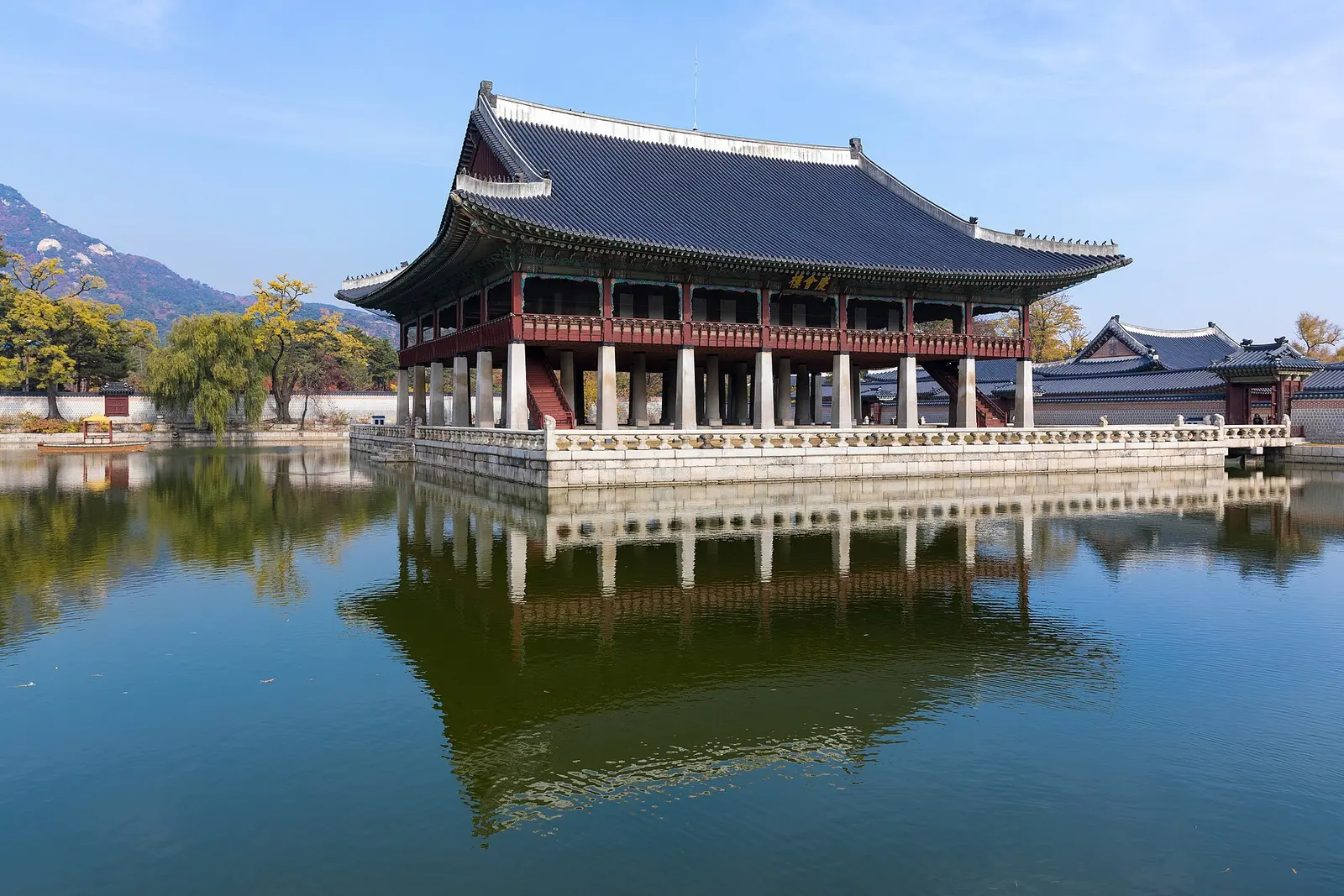
The palaces are the easiest win. Gyeongbokgung is the grand one, with a changing of the guard at the gate and a mountain backdrop. Adult entry is 3,000 won (about EUR 2.03 at 1,477.8 won per euro), and it is closed on Tuesdays. Changdeokgung, the best preserved, charges the same 3,000 won, plus 5,000 won (about EUR 3.38) for the guided Secret Garden walk. It is closed on Mondays. A long-time resident warns that Secret Garden tickets go fast, so book early or arrive when the gate opens.
Bukchon Hanok Village is the postcard lane of tiled roofs, and it is a real residential street. A 2026 resident guide says tourist access to the core alleys is limited to about 10 AM to 5 PM, with fines for breaking the rule. A 2025 photographer who arrived before sunrise on a Sunday was turned away by staff. Go on a weekday morning and keep your voice down.
Hanbok rental near the palaces is popular, and a resident writer recommends it for palace photos. Others find the rental shops and the tour groups around the gates tiring in peak season.
Myeongdong is the safe first-timer pick. It has two subway lines, airport buses, cheap food and a walk to the palaces and Namsan. A writer who stayed there on all three of her trips still calls it not her favorite area, citing tourist pricing, crowds and noisy evenings. A Korean writer says to spend an hour there at most.
Insadong, Ikseon-dong and Jongno suit anyone who cares more about palaces than shopping. A family who stayed in Insadong found it walkable to the palaces, and a writer who has stayed in Ikseon-dong says nights are calm once the day-trippers leave. Hongdae is the pick for younger travelers who want live music, cafes and late evenings.
Gangnam is polished and pricey, and a 2025 family writer found the COEX area soulless, though the same family loved the Seongsu cafes. Seongsu, the converted-factory cafe district, works best as a half day out from a base in the old core or Myeongdong.
Seoul is a good city to eat in alone. Solo dining is normal, though a few barbecue spots expect two diners. Reports praise bindaetteok mung bean pancakes with fresh juice, big shared bingsu shaved-ice desserts and sundae blood sausage.
Gwangjang Market is where the arguments are. In November 2025 a food reviewer said a stall charged 10,000 won for a dish listed at 8,000, and the merchants' association suspended the stall for ten days. A 2026 news column describes a 2,000 won bottle of water at another stall. Earlier in 2025, reporters found price displays and QR menus in 20 languages at many stalls.
The practical rule is to check the posted price before you order, ask what extras cost, and use a restaurant with a printed menu if a stall will not show prices. Popular restaurants can also mean queues of one to two hours, so reserve through an app where you can.
The subway reaches almost everywhere and families say nearly every station has elevators and ramps. The catch is long transfer corridors, so check the barrier-free route in a subway app before you set out.
Google's map app gives no walking or driving directions in Korea, which three separate 2025 and 2026 bloggers flag. Install Naver Map or KakaoMap before you land. Several writers add an eSIM for the first minute at the airport. Apple Pay worked almost everywhere for one September 2025 traveler, but a transit card can only be topped up with cash.
The national tourism site lists the Seoul Climate Card at 3,000 won for the card (about EUR 2.03 at 1,477.8 won per euro), loaded with 1, 2, 3, 5 or 7 day passes at 5,000, 8,000, 10,000, 15,000 and 20,000 won (about EUR 3.38, 5.41, 6.77, 10.15 and 13.53). Always tap off. A resident guide says forgetting costs you the free transfer and a penalty fare.
The DMZ is tour-only. The national tourism pages say the Third Tunnel must be reserved in advance, the tour starts at Imjingak, and every visitor carries a passport or alien registration card. Dora Observatory is reached on the same organized tour, and both sites close on Mondays. Individual drop-in visits are not possible.
The Joint Security Area at Panmunjom is a separate, stricter booking with passport checks against a list, a military escort and a dress code that rules out shorts, torn clothing and sandals, according to a May 2026 guide by a repeat DMZ visitor. Treat the tunnel and observatory as the plan and the JSA as a bonus that needs its own reservation.
Count on a full day. The same writer puts the drive at about two hours each way, so leave the palaces and markets for other days.
Seoul is busy. Seoul reported a record 11.56 million foreign visitors in the first eight months of 2026, and in August Myeongdong was the most visited area, followed by Times Square and the COEX area. A Korean-born writer calls Myeongdong crowded with overpriced street food, Gwangjang overhyped and the COEX library better in photos than in person.
Hotspot photos mislead. Namsan Tower observation decks draw crowds, and families report long waits even with a ticket. Adult observatory entry is 29,000 won (about EUR 19.62) at Namsan and 31,000 won (about EUR 20.98) at Lotte World Tower. If you only want the view, the Seoullo overpass at blue hour pleased one photographer.
The reassuring side: women traveling alone report feeling safe on the subway and walking at night, with one losing a purse on a train and getting it back. The airport taxi is the main trap. Reporters with a hidden camera were quoted about double the map-app fare.
The pitfalls
In November 2025 a Gwangjang Market stall was suspended for ten days after a viral overcharging claim, and a 2026 news column reports a 2,000 won water bottle there. Check posted prices and ask what extras cost before you order.
Reporters with a hidden camera were quoted about twice the map-app fare by an airport taxi driver, plus a toll, while drivers quoted standard rates on camera. The train or airport bus avoids the issue.
A resident guide says tourist access to the core lanes is limited to about 10 AM to 5 PM, with fines for breaking the rule. A 2025 photographer arrived before sunrise on a Sunday and was turned away.
A resident guide says you must tap your transit card on and off every time. Forgetting costs a penalty fare and the free transfer, and tapping off twice can lock the card for a day.
Three bloggers say Google's map app gives no walking or driving directions in Korea. Install Naver Map or KakaoMap and download an offline map or eSIM before you arrive.
Gyeongbokgung is closed on Tuesdays and Changdeokgung on Mondays, according to the national tourism pages. Secret Garden tickets sell out fast, so book the slot early.
Several writers describe Myeongdong as crowded, noisy and priced for tourists. A Korean writer suggests an hour at most, while another traveler who stayed there three times says it is convenient but not her favorite area.
The JSA at Panmunjom needs a separate booking with passport screening and a strict dress code. The Third Tunnel and Dora Observatory also require reservations in advance and close on Mondays, per the national tourism pages.
When to go
Best time
April to early May, late October to mid November
Mild days, cherry blossom in spring and foliage in autumn, although a resident warns that blossom season is very busy at spots such as Yeouido Hangang Park.
Peak season
July and August
Hot, humid and wet. A resident and a solo traveler both say they would avoid July and August.
Shoulder season
March, late May to June, September
Comfortable for walking with fewer queues than the spring and autumn peaks, though a resident warns that spring brings yellow dust on some days.
Off season
December to February
Cold, with late January and early February the harshest stretch and a wind that makes long walks unpleasant. Crowds thin, and the city turns to lights and indoor sights.
Reports favor spring and autumn: April to May for blossom and mild days, and late October to mid November for foliage at the palaces. A 2026 solo writer would avoid July and August for heat and humidity. A February traveler found the cold at its peak in late January and early February, with wind making long walks unpleasant.
Getting there and around
| Airport | Distance | To the centre | How |
|---|---|---|---|
| ICN Incheon International Airport | 60 km | about 43 min | AREX express runs nonstop to Seoul Station in 43 minutes to Terminal 1 and 51 to Terminal 2, 13,000 won adult (about EUR 8.80); the all-stop train costs 4,750 won to Terminal 1 (about EUR 3.21) and 5,350 won to Terminal 2 (about EUR 3.62). Airport buses also serve Seoul stops. (source, checked Nov 2026) |
| GMP Gimpo International Airport | 15 km | about 25 min | The AREX all-stop line links Gimpo to Seoul Station for 1,750 won (about EUR 1.18); Gimpo is used for domestic flights and some short regional routes. (source, checked Nov 2026) |
From Incheon Airport, the AREX express reaches Seoul Station in 43 minutes to Terminal 1 for 13,000 won (about EUR 8.80 at 1,477.8 won per euro), and the all-stop train costs 4,750 won (about EUR 3.21) to Terminal 1 or 5,350 won (about EUR 3.62) to Terminal 2. In town, the subway and buses use T-money or the Seoul Climate Card; use Naver Map or KakaoMap for directions.
Where to stay
We earn a commission if you book through our links. It never changes a verdict. How this works
High-end stays whose guests report the setting and service earn the rate.
Luxury hotel at Gwanghwamun, within walking distance of Gyeongbokgung and City Hall; the most central of the luxury picks for palace days.
Gwanghwamun
Check rates on Expediapartner siteFive star hotel by COEX in Gangnam, a calm, polished base for shopping and business, though Gangnam sits far from the palaces.
Gangnam
Check rates on Expediapartner siteHigh-floor hotel inside Lotte World Tower in Jamsil, linked to the mall and Lotte World and close to Seokchon Lake; suits families.
Jamsil, Lotte World Tower
Check rates on Expediapartner siteClassic five star near Dongguk University Station in a quieter district between Myeongdong and Dongdaemun, below Namsan.
Jangchung, near Namsan
Check rates on Expediapartner siteThe comfortable middle: well placed, well run, priced for a normal trip.
Playful design hotel next to Tapgol Park and across from the Ikseon-dong hanok lanes; a family writer who stayed here called the location perfect.
Insadong and Jongno
Check rates on Expediapartner siteFour star base steps from Hongdae Street, for younger travelers who want cafes, music and late evenings nearby.
Hongdae
Check rates on Expediapartner siteSmall design hotel near Seongsu Station and Seoul Forest, for cafe hoppers; the area is farther from the palaces than the other picks.
Seongsu
Check rates on Expediapartner siteCentral hotel about a 10 minute walk from Myeongdong Street; a 2026 writer praises its clean rooms and a lobby far enough from the main drag to sleep well. Star class varies by listing.
Myeongdong
Check rates on Expediapartner siteCheaper beds that travelers still rate well for location and cleanliness.
Three star hotel in Dongdaemun, a simple base for the night markets and the subway lines that cross there.
Dongdaemun
Check rates on Expediapartner siteGuesthouse with private rooms about four minutes from Hapjeong Station and a short walk to Hongik University; bathrooms may be shared.
Hongdae and Hapjeong
Check rates on Expediapartner siteCompact two star hotel about three minutes from Myeongdong Street and two from Euljiro 1-ga Station.
Myeongdong
Check rates on Expediapartner siteWalkable Myeongdong base near a metro station with compact rooms and a paid buffet breakfast.
Myeongdong
Check rates on Expediapartner siteQuestions
Visa-free visitors normally need a K-ETA, but Korea's Ministry of Justice has temporarily exempted many nationalities until 31 December 2026 (notice of 23 December 2025). Trips from 1 January 2027 may need one unless the exemption is extended again. The K-ETA portal shows an exempt pop-up for covered passports, so check there and apply only on the official site.
Four to five days covers the palaces, Bukchon, a market, Namsan or a mountain walk and a cafe district. Add one more day if you want the DMZ, since the tour takes most of a day.
Myeongdong is the safe first-timer choice for transit and walkability, while Insadong and Jongno suit palace lovers. Hongdae suits younger travelers, Gangnam suits shoppers on a bigger budget and Seongsu works better as a day trip than a base.
Install Naver Map or KakaoMap for directions, because Google's map app gives no walking or driving routes in Korea. Many travelers also use a subway app for transfers and a Kakao taxi app for registered cabs.
No. The national tourism pages say the Third Tunnel must be reserved in advance and starts at Imjingak, and you bring a passport. Panmunjom is a separate, stricter booking.
Travelers report feeling safe on the subway and walking at night. Common sense still applies in late-night entertainment areas, and the main complaint is overpricing at some stalls and airport taxis, not violent crime.
How this guide was written. We read 19 traveler reports about Seoul published between Jan 2025 and Oct 2026, 4 of them mainly negative, and checked the facts against official sources in Nov 2026. Nobody on the team claims a visit; hotel picks are chosen from what guests report, never from what they pay us. How we judge.
Our first Seoul verdicts are on the way.
Plan your Seoul trip
Where to stay
12 hotel picksLuxury, mid-range and budget, cross-checked against traveler reports
Getting there
Airports near SeoulDistances, transfer times and the options that work
Book a private transfer partner site
Keep exploring
Gear verdicts from our sister site, Real Buyer Experiences: