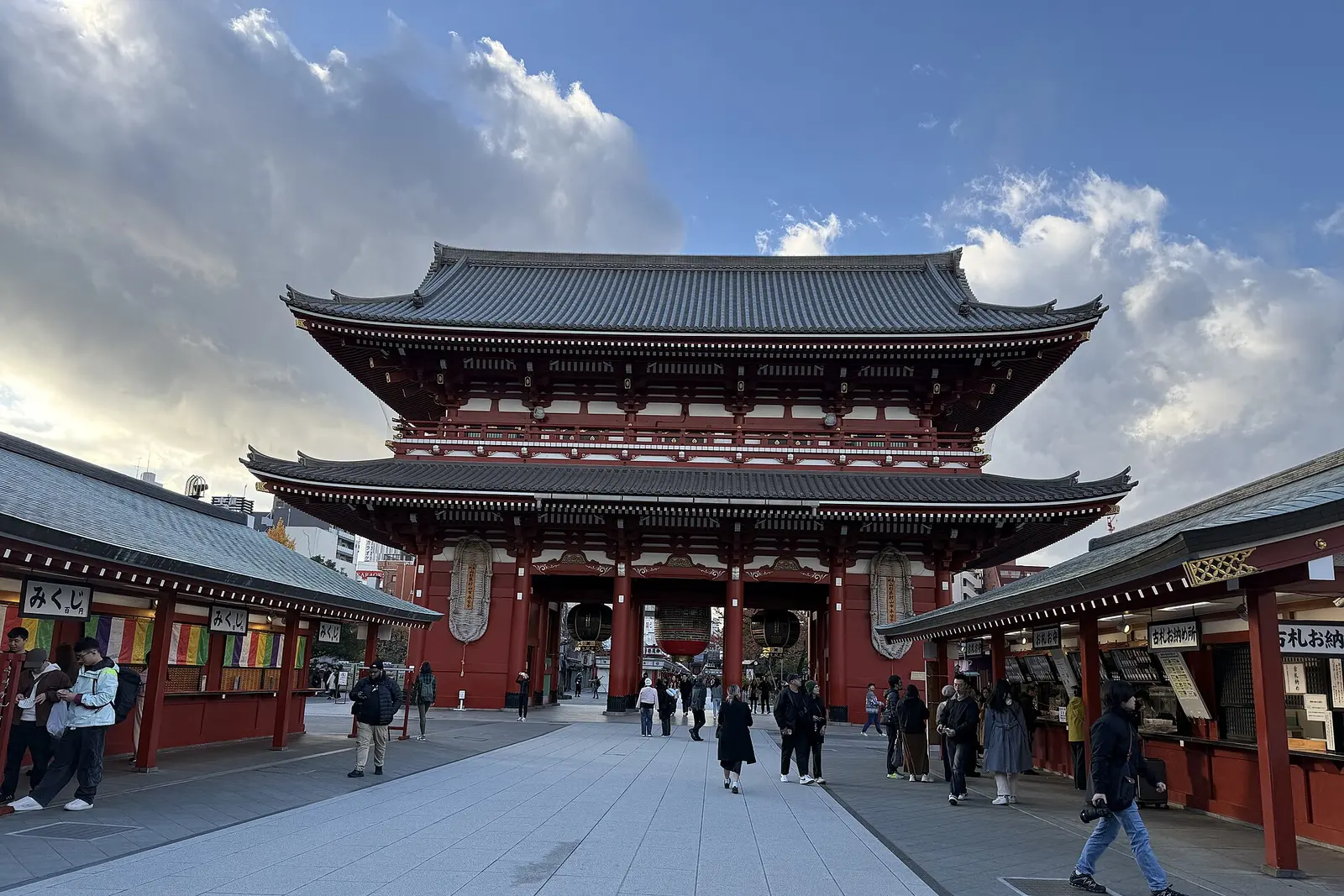
A vast, orderly city of neighborhoods, counters and trains that rewards a plan and punishes a rush.
Tokyo is worth it for almost anyone who likes food, walkable neighborhoods and a city that mostly just works. Travelers describe trains that run on time, clean streets, counters where a solo diner feels welcome and convenience stores that double as breakfast. Solo travelers and families both report feeling comfortable, and several say the structure of the place keeps even a very large crowd calm.
The hard truth is scale and crowding. Tokyo is bigger than most first-timers expect, the famous corners can be packed (Takeshita Street, Senso-ji by late morning, Shibuya's shops), and trips go wrong when people try to see five neighborhoods in a day. Trains stop around midnight, big stations take longer to cross than a route app suggests, and summer heat and humidity wear people down.
The fix is simple. Cluster each day in two neighborhoods that sit next to each other, go early to the big sights, book the timed attractions weeks ahead, carry one transit card and some cash, and pick your hotel by train line and airport, not by name. Done that way, Tokyo feels like several small cities rather than one overwhelming one.
Getting there and around
Airports near Tokyo
| Airport | Distance | To the centre | How |
|---|
HND
Tokyo Haneda Airport | 15 km | about 20 min | Keikyu line reaches Shinagawa in about 15 minutes and the Tokyo Monorail reaches Hamamatsucho in about 20 minutes per the airport. The monorail fare to Hamamatsucho is 520 yen on a printed ticket and 519 yen with an IC card (about EUR 2.93 at the 2026-11-10 rate). Keikyu fares vary by stop, so check the operator. (source, checked Nov 2026) |
NRT
Narita International Airport | 60 km | about 60 min | Skyliner runs to Keisei-Ueno in as little as 41 minutes at 2,470 yen one way, or 2,465 yen with an IC card (about EUR 13.93 at the 2026-11-10 rate). Narita Express runs to Tokyo Station in about 53 minutes at 3,140 yen in an ordinary car (about EUR 17.70); that fare comes from the operator ticket page as listed in search, checked 2026-11-10. The cheaper Access Express and Keisei Main Line also serve Ueno and Asakusa. (source, checked Nov 2026) |
One rechargeable IC card covers JR, subway and buses for ordinary rides, though it does not cover express trains or the Shinkansen. The Tokyo Subway Ticket costs 1,000 yen for 24 hours, 1,500 yen for 48 hours and 2,000 yen for 72 hours (about EUR 5.64, 8.46 and 11.28 at the 2026-11-10 rate) and covers Tokyo Metro and Toei lines only. Allow extra minutes at Shinjuku and Tokyo stations and note your exit number before climbing the stairs.
Questions
Tokyo, asked and answered
How many days do I need in Tokyo?
Most planners suggest about four days in the city, then one or two day trips or a night away. Three days works only if you accept a fast pace, and a week lets you add quieter neighborhoods such as Yanaka or Shimokitazawa.
Is Tokyo expensive?
Costs depend on the room and the meals. One recent traveler budgeted a mid-range pace of about 22,000 yen a day for sights and food, with counters and convenience stores keeping meals cheap, and accommodation is the biggest swing.
Is Tokyo safe for solo travelers?
Solo women and men report feeling comfortable on trains, in counters and on night walks. The main risk is tout-led bar bills and drink spiking in nightlife areas such as Kabukicho and Roppongi, so choose bars yourself and watch your drink.
Is Tokyo good for kids?
Yes, with pacing. Ramen, udon and conveyor-belt sushi suit children, and hands-on workshops work well. Commuter trains and crowded districts can overwhelm younger kids, so plan breaks, and book timed attractions weeks ahead.
Which airport is better, Haneda or Narita?
Haneda is inside the city and gives a shorter last leg to most hotels. Narita is far east, so match the train to your hotel: Skyliner for Ueno, Narita Express for Tokyo, Shinjuku or Shibuya, and allow real time if you must switch airports.
Where should I stay in Tokyo?
Shinjuku is the safe default for train links, Asakusa and Ueno are calmer and cheaper, and Ginza or Marunouchi suit a quiet, central base. Avoid hotels right on Shinjuku's nightlife blocks if street noise bothers you.
How this guide was written. We read 14 traveler reports about Tokyo published between Apr 2025 and Nov 2026, 2 of them mainly negative, and checked the facts against official sources in Nov 2026. Nobody on the team claims a visit; hotel picks are chosen from what guests report, never from what they pay us. How we judge.