City guide / Greece
Santorini, verdict by verdict
Santorini is the caldera. Everything the island is famous for sits on the rim of a drowned volcano. Our verdicts cover Akrotiri archaeological site and Fira to Oia caldera hike, the airport route and where to stay.
Explore the decisions
Sights and tickets
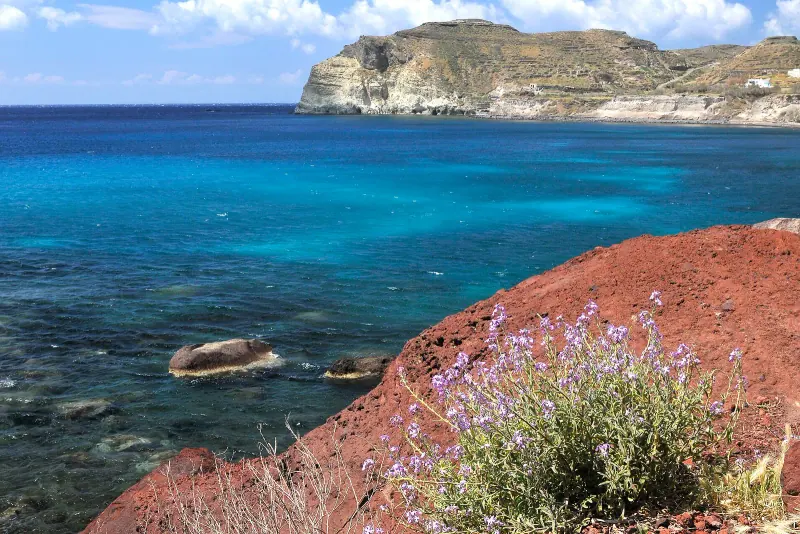 Are Santorini's red and black beaches worth it?It depends

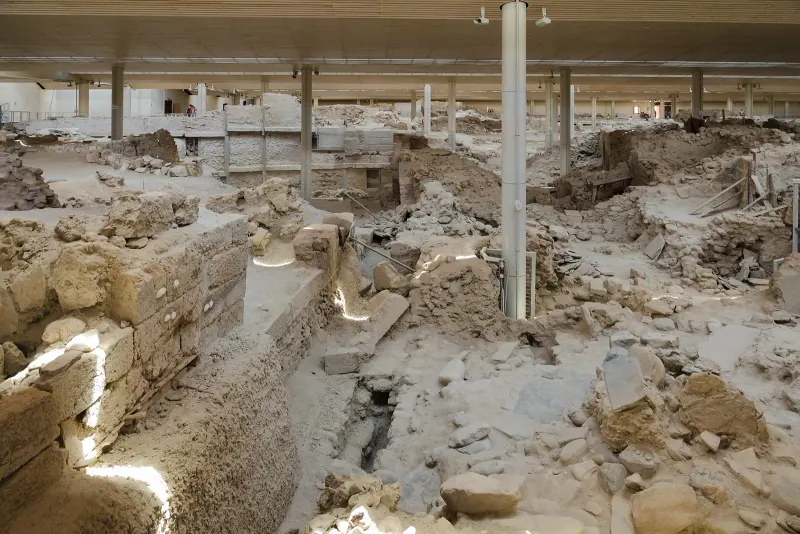 Is the Akrotiri archaeological site worth it?Go

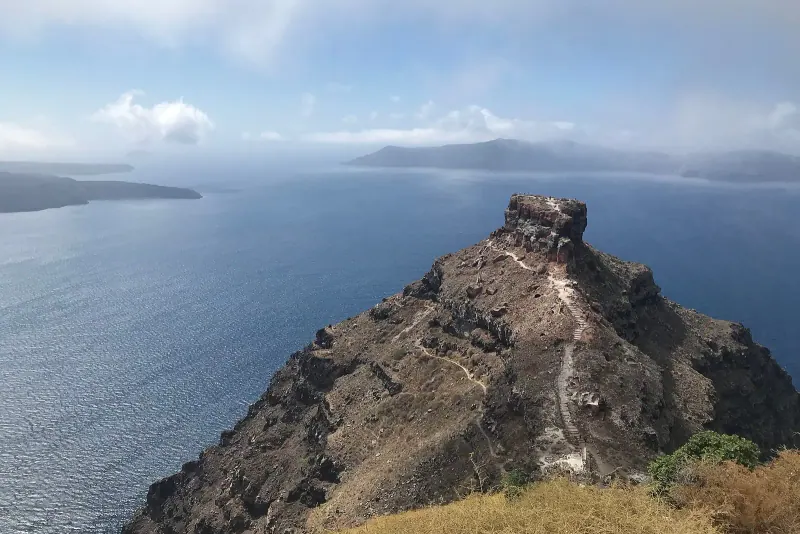 Is the Fira to Oia caldera hike worth it?Go

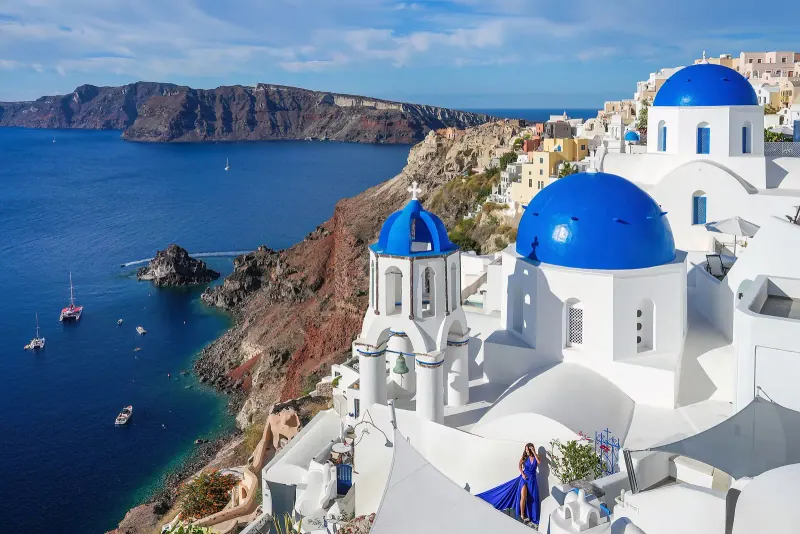 Is the Oia sunset worth the crowds?It depends

Explore the decisions
Tours
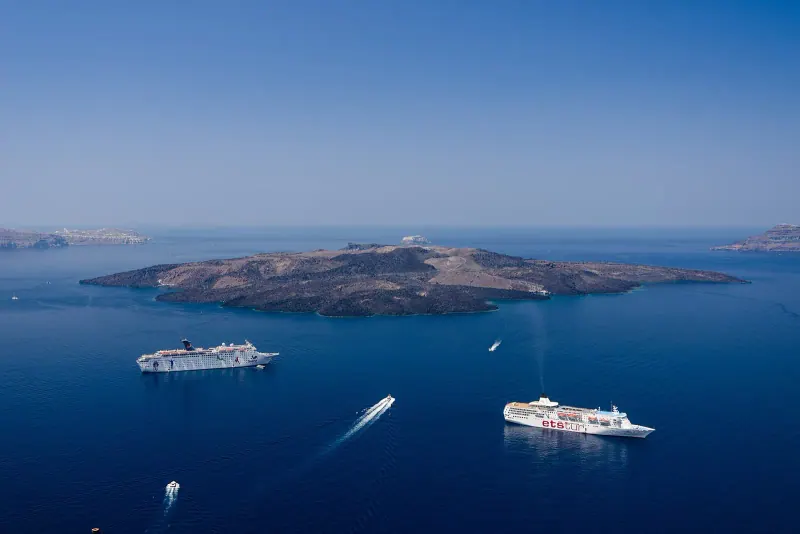 Is a Santorini caldera catamaran cruise worth it?Go

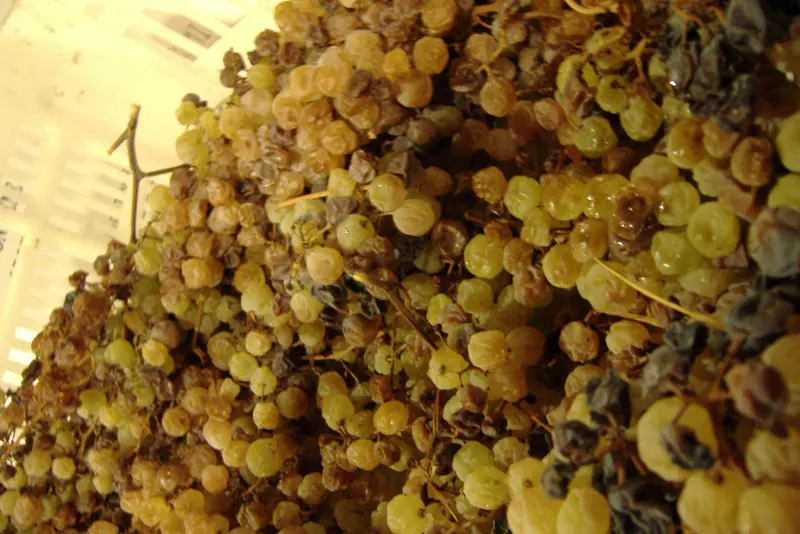 Is a Santorini wine tour worth it?Go

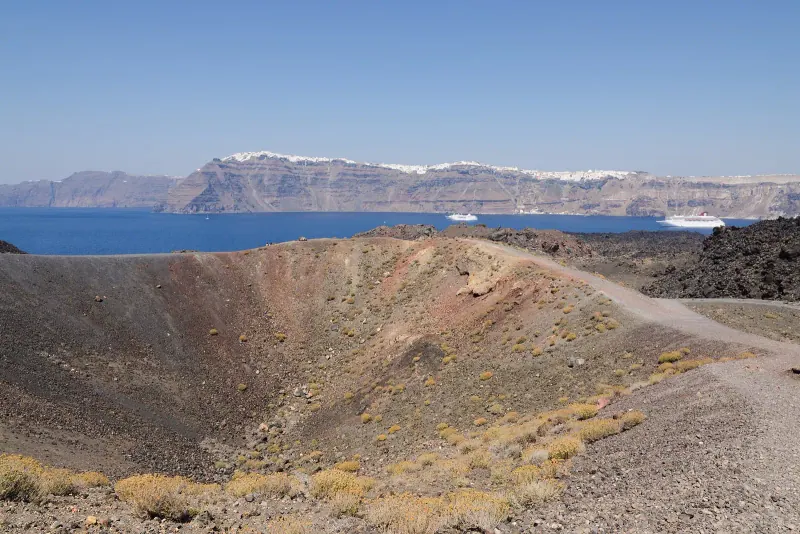 Is the Santorini volcano and hot springs tour worth it?It depends

Explore the decisions
Big choices
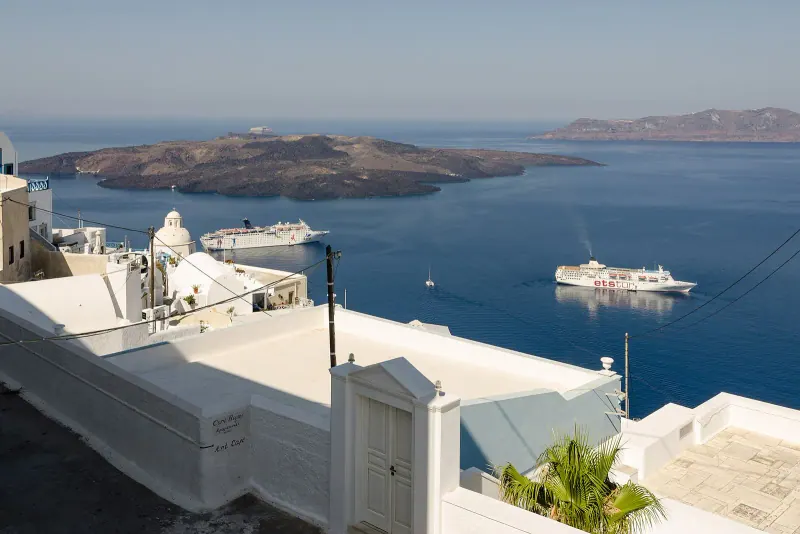 Santorini airport to Fira: which way?Our pick: KTEL airport bus

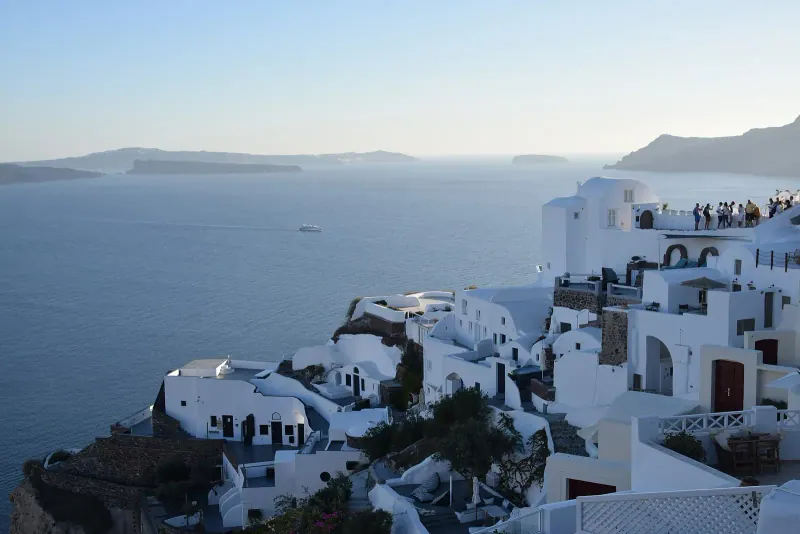 Santorini or Mykonos: which island?Our pick: Santorini

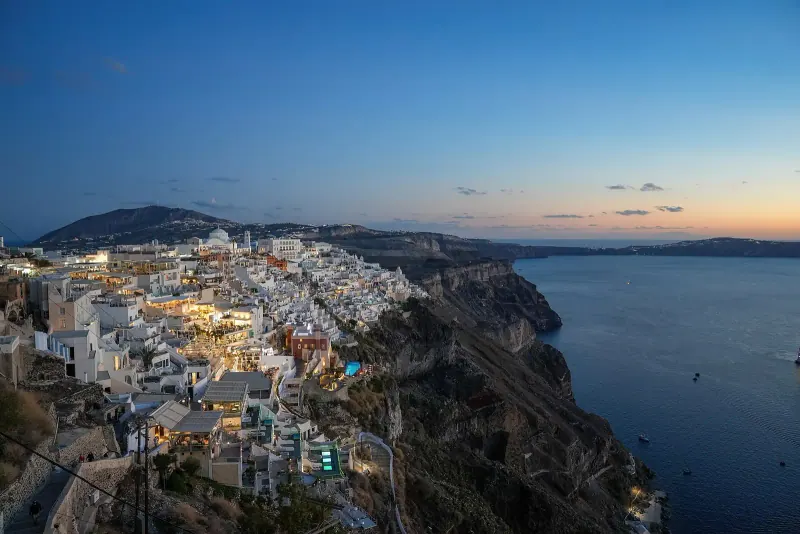 Where to stay in Santorini: Oia, Fira or the beach towns?Our pick: Fira

The review
Santorini in short
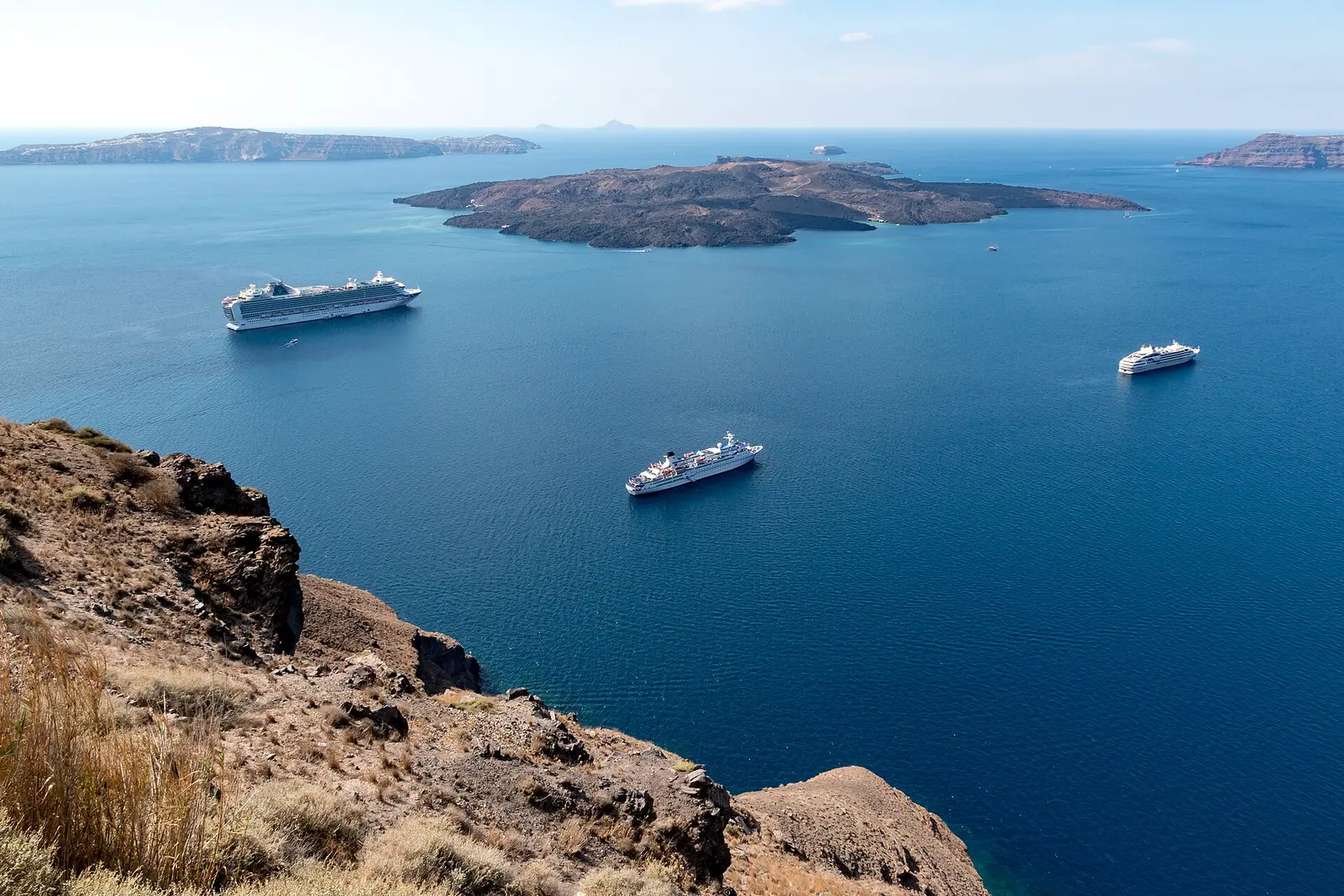
Santorini is the caldera. Everything the island is famous for sits on the rim of a drowned volcano: the white villages of Oia and Imerovigli pinned to the cliff edge, cruise ships anchored in the crater, a sunset that packs the lanes every evening. The view is that good, the cave-house architecture is unlike anywhere else in Greece, and behind the rim sits a quieter agricultural side most visitors never reach.
The straightforward picture is that Santorini is expensive and crowded in a way other Greek islands are not. Caldera-view rooms price at multiples of anywhere else in the Aegean, Oia's lanes jam shoulder to shoulder at sunset in season, and cruise-day crowds double the pressure on Fira. The famous beaches are dark volcanic sand rather than white powder, the island's single main artery clogs in July and August, and travelers on a budget or allergic to crowds should think carefully.
What survives the pricing is the sheer drama of the setting plus two underrated assets: Akrotiri, the Minoan town preserved under volcanic ash, and a serious wine culture built on assyrtiko vines trained in basket shapes on the black soil. Two to three days covers the caldera villages, Akrotiri, a wine tour and a boat trip, four only for beach time or a slower pace, and late May to June or September to early October keeps warmth without the peak crush. Come for a short, high-impact stop on a Greek islands route, spend on the view once, tour the rest cheaply, and leave before the prices start to feel normal.
Go if
- The caldera view: one of the great hotel-balcony settings in Europe
- A short, high-impact stop on a Greek islands route
- Wine travelers: assyrtiko, Santo Wines and the village cellars
- Akrotiri, the Pompeii-scale Minoan site under the ash
Skip if
- You are on a budget; caldera villages are the Aegean's priciest beds
- You want classic white-sand beaches; Santorini's are black or red volcanic
- Crowds sour a place for you; Oia at sunset in season is wall-to-wall
- When to go
- Late May-June and September-early October for warmth without the peak crush. July-August is the most crowded and most expensive. November-March is quiet and cheap but many hotels and tours close and the wind can be raw.
- How long
- Two to three days covers the caldera villages, Akrotiri, a wine tour and a boat trip. Four days only if you want beach time or a slower pace.
- Getting around
- Fira is the transport hub: the KTEL bus station links Oia, the airport, Kamari and Akrotiri cheaply but queues form in season. The Fira-Oia caldera path is the best free walk. Taxis and transfers are limited and pricey; rental cars and ATVs are common but parking in the cliff towns is a daily fight.
Where to stay
Hotels that fit this trip in Santorini
We are checking our Santorini hotel picks against live rates. Meanwhile: Search Santorini hotels on Expedia partner site
In pictures
Santorini, frame by frame
the Akrotiri archaeological site worth ita Santorini caldera catamaran cruise worth itthe Fira to Oia caldera hike worth itthe Oia sunset worth the crowdsSantorini's red and black beaches worth itSantorini airport to Fira: which waySantorini or Mykonos: which islanda Santorini wine tour worth itKeep exploring
If Santorini works for you
Pack for it
Gear verdicts from our sister site, Real Buyer Experiences: