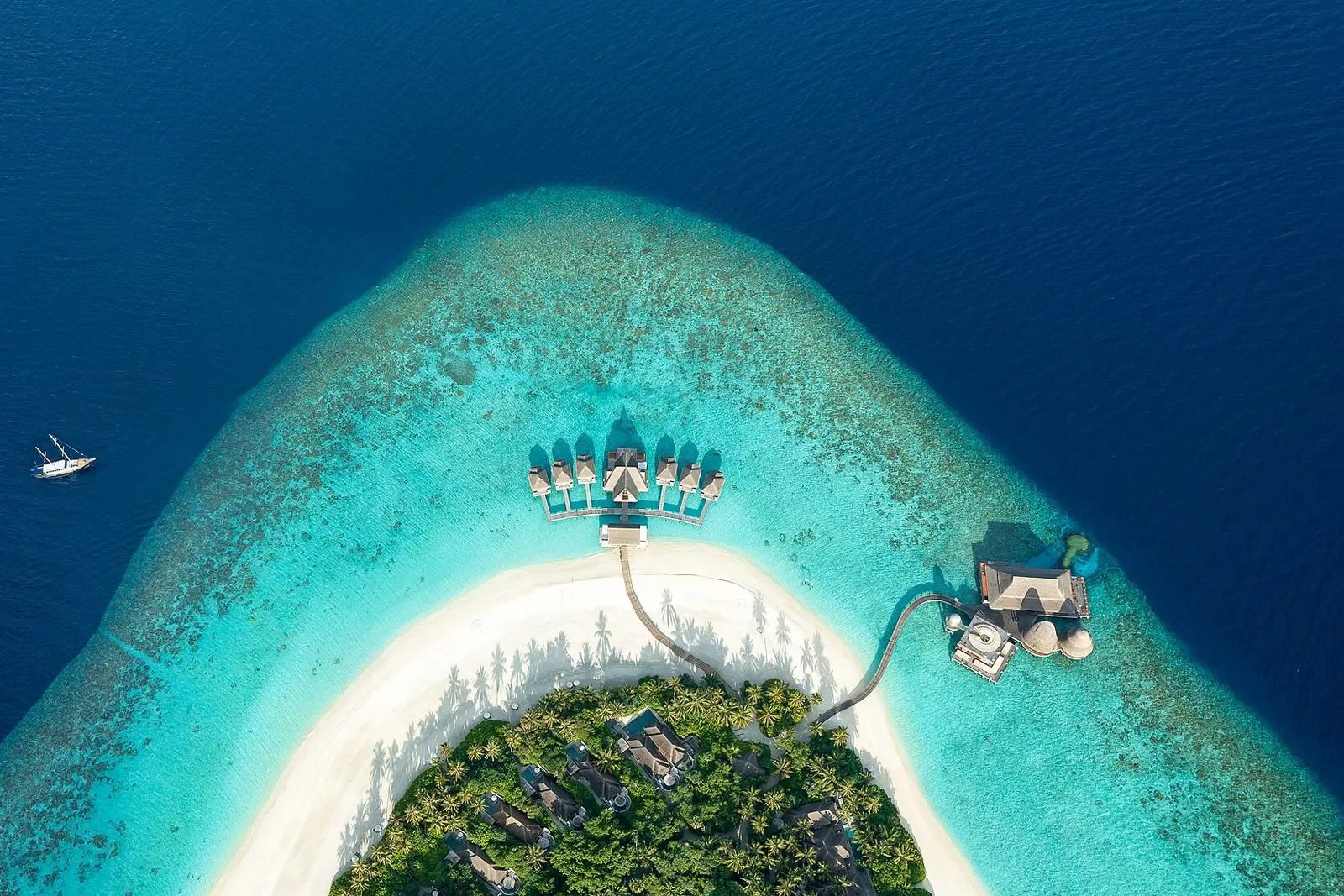
Resort island or local island
The Maldives sells two different trips. On a resort island one property holds the whole island, with a private reef, bars, restaurants and a transfer by seaplane or speedboat. On a local island you sleep in a guesthouse in a village where Maldivians live, eat in small cafes, and swim at one fenced off tourist beach. Reports treat these as separate holidays, not a cheap and an expensive version of the same one.
Local islands win on price, contact with islanders and cheap excursions. They also come with rules: no alcohol, covered shoulders and knees in the village, and a village rhythm set by prayer times. Writers on Dhigurah stayed dry, with one pair admitting they missed a sunset beer and another saying they did not miss it at all. Resorts win on privacy, house reefs you can walk into, and easy days with nothing to organize.
Many travelers split the stay. A 2026 family report spent four nights at a busy, activity heavy resort and four at a calmer one and was glad of both. A month long island hopper warns that choosing islands at random meant extra speedboat runs back to Malé, which cost time and money. A simple plan is to start on a local island near Malé, then finish at a resort with a good house reef.
Getting there: seaplane, speedboat, flight and ferry
Velana airport sits on its own island next to Malé. The airport operator lists a public ferry from the airport to the Hulhumalé ferry terminal at MVR 15, about USD 1 or EUR 0.89, running from 5:30 am to midnight every 15 minutes, paid in cash or by card. Buses run by the regional transport link serve Hulhumalé and Malé, and taxis cross the bridge at flat bridge fares. Speedboats leave from the airport jetty, and timings change with marine weather.
Seaplanes are the hard limit on arrival time. The main operator states it may fly only from sunrise to sunset and tells guests who want to reach their resort the same day to land by 15:30. Allowance is 20 kg checked and 5 kg hand luggage, with USD 5 per kg above that. Seats are sold through the resort, so the price is the resort's own; none is quoted here. A first time family with a one year old had worried about the noise and found the flight the highlight of the transfer.
Speedboats suit resorts and islands near Malé and run in more weather than seaplanes, but they can be rough. Travelers on Dhigurah, about two hours from the airport by speedboat, describe seasick passengers on both legs and a soaking on the way back in bad weather. Far atolls use a domestic flight plus a short boat ride; the domestic airline serves airports such as Gan, Maafaru, Kooddoo, Dharavandhoo and Kadhdhoo. Public ferries are the cheapest and slowest option. One 2025 video describes about 90 minutes to Maafushi at a fraction of the speedboat price, but no official fare table could be retrieved, so ask your guesthouse and check the state ferry operator's timetables.
Which atoll for what
Near Malé, Kaafu atoll has the easiest islands. Maafushi has the widest choice of guesthouses and tours. A month long traveler picked Thulusdhoo as her favorite there, with a good tourist beach but little to do, and found Dhiffushi a little less peaceful with litter on some beaches. Thulusdhoo suits surfers and people who want quiet; it does not suit anyone who needs a schedule of things to see.
The Ari atolls are where reports are most excited. On Dhigurah, a long, thin island, travelers join boat trips for whale sharks and mantas. Results vary: one writer swam with a whale shark on the first try while others on the same boat searched for four days, one group saw a shark for a few seconds in a crowd of boats but spent an hour with mantas, and a diving couple managed it on their fourth outing and counted about 20 mantas on one dive. Treat a whale shark as a bonus, not a promise. On Ukulhas the reef starts about ten meters from the tourist beach and travelers saw green turtles on four of six mornings. Rasdhoo is the diving island, with sharks, eagle rays and turtles, though its beach is small and shallow over dead coral.
Resort atolls are chosen by reef and by transfer. Baa atoll, Lhaviyani and Laamu mean a seaplane or flight and a longer day of travel, while resorts in North and South Malé atolls are a speedboat ride. Guests of resorts with a strong house reef, such as Vilamendhoo, Bandos and Kuredu, report sharks, turtles and rays from the beach, with some bleached coral in places.
Rules on local islands: alcohol, dress and Ramadan
Alcohol is sold only on resort islands. The UK government travel advice says visitors can be arrested and deported for possessing or drinking it, or being drunk, outside resorts and on inhabited islands, and warns against taking any alcohol out of a resort. Plan any drinks for a resort stay or a night in Malé on the way through, not for a guesthouse.
On local islands the advice is to keep shoulders covered and to avoid short or tight shorts, and to cover arms and upper legs when bathing at beaches used by locals. Swimwear belongs on the designated tourist beach. Topless sunbathing is not allowed anywhere, including resorts. Ukulhas travelers covered up everywhere except the tourist beach, and a 2026 budget writer saw visitors ignore the dress code with no consequence, but that is a risk, not a rule change.
Ramadan changes daily life on local islands. In February 2026 the local government ministry asked food providers to serve tourists out of public view, and the UK advice says not to eat, drink or smoke in public in daylight outside holiday resorts. Ramadan may start around 7 February 2027. Resort guests report little change; guesthouse guests should expect closed cafes by day and meals arranged by the guesthouse.
Costs, tax and the 2026 flight disruption
From 1 January 2025 the tax authority's circular sets the green tax at USD 12 per night (about EUR 10.92) at resorts and hotels, and USD 6 per night (about EUR 5.46) at guesthouses and hotels with 50 or fewer rooms on inhabited islands. Children under two are exempt. Older pages still show the former lower rates, so rely on the circular. Resorts also set their own prices for meals and transfers, which is why a resort week costs far more than a guesthouse week.
Small costs catch people out on local islands. One Dhigurah writer found the island's single cash machine ran dry over national holidays and some businesses add a card surcharge. Another reports prices quoted in dollars with a service charge and tax added to most bills. Carry some cash and ask what is included before booking an excursion.
Flights became a real risk in 2026. On 28 February, airspace closures after Middle East attacks stranded more than 2,000 tourists at Velana airport and suspended flights from Dubai, Doha and Abu Dhabi. The tourism minister said about 30 to 35 percent of visitors arrive on those airlines, and one report notes nearly all European arrivals transit a Gulf hub. Gulf carriers resumed part of their schedules within a week, and arrivals through October 2026 trailed 2025. Check your routing, keep a spare day in the plan and buy insurance that covers missed transfers.
Families, couples and divers
Families report that the Maldives works with small children if the resort is chosen well. A couple traveling with a one year old found the long flight, the seaplane and the food easier than feared, picked a beach villa for space and privacy, and said a resort that makes toddler friendly meals matters more than the villa category. Families on a budget can use a local island with a gentle beach: Rasdhoo's is small, shallow and calm, which suits children better than adults.
Couples usually want a resort with a water villa and a spa. A beach villa with easy water access suits anyone who is not a confident swimmer. The UK advice also points to strong tidal currents that have caused drownings, so swim in supervised or designated areas and ask staff where it is safe.
Divers and snorkelers do well on both kinds of island. A diver on Rasdhoo called the diving incredible, with reef sharks, eagle rays and turtles, but also reported rain most mornings in late 2025 and limited local food. Bring your own mask and snorkel if you can: Ukulhas travelers say rentals are worn and cost a few dollars a day.