Guests describe the classic riverside service, the spa and the jazz bar as the draw. It sits in Bang Rak, close to Silom and the river boats.
Riverside, Bang Rak
Search Expedia for this hotelpartner siteCity guide / Thailand
Bangkok is Thailand's capital and main gateway, a river city of temples, markets and street food. Our guide covers who it suits, when to go, the transport, the airports and where to stay.
The review
Thailand's capital rewards early starts, air-conditioned breaks and a taste for street food, and punishes anyone who tries to walk it all at noon.
Bangkok is worth it for almost anyone who likes food, temples and big-city energy, and it is easy to enjoy in two to four days. Travelers describe a city where a bowl of noodles costs next to nothing, the river temples are beautiful, and a rooftop bar at night feels cheap for the view. Most write that they would go again, and several would give it a week.
The hard truth is that the city is physically demanding. Reports agree that heat and humidity are the main complaint, ahead of crime, and that traffic makes short distances on a map feel long. Crowds at the big temples, touts near the palace and drivers who refuse the meter come up again and again. Hotels are also described as pricier than they used to be, even though local food is still cheap.
The fix is simple planning. Do the temples when they open, spend the middle of the day in a mall, a museum or the hotel pool, and head out again for the evening markets. Base yourself near a Skytrain or metro station, use the rail lines and the river boats, and use a ride app instead of haggling. Avoid the wettest weeks of September and the smoggiest weeks of January to March if your dates are flexible.
The long read
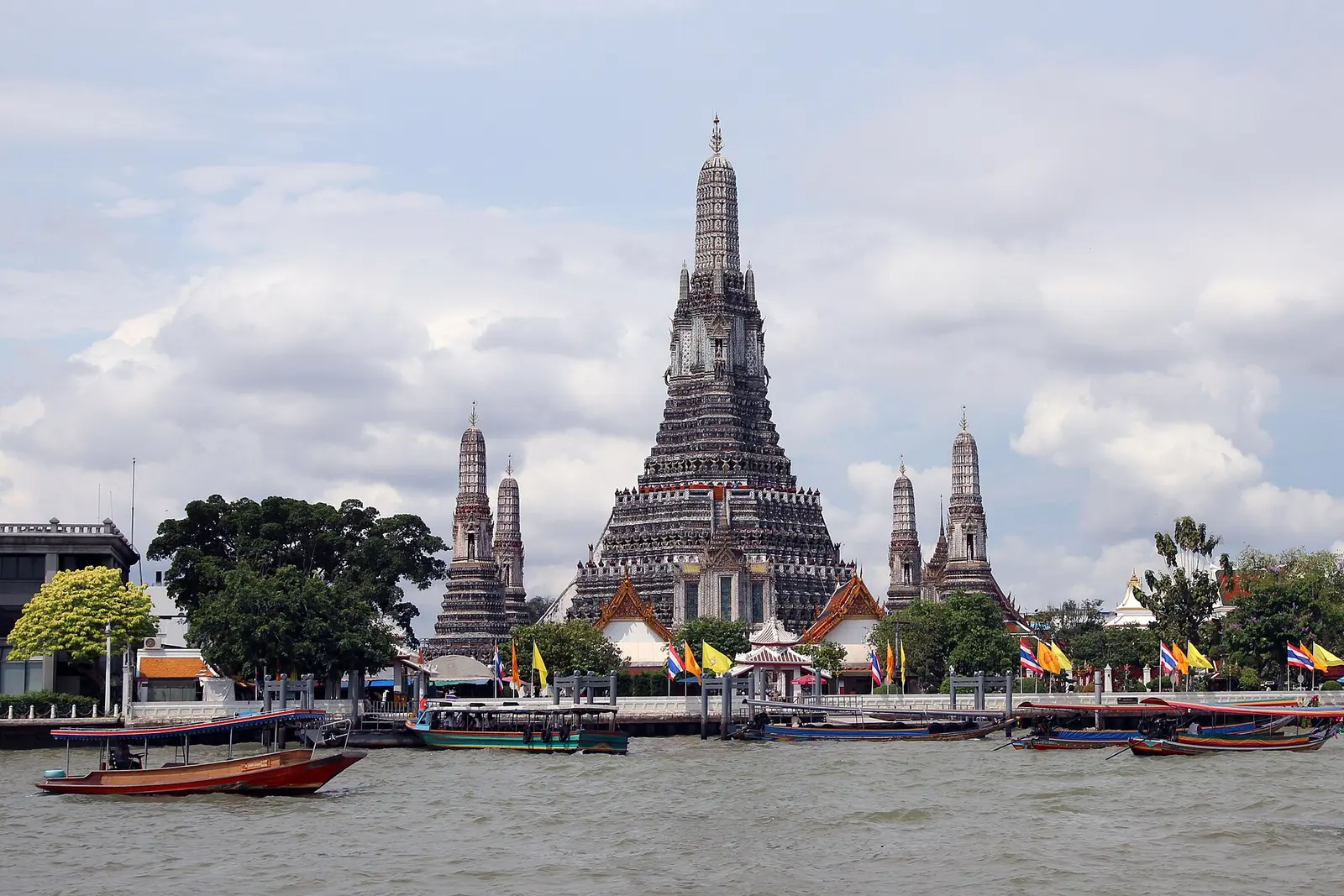
The old city on the Chao Phraya river is where Bangkok looks the way people expect. Travelers rate the reclining Buddha at Wat Pho as the temple to prioritize, with the Grand Palace and Wat Arun close behind, and most of the old city sights sit within reach of one another. Wat Arun's porcelain-covered tower is described as especially good in later light, and its steep steps give river views but are hard for small children.
The Grand Palace is the most crowded and the least shaded. The official hours are 08:30 to 15:30 daily, and trip reports say to arrive at opening or in the afternoon, once the morning tour groups have moved on. A strict dress code covers shoulders and legs, and there is a booth near the gate that provides clothing, which some travelers had to use after being turned away at the gate.
Wat Saket and its Golden Mount add a climb of 318 steps to a city viewpoint, and the riverboats are the pleasant way to link Wat Arun, the palace and the riverside malls. Plan one main sight per half day. Reports say that crowding too many temples into day one is the most common mistake, because the heat feels stronger than expected.
Food is the reason most people say they would come back. Travelers call Bangkok the best food city in Thailand, with pad thai, satay, mango sticky rice and green curry mentioned most, and street food that costs a fraction of a restaurant meal. Cash is still needed at stalls and markets, while cards work in hotels, malls and larger restaurants.
Chinatown after dark is the signature evening. A family with a seven-year-old called the street food a highlight, and also said the lanes are so packed that it is hard to move forward. Go early in the evening, hold on to the kids, and bring cash.
Not everyone eats at stalls. One traveler mostly avoided street food and instead used mall food courts and sit-down Thai places, praising the presentation and reasonable prices at a riverside mall food area. Both approaches work, and the malls double as air-conditioned rests.
Weather is the real itinerary. Travelers who went in July, in March and in the cooler months all describe the heat and humidity as the worst part, and they recommend sightseeing early in the morning and after sunset. Several advise treating large malls as places to cool down, eat and use clean restrooms, and building a rest into every day.
The rainy season, roughly June to October, is cheaper and quieter. One traveler who went in July had a mostly dry week with one night of heavy rain. September is different: late in 2026, Bangkok was declared a flood disaster zone after days of heavy rain, and the city and its airport were disrupted.
From roughly December to April, smog from fine particles can be bad, peaking from mid January to March. Local news advises checking the air by district each day and wearing a proper respirator on red days. If you have a lung condition, pick another month.
The Skytrain and metro are what most travelers lean on. They skip the traffic and reach most tourist areas, and several reports recommend a hotel close to a station for late-night returns. The river boats are the pleasant alternative on the old city side, and one guide suggests taking the Skytrain to Saphan Taksin and then a boat to the palace pier.
Road traffic is heavy, and crossing streets takes longer than expected. Elevated walkways help. A short walk on a map can be hard going in the heat, so treat anything over about ten minutes as a Skytrain or ride-app trip.
Taxi and tuk-tuk overcharging is the recurring complaint. Reports describe drivers refusing the meter and a tuk-tuk driver asking 4,000 THB for a short ride after a concert. Use the meter, use an app, and agree a price in advance if you do take a tuk-tuk.
Families report that Bangkok is easier than expected. Family blogs list an aquarium, a riverside night market, the city's biggest park with paddle boats and lizards, and an easy small-group bike tour for a seven-year-old. A cooking class and a Kanchanaburi waterfall day are popular add-ons.
Solo travelers report feeling safe. Violent crime against visitors is described as rare, and the risks are scams and phone or bag theft in crowds. Staying near a station and using a ride app at night are the usual tips.
For a first stay, Sukhumvit and Siam are the easiest bases because of rail access and food. Silom suits nightlife and rail access, the riverside suits a slower pace and a pool, and the old city and Khao San area suit budget travelers who want the temples nearby, though the Skytrain does not reach them directly.
The pitfalls
Travelers who went in July, March and the cool season all call heat and humidity the worst part of the city. A short distance on a map becomes hard going, and the Grand Palace has little shade. Do the temples at opening, rest indoors from late morning to mid afternoon, and go out again after sunset.
Travelers report taxi drivers who refuse the meter, and a tuk-tuk driver reportedly asked 4,000 THB after a stadium concert in October 2026 while the tourists paid 400. The airport operator says taxis charge the meter plus a 50 THB surcharge, so insist on the meter, use the official rank or a ride app, and agree tuk-tuk prices first.
Touts outside the Grand Palace claim it is closed and offer a tour instead; family and solo bloggers found it open and say to decline firmly. Shoulders and knees must be covered, and travelers who arrived underdressed had to rent or buy clothing at the gate. Official hours are 08:30 to 15:30.
Late September 2026 brought days of heavy rain and a disaster declaration for the capital, with disruption across the city and its airport. September is the wettest month, so keep a flexible schedule, buy flexible fares and have indoor options ready.
Fine particle pollution typically runs from December to April and peaks from mid January to March. Local news advises checking air readings daily, wearing a proper respirator on bad days and choosing indoor plans, and people with lung conditions should get medical advice before going in peak weeks.
Itinerary writers say the most common mistakes are cramming days one and two, spending too much time in taxis and trying full-day trips on a three or four day stay. Cluster sights by area, keep day one light because the heat hits harder than expected and save day trips for a longer stay.
When to go
Best time
November to early February
The cooler and drier months, with the most comfortable sightseeing, though travelers still call it hot and hotels cost the most. Book rail-side hotels early.
Peak season
December to February
Highest hotel prices and the busiest temples and markets. The air gets worse from December, so check readings if you are sensitive.
Shoulder season
March to May
Very hot and humid, with air-conditioned rests essential, and smog fading by April. Prices ease and crowds thin.
Off season
June to October
The rainy season brings afternoon downpours, lower hotel rates and thinner crowds; September is the wettest month and brought a flood disaster declaration in 2026.
November to February is the cooler and drier stretch, and travelers still describe it as hot, with the highest hotel prices. The air is worst from roughly December to April, peaking from mid January to March. June to October is the rainy season with lower hotel rates, and September is the wettest month; heavy flooding in late September 2026 caught travelers and the airport.
Getting there and around
| Airport | Distance | To the centre | How |
|---|---|---|---|
| BKK Suvarnabhumi Airport | 30 km | about 40 min | Roughly 30 km by road (approximate, not an official figure). The Airport Rail Link station is on Level B1 of the main terminal and runs 05:30 to 24:00, with travelers reporting about 30 minutes to the Phaya Thai interchange. Taxis leave from Level 1 between Gates 4 and 7: the fare starts at THB 35 or 40 (about EUR 0.93 or 1.07) plus the meter, with a THB 50 airport surcharge (about EUR 1.33). The ride-app pickup is at Level 1, Gate 4. Public bus S6 runs to the Krung Thep Aphiwat terminal from 05:30 to 24:00. (source, checked Nov 2026) |
| DMK Don Mueang International Airport | 24 km | about 45 min | Roughly 24 km by road (approximate, not an official figure). BMTA bus A1 to Mo Chit and A2 to Victory Monument cost THB 30 (about EUR 0.80), with A3 and A4 at THB 50 (about EUR 1.33). The SRT Red Line from the skywalk at Terminal 2 reaches Krung Thep Aphiwat for THB 33 (about EUR 0.88), where the metro connects. Taxis queue at Gate 8 of Terminal 1 with a queue ticket. (source, checked Nov 2026) |
The Skytrain and metro are the easiest way to cross the city and avoid traffic; the operator's adult fare table lists 17 to 62 THB (about EUR 0.45 to 1.65 at the 2026-11-10 rate). River boats link the old city temples, and a ride app gives a fixed fare. Taxis are cheap but must use the meter, and tuk-tuks are described as an experience rather than transport, with prices to agree before getting in.
Where to stay
We earn a commission if you book through our links. It never changes a verdict. How this works
High-end stays whose guests report the setting and service earn the rate.
Guests describe the classic riverside service, the spa and the jazz bar as the draw. It sits in Bang Rak, close to Silom and the river boats.
Riverside, Bang Rak
Search Expedia for this hotelpartner siteGuests praise the river views and the free shuttle boats to the other bank. One reviewer noted it feels far from the centre, so plan on the boats.
Riverside, Thonburi bank
Search Expedia for this hotelpartner siteA 222-room tower beside a large mall with a rooftop terrace and pool cabanas, a short walk from Erawan Shrine and CentralWorld, and strong rail access.
Ploenchit, Central Embassy
Search Expedia for this hotelpartner siteGuests like the covered walkway into the Siam shopping area and the garden pools in the middle of the busiest district, with an easy rail connection.
Siam
Search Expedia for this hotelpartner siteThe comfortable middle: well placed, well run, priced for a normal trip.
A 185-room four-star hotel on Sukhumvit Soi 4, close to the Skytrain and metro and to the Nana food and nightlife streets, a practical mid-range base for first-timers.
Sukhumvit, Nana
Search Expedia for this hotelpartner siteA large, reliable four-star on Silom Road near Lumphini Park and the Silom nightlife, with good rail access. Guests value the location and consistent standards over style.
Silom
Search Expedia for this hotelpartner siteGuests consistently praise the location, a minute from the Skytrain and close to the big malls and Jim Thompson area. It is a practical base for first-timers.
Siam
Search Expedia for this hotelpartner siteA 244-room hotel with a rooftop pool in the Asok area, close to the Skytrain and metro interchange, with food and nightlife on the doorstep.
Sukhumvit, Asok
Search Expedia for this hotelpartner siteCheaper beds that travelers still rate well for location and cleanliness.
Guests call it clean and reliable, beside the National Stadium Skytrain station with a short walk to the big malls. Rooms are simple and breakfast is extra.
Siam, near National Stadium
Search Expedia for this hotelpartner siteA budget riverside option with a pool and a free shuttle boat to the Saphan Taksin Skytrain stop. Guests praise the staff and the location near the big riverside mall.
Riverside, Charoen Krung
Search Expedia for this hotelpartner siteA design-led hostel near Khao San Road, close to the Grand Palace and temples, with air conditioning and a 24-hour desk. Expect nearby street noise, and bathrooms are shared.
Khao San, old city
Search Expedia for this hotelpartner siteA bright, colorful budget hotel in the Silom area with strong guest ratings and easy rail access, a good base for nightlife and the river without a big bill.
Silom
Search Expedia for this hotelpartner siteQuestions
Two to three full days covers the main temples, a river ride, Chinatown and a modern district, according to trip reports. Add a day for Ayutthaya or Kanchanaburi, and spend longer if you want slow days with air-conditioned breaks.
Local food and transport are cheap, and nightlife and rooftop bars feel good value, but travelers say hotels have become pricier. The Skytrain and metro cost about EUR 0.45 to 1.65 per ride, and the airport bus costs about EUR 0.80.
Reports describe violent crime against visitors as rare. The usual problems are taxi and tuk-tuk overcharging, touts near the palace and phone or bag theft in crowds. Use a ride app, stay near a rail station and keep belongings close.
Family bloggers say yes. Options include an aquarium, a riverside night market, the city park, a bike tour and indoor play centers. Plan heat breaks and avoid the steep temple steps with small children.
Sukhumvit and Siam are the easiest first-time bases for rail and food, Silom suits nightlife, the riverside suits a slower pace with a pool, and the Khao San area suits budget travelers who want the temples close.
November to early February is cooler and drier, though still hot and busier. The smog is worst from mid January to March, and September is the wettest month, with a flood disaster declared in late September 2026.
How this guide was written. We read 18 traveler reports about Bangkok published between Jan 2025 and Nov 2026, 5 of them mainly negative, and checked the facts against official sources in Nov 2026. Nobody on the team claims a visit; hotel picks are chosen from what guests report, never from what they pay us. How we judge.
Our first Bangkok verdicts are on the way.
Plan your Bangkok trip
Where to stay
12 hotel picksLuxury, mid-range and budget, cross-checked against traveler reports
Getting there
Airports near BangkokDistances, transfer times and the options that work
Keep exploring
Gear verdicts from our sister site, Real Buyer Experiences: