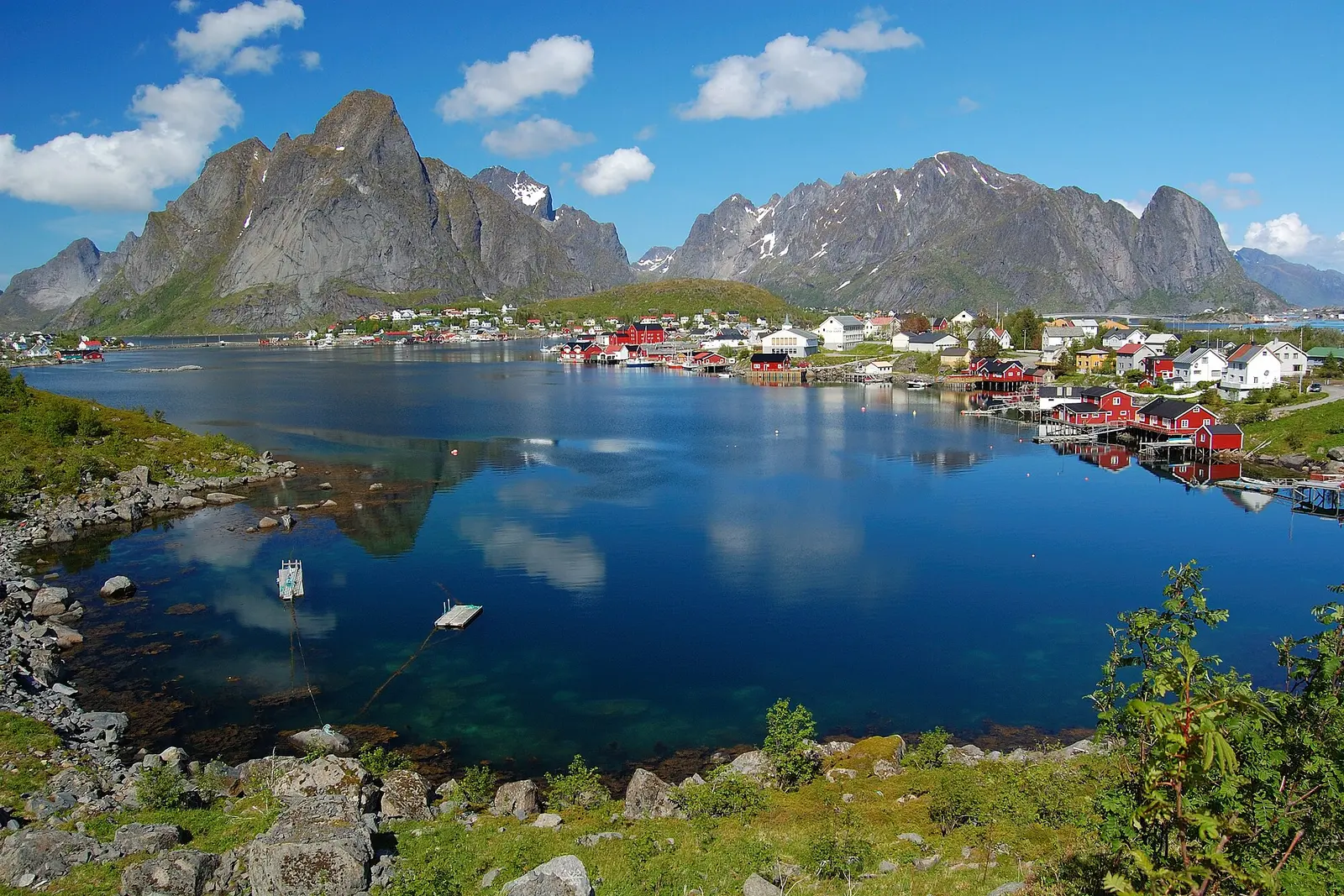
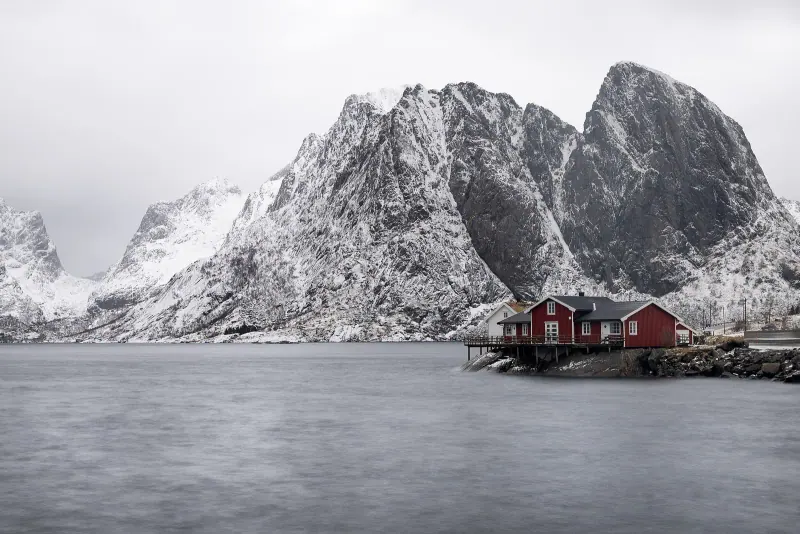
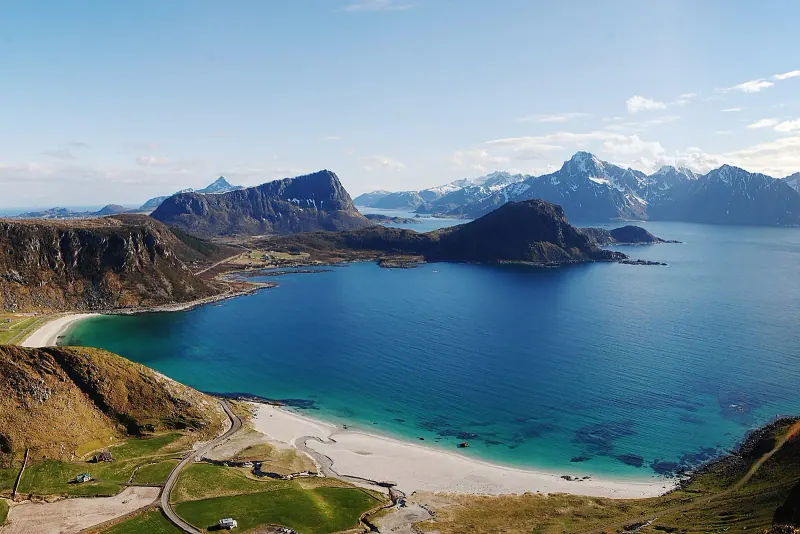
Lofoten is the arctic island chain of jagged peaks, red fishing cabins and white beaches north of the Arctic Circle, with midnight sun in summer and northern lights in winter. Our guide covers who it suits, when to go, driving and ferries, the airports and where to stay.
Jagged peaks, red fishing cabins and white beaches above the Arctic Circle, best with a car, a week and a plan for the weather.
Best time
Late May to mid July
How long
Five to seven days is the working range, based in two places. Reports from a nine-night stay used three bases, while a seven-day multi-city route that included Lofoten was called too rushed.
Cost level
Very high
Nearest airport
Svolvær Airport (Helle) (SVJ)about 10 min to the centre
Lofoten is worth the trip for travelers who want mountains rising straight out of the sea, and it suits people who like to hike, drive and photograph more than shop or party. Reports describe red rorbu cabins on the water, long beaches under steep peaks, midnight sun in early summer and northern lights from late summer into spring. Plan five to seven days and a rental car.
The hard truth is that the best-known spots are crowded and the weather decides the trip. Reports describe the Reinebringen stair filling up as the morning goes on with no railings to step aside, paid parking in most villages, trailhead lots full by midday, and a forum trip planner for a seven-day Oslo, Bergen, Tromso and Lofoten route was told it was far too rushed. The E10 rest stops now carry time limits too.
The fix is simple. Pick one or two bases instead of moving every night, climb or visit the famous places early or late, treat paid parking and time limits as part of the cost, book the Bodø ferry or a flight early, and leave slack days for rain. Shoulder months and the dark season trade crowds for darker days, ice on the E10 and fewer open doors.
Go if
Hikers who want steep, short mountain days and big sea views
Photographers chasing fishing villages, beaches and aurora
Road trippers comfortable with narrow roads, tunnels and ferries
Couples and friends who want a self-catering rorbu cabin by the water
Winter travelers who want aurora, skrei cod season and surf without big crowds
Skip if
You want a fast stop of one or two days; the distances and the weather punish short trips
You dislike driving, because buses between villages are limited and a car is the normal way around
You need guaranteed sun or a fixed schedule; the weather turns quickly
You plan to wild camp or sleep in a van at roadside pull-outs, because the rules have tightened
The far west is the postcard. Red rorbu cabins sit on stilts in Hamnøy and Reine, steep peaks drop into the fjord and the E10 ends a short drive away at Å. One blogger used a new Hamnøy cabin as a first base and climbed Reinebringen early. Eliassen Rorbuer and Reine Rorbuer are the best-known cabin stays, and both fill early.
Reinebringen is the famous climb above Reine, a steep stone staircase that gives the classic view over the village. A July 2025 report started at 9:30 pm and shared the lookout with about 30 people at 11 pm, while a summer report found more hikers arriving as the morning went on, which is hard on a stair with no railings. Go early or late in the long summer light.
Parking is where this area tests patience. Reine and its trailheads use paid and time-limited parking, so read the signs before leaving a car. The Bodø to Moskenes ferry lands nearby, which makes this end easy to reach from the mainland if you book early.
Henningsvær, Svolvær and the east
Svolvær is the biggest town in Lofoten and the easiest base for a first trip, with shops, restaurants, tour departures and the coastal ship quay.
Henningsvær sits on small islands joined by bridges, with galleries, cafés and the football pitch that squeezes onto a rocky shore. A seafood dinner here is a highlight for many guests, though not a cheap one.
Kabelvåg is a calmer alternative. One long-stay report used it as the quiet base on the east side, with a drive along the southeast coast and a summit hike up Glomtiden. If you want fewer crowds and still want to reach both ends, the east side gives choices.
Haukland, Uttakleiv and Ramberg are the well-known white-sand beaches, and the area around Leknes and Ballstad on Vestvågøy is a practical central base. One traveler used Ballstad for three nights and found it close to the hikes, with a Nonstinden and Ballstadheia outing and a seafood dinner in the village.
Kvalvika is the harder beach: a walk, not a drive, with a saddle viewpoint above the sand and an extension up Ryten. Trailhead parking is small, and one July 2025 report found the lot full by midday, so start early and check for closures before you set out.
Surfing is possible year-round at Unstad and at Flakstad, and the Lofotr Viking Museum at Borg stays open through winter. These give wet-day and dark-season options away from the big hikes.
Getting there and driving the E10
Most travelers fly to Svolvær or Leknes with Widerøe, often via Bodø or Tromsø, or fly to Evenes and continue by bus or car. The drive from Evenes to Svolvær is around two and a half hours. Flybussen Lofoten runs an airport bus from Evenes to Svolvær town centre in about three hours, coordinated with flights, and Lofotekspressen route 300 is the only public bus from the airport, so check the operator pages for current times and fares.
The ferry from Bodø to Moskenes is the scenic route. Torghatten says only part of the capacity can be booked in advance, 50 percent on Bodø to Moskenes, so foot passengers and drivers with a flexible plan have fallback options. A July 2025 report prepaid a foot-passenger place for peace of mind, while most walk-ons simply arrived about an hour early.
The E10 is the main artery, about 160 km from Fiskebøl to Å. Visit Lofoten notes very few safe places to overtake, ten tunnels totaling about 7.5 km and strong-wind closures on exposed bridges such as Gimsøy. In winter the same day can bring dry road, black ice, snow and slush. Add time to every estimate, use lay-bys rather than stopping on the road, and do not treat passing places as parking. The Nappstraumen tunnel between Vestvågøy and Flakstad runs convoys, one or two an hour by day, and closes from 23:00 to 06:00 with a single night passage, so do not get stranded on the far side after dark.
Crowds, rules and the new visitor levy
The islands feel the pressure. Reports describe June to August as very crowded, especially during Norwegian school holidays, with paid parking in most villages and room for only three or four cars at the Kvalvika trailhead. A resident blogger avoids July and the busiest villages altogether.
The roads agency started time-limited parking at rest stops along the E10 in July 2025, with Statens vegvesen giving two or four hours at eight or nine rest stops and leaving the exact limit to each sign. Signs rule, so use campsites or designated motorhome areas if in doubt.
The Storting adopted a visitor levy law in June 2025 that lets municipalities charge 3 percent of the price of a night's stay, excluding VAT, and the law applies from a date the King sets. The six Lofoten municipalities are preparing a joint scheme and Vestvågøy has a draft regulation out for hearing until 15 November 2026, with collection possible at the earliest from 2027, after ministry approval and council adoption. Do not assume it applies yet.
Winter and the dark season
Winter is the quieter Lofoten. Visit Lofoten describes it as relatively mild, with aurora from late August to early April and the lights usually showing between about 21:00 and 01:00. Reine and Hamnøy come up as classic spots, and guides advise driving away from Svolvær or Leknes to escape light pollution.
Skrei cod arrives to spawn from January to April, and a world cod fishing championship is held each March. Ski touring runs from the beginning of February to the end of April, with local guides advised for anyone without winter mountain experience. Sea eagle RIB safaris into Trollfjord, kayaking and sauna stays also run.
Plan slack. Flights and ferries can be delayed by weather, and an autumn motorhome report had the Bodø ferry delayed about two hours by a storm. A January 2026 hiking report saw aurora on all but two nights and called microspikes essential on every hike, ice sits on village pavements, and some smaller galleries and museums keep limited hours.
The pitfalls
What goes wrong in Lofoten
Reinebringen crowds and parking
Reports describe the Reinebringen stair filling up as the morning goes on, with no railings to step aside. Parking around Reine is paid and limited, so arrive early or late and check signs.
Roadside overnight parking
Statens vegvesen set two or four hour limits at eight or nine E10 rest stops in July 2025 and does not list which stop gets which, so read each sign. Campsites and designated motorhome areas are the safe choice for overnight stops.
Small trailhead lots
A resident says the Kvalvika trailhead has room for only three or four cars, and a July 2025 report found it full by midday. Go early, expect paid parking in most villages and check signs before leaving a car.
Ferry and flight slack
Only half of the Bodø to Moskenes capacity can be booked in advance. Weather can delay flights and ferries outside summer, and an autumn report had the Bodø ferry delayed about two hours by a storm. Leave a spare day around each transfer.
Underestimating drive times and tunnels
Visit Lofoten notes narrow tunnels, few safe overtaking places and strong-wind closures on exposed bridges. The Nappstraumen tunnel has convoy driving and a 23:00 to 06:00 closure during renovation until December 2027, with the tunnel open to slow traffic from 15 July to 15 August, so check the roads agency page. Add generous time to every leg.
Too many stops in too few days
A forum trip planner for a seven-day Oslo, Bergen, Tromso and Lofoten route was told it was too rushed. Lofoten itself is 160 km end to end on the E10, so picking two bases beats moving every night.
When to go
Lofoten by season
Best time
Late May to mid July
Visit Lofoten gives 28 May to 14 July for the midnight sun, with the window shifting a few days by place. Hiking and beach days stretch into the night.
Midnight sun hikes and late dinners by the water
Beach days at Haukland, Uttakleiv and Ramberg
Coastal ship stopovers
Peak season
Mid July to mid August
Reports describe very crowded villages, trailhead lots full by midday and cabins filling fast. Book ferries, cabins and rental cars early.
Reinebringen and Kvalvika at their busiest
Boat trips into Trollfjord
Shoulder season
Late August to October and April to mid May
Aurora can be seen from late August, the winter season begins around November, and spring is short, so conditions swing between mild and wintry.
Early aurora nights
Quieter trails and roads
Off season
November to March
Visit Lofoten calls winter relatively mild and quiet, with ice on roads, polar night from about 6 December to 6 January and some small museums on reduced hours.
Northern lights from late August to early April, usually about 21:00 to 01:00
Skrei cod season from January to April, with a cod fishing world championship each March
Surfing at Unstad and Flakstad in Arctic conditions
Ski touring from the beginning of February to the end of April, with a local guide
Sea eagle RIB safaris into Trollfjord
Lofotr Viking Museum at Borg, open through winter on limited hours
Visit Lofoten gives 28 May to 14 July as the midnight sun window and late August to early April for aurora, with polar night from about 6 December to 6 January. Summer is the busiest period for hikes and parking. Winter starts around November and can last to late April, so spring is short.
Getting there and around
Airports near Lofoten
Airport
Distance
To the centre
How
SVJ Svolvær Airport (Helle)
6 km
about 10 min
Widerøe is the only airline, with flights from Bodø and Tromsø. The airport lies about 6 km east of Svolvær per the national encyclopedia (Avinor does not publish a distance). Visit Lofoten lists taxis for the airport and advises pre-booking, with a Lofoten Taxi app and contact numbers on its travel-within page. (source, checked Oct 2026)
LKN Leknes Airport
2 km
about 10 min
Widerøe flies from Bodø and Tromsø. The airport lies about 2 km north of Leknes per the national encyclopedia (Avinor does not publish a distance). Visit Lofoten lists taxis for the airport and advises pre-booking, with a Lofoten Taxi app and contact numbers on its travel-within page. (source, checked Oct 2026)
EVE Harstad/Narvik Airport (Evenes)
n/a
about 180 min
Flybussen Lofoten runs from the terminal entrance at Evenes to Svolvær town centre in about 3 hours, with routes coordinated to flights and a timetable search on the operator page. Lofotekspressen route 300 is the only public bus from the airport, with departures at 10:50 and 17:05. Check the operator pages for the current fare. (source, checked Oct 2026)
A rental car on the E10, which runs about 160 km from Fiskebøl to Å, is the usual way. Reis Nordland's Lofotekspressen route 300 links Å, Leknes, Svolvær, Evenes and Narvik, and local buses link the villages with limited frequency, so check the timetable. Visit Lofoten lists taxis for both airports and advises pre-booking them. The E10 has ten tunnels and the Nappstraumen tunnel runs convoy driving and closes at night until December 2027 (Statens vegvesen). Widerøe flies from Bodø and Tromsø to Svolvær and Leknes, and the Bodø to Moskenes ferry takes about 3 to 3.5 hours, with only half of the places bookable in advance.
Where to stay
12 hotels that fit this trip in Lofoten
We earn a commission if you book through our links. It never changes a verdict. How this works
Luxury
High-end stays whose guests report the setting and service earn the rate.
Hamnøy, 5 minutes from Reine
Eliassen Rorbuer
Large rorbu lodge of about 100 rooms on the water at Hamnøy, the most photographed stretch of the islands, with a restaurant and bar. Rated three stars; among the best-reviewed cabin stays in the region.
Rorbu cabins with sea views in Reine, with a marina and the Gammelbua restaurant. Guests describe a stunning harbor view. No lift, no on-site parking and open February to October only.
Cabins inside the preserved fishing village of Nusfjord, among the best-reviewed properties in the area, with the village itself as the evening walk. Non-guests pay an entry fee to the village.
The comfortable middle: well placed, well run, priced for a normal trip.
Svolvær
Thon Hotel Lofoten
A four-star town hotel in Svolvær, the easiest base for a first visit with shops, restaurants and tour departures close by, and a short walk from the coastal ship quay.
Historic cabins in Henningsvær with sauna and hot tub; guests praise the location and view, while some mention noise carrying between neighbouring cabins.
A small lodge with its own marina and a restaurant on Vestvågøy, with free parking, a good base for the central beaches and Ballstad. Some guests note the front desk keeps very limited hours.
Cheaper beds that travelers still rate well for location and cleanliness.
Stamsund
Stamsund Hostel
A budget hostel with shared kitchens, a common room, a patio and free paddleboards, bikes and rowboats for guests, near the Hurtigruten quay in Stamsund. Check its opening season for winter dates.
Self-catering cabins on Vestvågøy about 8 minutes' drive from Leknes airport, with free parking; guests mention warm rooms and helpful staff. The sauna is charged extra per hour.
A harbor-island hotel in Svolvær with sea-view rooms and balconies; guests mention the breakfast and free coffee and tea. Rated three stars; check the rate for your dates.
A town hotel in Leknes; guests mention friendly staff and a central position, but report an older building with no lift, some construction noise and a weak restaurant.
Five to seven days with a car, based in two places, is a sensible range. One long-stay report used nine nights across Hamnøy, Ballstad and Kabelvåg, while a seven-day route covering four regions was called too rushed. Allow spare days for rain and for ferry or flight delays.
Do you need a car in Lofoten?
A car is the normal way to see the islands because the villages and trailheads are spread along the E10 and buses are limited. The Lofotekspressen route 300 links Å, Leknes, Svolvær and Narvik, but check timetables with the operator.
Is Lofoten crowded?
Parts of it are. Reports describe June to August as very crowded, a Reinebringen lookout shared with about 30 people at 11 pm in July, and paid, time-limited parking. Early or late hours and shoulder months help.
Is there a tourist tax in Lofoten?
The Storting adopted a visitor levy law in June 2025 that lets municipalities charge 3 percent of the price of an overnight stay, excluding VAT, from a date the King sets. The six Lofoten municipalities are preparing a joint scheme, Vestvågøy has a draft out for hearing until 15 November 2026 and collection can start in 2027 at the earliest. Check the municipality before you travel.
When can you see the northern lights in Lofoten?
Visit Lofoten says the aurora can be seen from late August to early April, usually between about 21:00 and 01:00. Clear skies matter, so allow several nights, get away from town lights and expect to wait for the forecast to line up.
How this guide was written. We read 18 traveler reports about Lofoten published between Jan 2025 and Oct 2026, 1 of them mainly negative, and checked the facts against official sources in Oct 2026. Nobody on the team claims a visit; hotel picks are chosen from what guests report, never from what they pay us. How we judge.