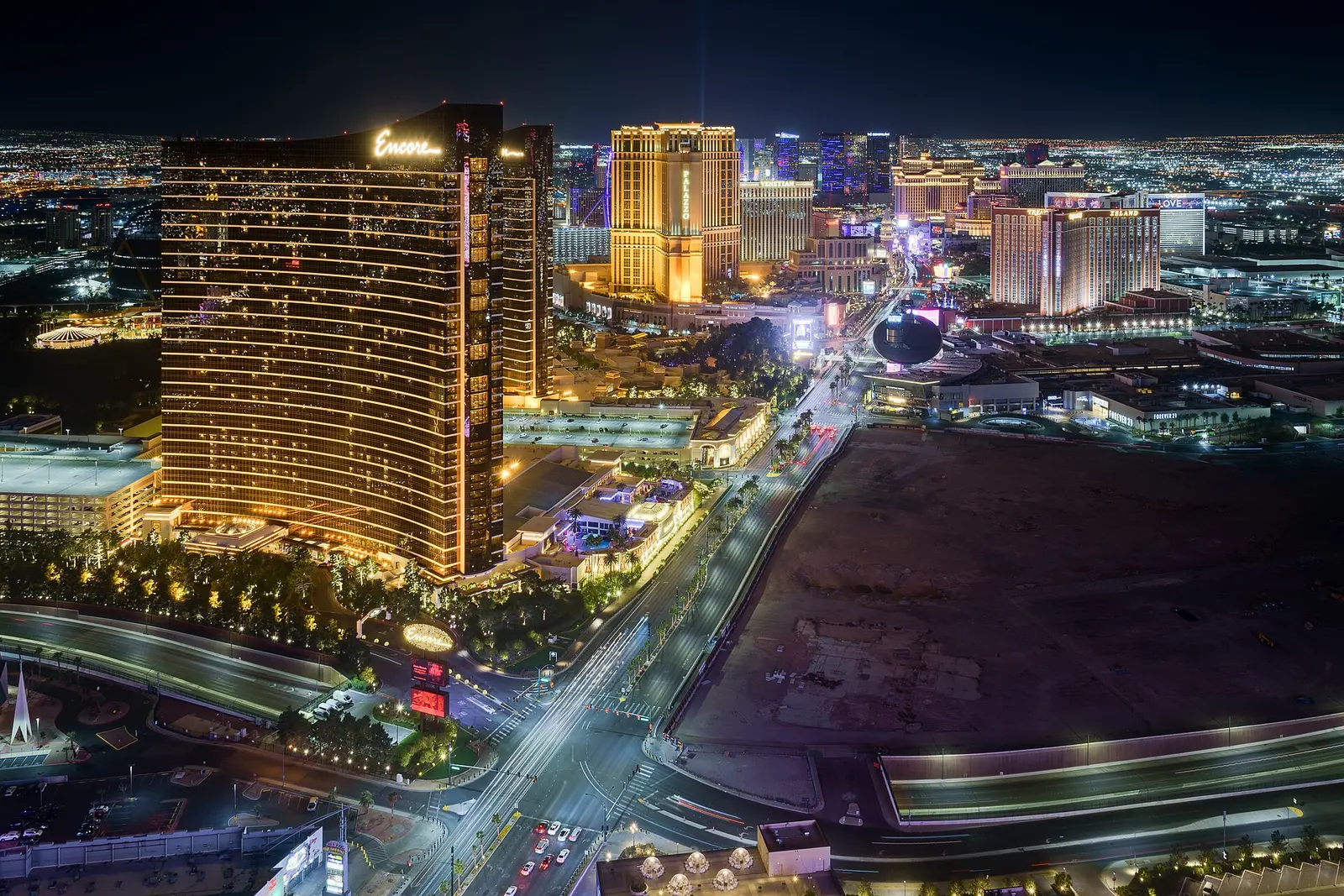
Guests describe polished service and a calmer, more refined stay on the north Strip, with the trade-off that it sits far from central sights and rideshare costs add up.
Strip north
Search Expedia for this hotelpartner siteCity guide / United States
Las Vegas is the Nevada desert city of casino resorts, shows and dining. Where you sleep, on the Strip or Downtown, shapes the trip, and Red Rock Canyon and Hoover Dam are the day trips.
The review
A city built to spend your money: pick the Strip or Downtown on purpose, and price the fees before you book.
Las Vegas is worth it for travelers who want spectacle, big shows, a serious restaurant scene and a few free sights, and who can accept that the whole place is designed around spending. First timers who want the classic version tend to be happiest on the Strip. Returning visitors, gamblers and budget travelers describe Downtown as the cheaper, older and more walkable side of town.
The hard truth is cost and scale. Travelers describe resort fees of roughly $25 to $55 a night (about EUR 22.62 to EUR 49.76 at the 2026-11-13 rate) added on top of the quoted rate, parking charges where it used to be free, $30 cocktails and dinner waits of an hour at peak times. The Strip is about 4.2 miles long, and a casino that looks five minutes away on the map often takes 20 to 30 minutes on foot. Visitor numbers fell in 2025 and travelers keep naming value as the reason.
The fix is to decide the base first. Strip for the first trip, Downtown for a second trip or a night or two, and a plan for the transport between them, which is a bus ride of well over half an hour or a short rideshare. Compare the all-in nightly total rather than the headline rate, book away from event weeks, and keep the car for Red Rock Canyon or Hoover Dam only.
The long read
Almost every guide arrives at the same split. The Strip is the easy, big, loud version of Las Vegas, with the largest resorts, the shows, the fountains and the celebrity restaurants. Downtown is the older, smaller and cheaper version, centered on Fremont Street, a few blocks of vintage neon under a lit canopy with free evening shows.
Cost is the clearest difference. A local news report found that in the first half of 2025 the average Downtown room cost less than half the current Strip rate, even with resort fees. Another writer reports that some Downtown and off-Strip hotels charge no resort fee at all, which widens the gap once fees and parking are counted.
Writers who sum it up put it this way: stay Downtown if you want weird Vegas and on or near the Strip if you want easy Vegas. For a first trip most advise the Strip and a night or an evening Downtown. For a second trip, a gambling trip or a tight budget, they lean Downtown. Splitting a short stay between the two costs a transfer each way, so many travelers pick one base.
The Strip is about 4.2 miles from end to end, and reports agree that nothing is as close as it looks. A brisk walk of the whole thing takes around 90 minutes, and a local writer says a five minute hop on the map often takes 20 to 30 minutes once escalators, bridges and casino floors are counted. Casinos are built without clocks and with few obvious exits, so connecting paths and free trams save time and heat.
Travelers describe the Strip in three stretches. The center is the most walkable and the priciest, with the Bellagio fountains, the Venetian, Caesars and the High Roller. The south end, toward Mandalay Bay, is calmer and linked by free resort trams. The north end, with Wynn and Encore, is quieter but far from the central action, and older budget properties there are described as needing upgrades.
Free sights matter here. The Bellagio fountains run every 30 minutes in one guide, the Bellagio conservatory gardens are free to enter, and the Fremont Street light show costs nothing. Cirque shows average roughly $100 a ticket, and a few visitors found the older magic and showgirl revues dated.
Downtown is compact, with most casinos, bars and restaurants within a few minutes on foot, and a local writer gives it a walkability score of 75 and the Arts District 86. Travelers describe it as more local, a little rougher around the edges and friendlier to small stakes, with lower table minimums and cheaper drinks than the big Strip resorts.
Noise is the main complaint. Fremont Street music and late-night drinking carry into many rooms, even on higher floors, and a local ranking of Fremont hotels notes that quiet rooms often cannot be booked in advance and have to be requested at check-in. One guest at a Downtown property described late-night music funneled past the building. Earplugs and a back-facing room help.
From Downtown, the Strip is a short rideshare or a slow bus ride, since the Deuce crawls in evening traffic. A video creator argued in July 2026 that Downtown has lost visitors for 18 months and that the budget gap is narrower than it used to be, so check the all-in total for your dates rather than assuming Downtown wins.
Most guides say a car is unnecessary for the Strip and Downtown. The Monorail covers seven stations on the east side, from SAHARA Las Vegas and Westgate through the Convention Center, Harrah's and The LINQ, Flamingo and Caesars Palace, Horseshoe and Paris, to MGM Grand. It does not serve the west side of the Strip, the airport or Downtown, and walking from a hotel room to the platform can take around 10 minutes, so for one or two stops walking outside may be faster.
The Deuce is a double-decker bus on Las Vegas Boulevard that local guides describe as running around the clock, every 10 to 15 minutes in the daytime. It stops at every casino and crawls in Friday and Saturday evening traffic and during big events. Rideshare surge pricing spikes around conventions and event weeks.
Plan walking around the heat. Summer midday often passes 105 degrees F, and only about half of the bus stops have shelter. Casinos run far cooler than outdoors, so a light layer helps indoors, and a jacket is worth packing for January evenings.
Resort fees are the most repeated complaint. The US consumer protection agency's fee rule, in force since May 12, 2025, requires hotels to show mandatory fees in the total price up front, and its guidance uses the daily resort fee as an example, but the rule does not cap what a hotel charges. Travelers report fees of roughly $25 to $55 a night on top of the room rate, and one visitor said the fee applied even on a points booking.
Parking is the second surprise. Reports put self-parking at about $20 to $25 a day at large Strip resorts (about EUR 18.10 to EUR 22.62 at the 2026-11-13 rate), and a Downtown guide notes that several Downtown properties still park guests free. A news report on one three-night stay found a $289.20 room price grew to $342.20 once fees, parking and taxes were added.
Food and drink add up too. Travelers cite sit-down dinners above $95 a head, cocktails near $30 and a coffee that costs $5 to $6 outside and about $20 inside a resort. Eating at 11 a.m. or between 3 and 5 p.m. avoids peak waits of an hour, and food halls and off-Strip counters are the cheaper route.
Red Rock Canyon National Conservation Area is the easiest escape from the neon, a 13-mile scenic loop with sandstone cliffs and short trails. From October 1 to May 31, a timed-entry reservation is required for the Scenic Drive between 8 a.m. and 5 p.m., booked on the federal recreation site up to 30 days ahead, and from June 1 to September 30 no reservation is needed. The loop is open 6 a.m. to 5 p.m. from November to February, and winter is the comfortable time to hike.
Hoover Dam is open daily, with the visitor center and tours running 9 a.m. to 5 p.m. The Bureau of Reclamation lists a guided dam tour at $40, a guided power plant tour at $25 for adults, a self-guided visitor center tour at $15 and parking at $10 a vehicle (about EUR 36.19, EUR 22.62, EUR 13.57 and EUR 9.05 at the 2026-11-13 rate). The dam tour is sold only on site, so arrive early.
Public transit does not reach either place, so these trips need a rental car or a tour. Travelers also discourage trying the Grand Canyon as a day trip, with a drive of around five hours each way, and recommend Valley of Fire or Lake Mead as shorter alternatives.
Las Vegas is described as one of the strongest restaurant cities in the country, from tasting menus that start at several hundred dollars to cheap taco counters off the Strip. Buffets still exist, at around $45 to $65 a head for the best known. Show tickets run from about $55 to $220 in the same guide, and a few travelers found the premium seats at an aquatic show let them see the mechanics behind the illusion.
Families are split. One 2026 guide calls it a real family trip for children aged 6 and up and recommends a base near the north Strip or an off-Strip suite hotel, with Shark Reef, the Discovery Children's Museum and the High Roller as the core kid picks. It says children under four fit a beach trip better, and that weekend Strip foot traffic and casino floors are hard to avoid with crowd-sensitive children.
The same family guide estimates $3,500 to $5,500 for four people over five days before flights, including resort fees that average about $44 a night. Spring and autumn suit children better than the July and August heat.
The pitfalls
Resort fees are a common practice in Las Vegas and are charged per night on top of the room rate. The federal fee rule in force since May 12, 2025 requires mandatory fees in the up front total but does not cap them. Travelers report roughly $25 to $55 a night, and one guest paid it even on a points booking, so compare the all-in total.
Self-parking at large Strip resorts is reported at about $20 to $25 a day, where it was once free. A news report found a three-night room listed at $289.20 reached $342.20 after fees, parking and taxes. Ask whether the hotel charges before you rent a car, and skip the car if you stay on the Strip or Downtown.
The Strip is about 4.2 miles long, and a casino that looks five minutes away often takes 20 to 30 minutes on foot. Some hotels need a 10 minute walk just to reach the Strip. Plan with the Monorail, the free trams and the Deuce, and book a hotel close to what you want to do.
One blog counted 101 days above 100 degrees F in 2024, and a local writer says summer midday often passes 105 degrees F with few shaded bus stops. Casinos are far cooler indoors, and January evenings are cold, so pack a layer and carry water.
Travelers report waits of up to an hour at dinner and meal costs that can double in prime hours. A coffee that costs $5 to $6 outside runs about $20 inside a resort, and a $3 snack can cost $12 in a hotel shop. Eat at 11 a.m. or from 3 to 5 p.m. and buy supplies off property.
Downtown hotels near Fremont Street are loud at night, and guests report street music carrying into rooms even on higher floors. Quiet rooms often cannot be booked in advance. Ask for a back-facing or mountain view room at check-in and bring earplugs.
From October 1 to May 31 a timed-entry reservation is required for the Scenic Drive between 8 a.m. and 5 p.m., and fees paid on the day of arrival are non-refundable. Book up to 30 days ahead on the federal recreation site, and arrive early or plan a trail day if you miss a slot.
Costumed characters may ask $30 or more for a photo, and CD promoters want payment for free albums. County signs now say tipping for photos is not required. Rideshare surge pricing spikes during conventions and event weekends, and on the Strip you usually walk to a marked pickup zone.
When to go
Best time
March to May, and October to mid-November
Travelers describe mild days in the 70s and 80s degrees F, cool evenings and comfortable walking. Spring and autumn also fall inside the Red Rock timed-entry period, so reserve the Scenic Drive ahead.
Peak season
Event weeks, notably F1 race week in November and CES in early January, plus New Year's Eve
Rates follow events more than weather. F1 race weekend is November 19 to 21, 2026, the Monorail lists a special nonstop schedule from November 17 to 23, and CES runs January 6 to 9, 2027. Travelers say these weeks lift prices citywide and make rides scarce.
Shoulder season
June to September
Highs near 104 degrees F make outdoor walking hard, and midday often passes 105. Pools are open, and Red Rock Canyon needs no timed reservation from June 1 to September 30, but visitors plan indoor days.
Off season
December to February, outside holidays and event weeks
Days are mild and sunny, nights are cold, and Sunday to Thursday stays are often cheaper. Most resort pools close or cut hours, and a few heated pools stay open.
Travelers describe March to May and October to mid-November as the comfortable months, with mild days and cool evenings. Rates follow events more than weather, so a quiet midweek in early December or January is often cheaper than a spring weekend. July and August bring very high heat, with highs near 104 degrees F in reports, and big event weeks such as the F1 race in November and CES in early January lift prices across the city.
Getting there and around
| Airport | Distance | To the centre | How |
|---|---|---|---|
| LAS Harry Reid International Airport | n/a | n/a | RTC route 108 and the Red Line (the former route 109) stop at Terminal 1 only, and Terminal 3 passengers use the free inter-terminal shuttle from Level 0, which runs about every 20 to 30 minutes; check RTC's current fares and the Strip transfer options before you ride. Taxis run on flat zone rates to the Strip, shown on the airport taxi page, and rideshare pickups are in the Terminal 1 and Terminal 3 parking garages. The Monorail does not serve the airport. (source, checked Nov 2026) |
RTC Strip and Downtown buses sell a two-hour pass at $6, a 24-hour pass at $8 and a three-day pass at $20 (about EUR 5.43, EUR 7.24 and EUR 18.10 at the 2026-11-13 rate); check RTC's current fares before you ride. The Monorail serves seven stations on the east side of the Strip, with a one-ride ticket at $6.25 and a one-day pass at $15.50 (about EUR 5.66 and EUR 14.02); it does not reach the airport or Downtown. Travelers say the Deuce bus is slow in evening traffic and that rideshare pickups on the Strip use marked zones. A car is not needed for the Strip and Downtown, but day trips out of town need one.
Where to stay
We earn a commission if you book through our links. It never changes a verdict. How this works
High-end stays whose guests report the setting and service earn the rate.
Guests describe polished service and a calmer, more refined stay on the north Strip, with the trade-off that it sits far from central sights and rideshare costs add up.
Strip north
Search Expedia for this hotelpartner siteThe fountains, gardens and central location are what guests praise. It sits in the most walkable stretch of the Strip and puts the busiest sights on your doorstep.
Strip center
Search Expedia for this hotelpartner siteGuests praise staff and cleanliness at this quieter south Strip tower near Mandalay Bay, and some note it feels set apart from the central Strip.
Strip south
Search Expedia for this hotelpartner siteGuests like the calm, adult-leaning pool and the CityCenter location, near the central Strip without sleeping on a casino floor.
Strip center
Search Expedia for this hotelpartner siteThe comfortable middle: well placed, well run, priced for a normal trip.
A local ranking of Fremont hotels names it the best Downtown, for rooms and a big sportsbook, and rates street noise as modest. Guests must be 21 or older.
Downtown / Fremont
Search Expedia for this hotelpartner siteWriters describe a music-hotel feel with more breathing room than the Strip, on Paradise Road near the convention center and the arena.
Off-Strip
Search Expedia for this hotelpartner siteWriters describe a calmer, more composed stay on the south Strip, with the quieter Reserve boutique rooms inside the same resort and a smoke-free casino floor.
Strip south
Search Expedia for this hotelpartner siteA value-minded pick in the middle of the Strip with a Monorail station and the LINQ promenade at the door, though guests report mixed service and a busy nightlife crowd.
Strip center
Search Expedia for this hotelpartner siteCheaper beds that travelers still rate well for location and cleanliness.
Guides name it a lower-priced way to sleep in the center of the Strip, though guest scores are lower than at newer resorts and the fee total still needs checking.
Strip center
Search Expedia for this hotelpartner siteAn old-school adults-only casino hotel near vintage neon, dive bars and late food. One guest found the tower rooms very quiet two blocks from Fremont Street.
Downtown / Fremont East
Search Expedia for this hotelpartner siteA castle-themed south Strip option families pick for price and the free tram, with guests citing dated rooms and smoky casino air.
Strip south
Search Expedia for this hotelpartner siteA practical base close to Fremont Street but calmer, with parking listed as free for guests, though one guest described late-night street music funneled past the building.
Downtown / Fremont
Search Expedia for this hotelpartner siteQuestions
Most guides advise the Strip for a first trip, because the resorts, shows and fountains are there, and Downtown for a second trip, a gambling trip or a tight budget. Downtown is more compact and cheaper, but louder at night and a rideshare away from the Strip.
Three nights covers the Strip, a Downtown evening and the main free sights. Add a fourth day if you want Red Rock Canyon or Hoover Dam, which need a car or a tour because public transit does not reach them.
They are a common practice in the city, and travelers report roughly $25 to $55 a night plus tax. The federal fee rule requires mandatory fees to be in the up front total, but it does not cap them, so compare the all-in price for your dates and ask whether parking is charged too.
Not for the Strip and Downtown. The Monorail, the Deuce bus, free resort trams and rideshare cover them, and parking costs extra at many resorts. A car or a tour is needed for Red Rock Canyon, Valley of Fire and Hoover Dam.
One 2026 guide calls it workable for children aged 6 and up, with Shark Reef, the children's museum and free fountains. It suggests a beach trip for children under four and warns that casino floors and weekend Strip crowds are hard to avoid.
Rates follow events more than seasons, and Sunday to Thursday stays in early December and much of January are usually cheaper. Avoid F1 race week in November, CES in early January and New Year's Eve, when prices rise across the city.
How this guide was written. We read 15 traveler reports about Las Vegas published between Feb 2025 and Oct 2026, 5 of them mainly negative, and checked the facts against official sources in Nov 2026. Nobody on the team claims a visit; hotel picks are chosen from what guests report, never from what they pay us. How we judge.
Our first Las Vegas verdicts are on the way.
Plan your Las Vegas trip
Where to stay
12 hotel picksLuxury, mid-range and budget, cross-checked against traveler reports
Getting there
Airports near Las VegasDistances, transfer times and the options that work
Book a private transfer partner site
Keep exploring
Gear verdicts from our sister site, Real Buyer Experiences: