Harbour-front grand hotel next to the Star Ferry pier, known for its afternoon tea, pool and spa, with guest scores near the top of the city.
Tsim Sha Tsui
Check rates on Expediapartner siteCity guide / Hong Kong
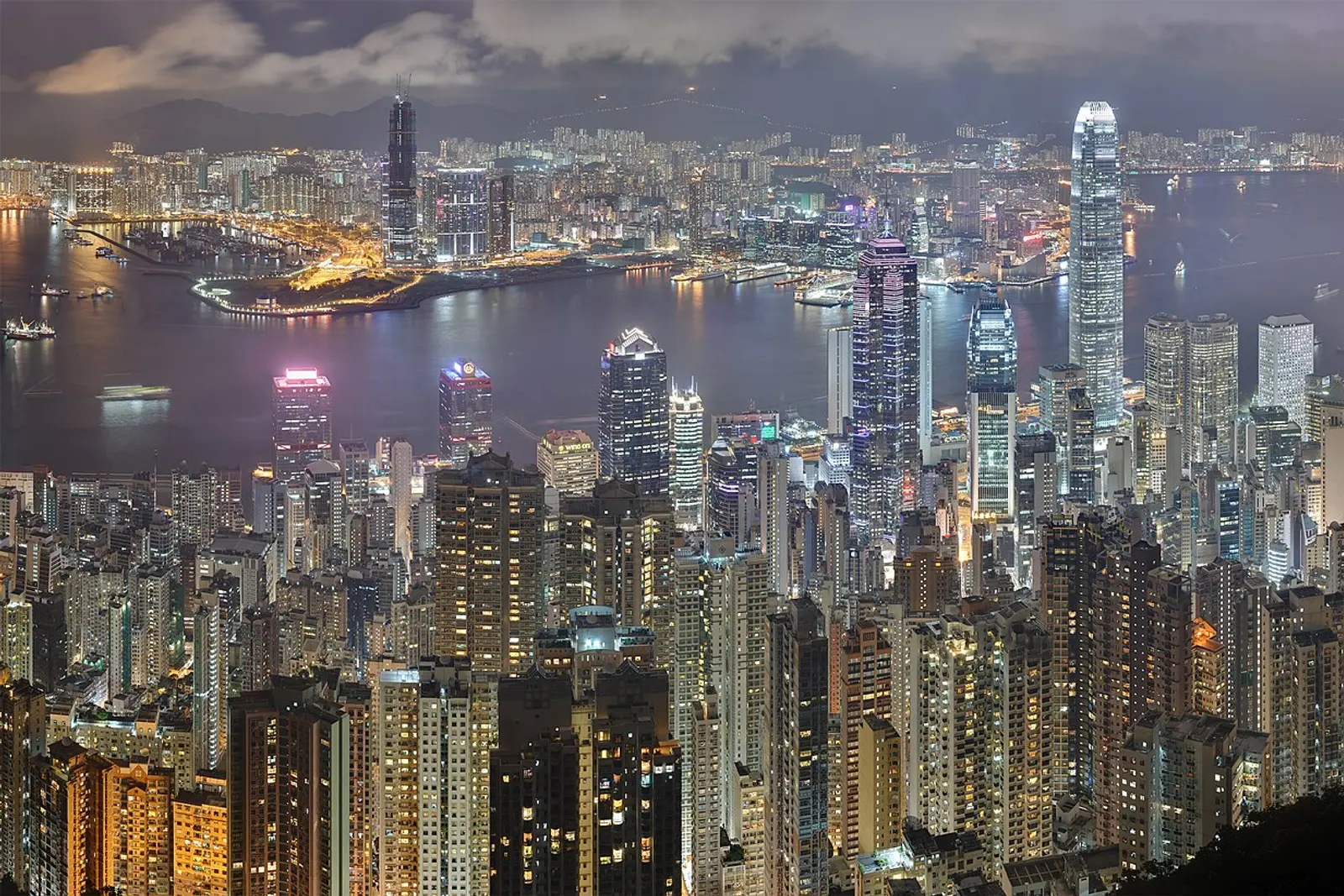
Hong Kong packs a vertical harbour skyline, ridge hikes and island beaches into a small territory, with dim sum, trams, ferries and a fast metro tying it together.
The review
A dense, fast harbour city with real hiking, great food and easy transit, best in autumn and best planned around crowds and heat.
Hong Kong is worth it for travelers who want a big-city trip with an unusual extra: green ridges and beaches within an hour of the skyline. Reports agree on the core. The metro, trams and ferries make everything reachable, the food is excellent at every price, and the Dragon's Back ridge walk and the Lantau cable car deliver views that match their reputation. Solo travelers describe feeling safe, and the harbour at dusk is the image people keep.
The hard truth is that the city is small, humid and expensive for what a hotel room gives you. Writers describe tiny rooms, packed sidewalks in Kowloon, hazy views from the Peak on bad days and a nightly light show that has now ended. Golden Week in early October and the typhoon months of July to September cause the biggest swings in crowds, prices and flight disruption. Several 2026 accounts say the first days feel rushed because travelers try to stack too many famous sights.
The fix is simple. Go between late October and March, pick one base that suits your plan, split the days between city and nature, keep mornings for outdoor sights, carry some cash and a payment card or Octopus, and book the Macau and Lantau days on weekdays. If you are pairing this with a second Asian city, Bangkok and Seoul both fit on a short flight.
The long read
The signature Hong Kong image is Victoria Harbour with the skyline behind it, and the cheapest way to get it is the Star Ferry between Central and Tsim Sha Tsui. It sails every 6 to 8 minutes through most of the day, and the adult upper deck fare is HK$5.00 on weekdays (about EUR 0.58). A traveler who planned a rushed list of ferry, Peak and markets says the harbour and trams were the parts that felt unrushed.
The Peak is the classic viewpoint and it depends on the weather. A 2026 retrospective describes a hazy day that muted the view, and another writer warns that fog can erase it entirely, so keep the Peak flexible. The Peak Tram costs HK$116 return and HK$82 single for adults (about EUR 13.45 and EUR 9.51), and walking from Central Station to the lower terminus is an uphill trek, so take transport. Lugard Road is a free, 10 to 15 minute walk from the upper station and is named as a better night view than the old harbour light show, and the skyline itself is the evening draw.
Not everything pays off. A March 2025 writer finds the Golden Bauhinia Square underwhelming and describes the PMQ market as sterile with many shops closed. Her replacements are the Po Hing Fong and Tai Ping Shan lanes, Cat Street and the Belcher's Bay promenade in Kennedy Town. The nightly Symphony of Lights harbour show, which she called a weak mix of lasers and thin music, is due to end its 22-year run with a final show on 18 November 2026, according to press reports, after the government suspended it in September; the harbour view itself, from the ferry or the promenade, is the better plan.
Reports split along one line. Tsim Sha Tsui is the default for first-timers, with the harbour, ferry pier and museums within walking distance and flat streets. A long-time returning writer says she now stays only there. A 2026 retrospective by another traveler, who stayed in Tsim Sha Tsui, calls it hectic and commercial at night, with tour groups and shoppers on packed sidewalks, and says a split stay would have been better.
Central and Sheung Wan suit food and walking, with trams, the Soho lanes and the ferry piers close by. Sai Ying Pun and Kennedy Town give the same streets with fewer crowds, and a solo traveler who stayed in Sai Ying Pun on her second trip preferred its herbal shops and local restaurants. Causeway Bay is easy by metro but one writer found it too upmarket, with an expensive mall and costly restaurants. A Poor Traveler account adds that Sheung Wan and Causeway Bay give larger rooms for less than Kowloon or Central.
Mong Kok is the street-market base, with the night markets and food stalls at the door. The same crowd is the drawback: a 2026 writer describes sidewalks so packed that pedestrians dodge each other, constant traffic noise and a room the size of a shoe box in an older hotel. Pick Mong Kok if you want local energy and accept the noise. Pick Tung Chung or the airport side only if Lantau, Disneyland or Macau by bridge is the plan.
Hong Kong food is the reason many travelers go back. Reports describe dim sum, roast goose and pork, cheong fun eaten from a street window, claypot rice and Portuguese egg tarts, with Sham Shui Po the neighborhood most often named for local value. One writer queued about 30 minutes for claypot rice at a popular spot that opens at 5:30 PM, and says the wait was worth it.
The best-known names have lines. A March 2025 writer says the Tim Ho Wan branch at Hong Kong Station has long waits, and points to the Sham Shui Po and Tai Kok Tsui branches or traditional cart restaurants such as Lin Heung Lau instead. Other writers say peak-hour dim sum queues and busy dinner districts cost time, so eat slightly off-peak.
Carry some cash. A Poor Traveler account says many small shops and local eateries are cash-only, and a returning writer suggests avoiding large HK$500 and HK$1,000 notes because some small businesses will not take them. Prices have risen: the same writer recorded a fast-food meal at HK$46 and bottled water at HK$9 to HK$10 in convenience stores.
The Dragon's Back ridge is the most mentioned nature day. Writers describe a point-to-point walk of about 7 to 8 km in 2 to 3 hours, finishing at Big Wave Bay, with no technical sections. You take the MTR Island Line to Shau Kei Wan, then bus 9 or 11 toward Shek O and ask for the Dragon's Back trailhead. The first stretch of steps is the toughest and feels harder in humidity, and writers say the ridge is the highlight, with wide views on both sides.
Crowds and wind matter. The early section gets busy late in the morning, especially at weekends, while an overcast weekday left Big Wave Bay nearly empty. A winter hiker found the beach too cold for swimming but had hot chips and craft beer at a cafe on the sand, and a late-afternoon pair of travelers caught golden hour on the ridge but fought strong wind. Bring 1 to 1.5 liters of water, because writers note there are no refill points, plus grippy shoes for slippery steps.
Lantau is the other nature day. The Ngong Ping 360 standard cabin costs HK$295 return for adults (about EUR 34.21), takes about 25 minutes each way and drops you at the Big Buddha, where entry is free. A family that took the first car at 10 AM in October found it already hot by 10:25 and went through four bottles of water on the 268 steps. They skipped Tai O because of the heat, which is a fair warning not to pack the day.
Macau is a one-hour ferry from Sheung Wan, with TurboJET listing the Hong Kong to Macau economy fare at HK$194 on weekday day sailings and HK$212 at weekends from 25 April 2026 (about EUR 22.50 and EUR 24.59). A January 2025 writer paid about HK$380 for two people return and says booking ahead was only needed on holidays. A November 2025 writer used the Sheung Wan terminal too and found the crossing smooth.
Entry rules are simple but real. You need a passport both ways. Macau immigration lists the US, UK and most EU countries as visa-exempt and asks for a passport valid at least 90 days beyond the stay, and other nationalities can apply for visa on arrival at the checkpoint. A returning writer says she once nearly got stopped on the way back to Hong Kong because her passport had under six months left, so check validity before you go.
Plan one theme. Old Town on foot gives Senado Square, the Ruins of St Paul's, Mount Fortress and the custard tarts, while Cotai gives the big resorts, free hotel shuttles and a different mood. One writer found most places outside Cotai almost quiet, and another found the Ruins area full in October. Spend your patacas before you leave, because they are hard to change outside Macau. Shenzhen is left out here because official entry rules for each nationality were not confirmed for this guide.
Octopus is the smart-card default. The official Tourist Octopus costs HK$39 (about EUR 4.52), has no deposit and no initial value, and the remaining value can be refunded but the card is deactivated. The standard on-loan card needs a HK$50 deposit (about EUR 5.80) and HK$150 of stored value for adults, and a HK$11 handling fee applies if you return it within 90 days. One traveler stood in a cash-only airport queue to get hers and a solo traveler left about HK$20 of credit on the card.
Contactless cards and phone wallets now work on the MTR, buses and trams, so many visitors skip Octopus entirely. Trams are very cheap, with one writer paying HK$2.60 from Causeway Bay to Kennedy Town, and Octopus also works in convenience stores.
Pick the airport link by your hotel. The Airport Express takes about 25 minutes, and writers say it beats a bus plus metro with luggage, but one 2026 retrospective calls it costlier than the bus and metro combination. Taking the train to Kowloon or Hong Kong Station and then a taxi is the common advice for first-timers with bags.
The pitfalls
The Observatory normals put July humidity at 81 percent and show Signal 8 days from July to September. Super Typhoon Ragasa stopped flights in September 2025, and writers say hazy or foggy days erase the Peak view, so build slack into your plan.
A solo traveler says early October brings mainland crowds and higher accommodation prices, and a 2026 commentary describes Peak Tram traffic jams and long queues at Admiralty bus stops on October 1. Avoid the first week of October if you can.
In August 2026 a visitor alleged a HK$376 fare for a HK$144 meter ride from Hong Kong Disneyland and was told it was a bridge toll, which the report says does not apply. Use the MTR or bus, check the meter and report disputes.
Writers describe tiny rooms in Kowloon and Central, a Mong Kok room the size of a shoe box with a mildew smell, and cramped guesthouses in older buildings. Sheung Wan and Causeway Bay are said to give larger rooms, so pick a base before you book.
A Poor Traveler account describes being stopped by four police officers at Tung Chung Station, who checked the passport and searched bags. The writer advises always carrying your passport, and Macau trips require it in both directions.
A March 2026 retrospective says a plan with ferry, Peak, markets, Lantau and temples left the days rushed, and the author wishes for fewer big sights per day. Alternate city days with nature days and keep mornings for outdoor sights.
A March 2025 writer ranks Madame Tussauds, PMQ and Golden Bauhinia Square as stops to skip, and one rooftop bar charged nearly USD 20 for a beer plus a 10 percent service charge. The Symphony of Lights is due to end with a final show on 18 November 2026, according to press reports, so do not plan an evening around it.
A returning writer says Macau immigration nearly stopped her return to Hong Kong because her passport had under six months left. Another writer says the pataca is hard to change outside Macau, so spend it before the ferry back.
When to go
Best time
Late October to December, and March to April
Reports describe cooler, clearer weather, and the Observatory normals show mean highs from 28.1 C in October down to about 18.7 C in January. Hiking and harbor days are most comfortable, though early October brings Golden Week crowds.
Peak season
Golden Week in early October, and the Christmas and New Year week
A solo traveler reports mainland crowds and higher accommodation prices in early October, and a 2026 commentary describes jams around the Peak Tram and long bus queues on October 1. Book trams, cable cars and ferries ahead and expect full hotels.
Shoulder season
September, and mid-March to April
September is still hot with a mean high of 30.5 C and some typhoon risk, while March and April are named by writers as comfortable windows. Weather swings are common, so keep a flexible day for fog and rain.
Off season
January and February, and the hot months of June to August
January and February are the coolest months, with a mean temperature of 16.5 C in January, and are quiet outside the Lunar New Year period. June to August are hot and humid with the most typhoon signals, and writers recommend morning-only outdoor plans.
Reports and the Observatory normals point to late October to March, when the mean daily high runs about 18.7 to 28.1 C and humidity is lower. Writers also name March and April and September to November as good windows. July and August are hot, with a mean high of 31.6 C and 81 percent humidity in July, and Signal 8 typhoon days are most common from July to September.
Getting there and around
| Airport | Distance | To the centre | How |
|---|---|---|---|
| HKG Hong Kong International Airport | 34 km | about 25 min | The Airport Express runs to Kowloon Station for HK$105 and Hong Kong Station for HK$120 with Octopus (about EUR 12.18 and EUR 13.92 at 8.6221 HKD per euro, checked 2026-11-17), with Tsing Yi at HK$73 (about EUR 8.47). Single tickets and cards without Octopus cost HK$115 and HK$130. A solo traveler describes about 25 minutes to Kowloon or Central, and bus A11 is cheaper but takes about an hour. (source, checked Nov 2026) |
The Airport Express to Kowloon costs HK$105 with Octopus (about EUR 12.18 at 8.6221 HKD per euro on 2026-11-17) and HK$120 to Hong Kong Station (about EUR 13.92). The MTR from Tsim Sha Tsui to Central costs HK$10.60 with Octopus (about EUR 1.23). The Star Ferry from Central to Tsim Sha Tsui costs HK$5.00 on weekdays (about EUR 0.58) and HK$6.50 on weekends (about EUR 0.75) on the upper deck, and the Peak Tram is HK$116 return (about EUR 13.45). A Tourist Octopus costs HK$39 (about EUR 4.52) with no deposit, and contactless cards also work on the MTR.
Where to stay
We earn a commission if you book through our links. It never changes a verdict. How this works
High-end stays whose guests report the setting and service earn the rate.
Harbour-front grand hotel next to the Star Ferry pier, known for its afternoon tea, pool and spa, with guest scores near the top of the city.
Tsim Sha Tsui
Check rates on Expediapartner siteClassic five star in Central with a strong guest rating, steps from the ferry piers, the MTR and the city's main restaurants.
Central
Check rates on Expediapartner siteDesign-led hotel above Pacific Place with very large rooms and a guest rating near the top of the city, good for calm after a busy day.
Admiralty
Check rates on Expediapartner siteHarbour-view luxury tower on Victoria Dockside with strong guest scores, close to the promenade, the Star Ferry and the art district.
Tsim Sha Tsui
Check rates on Expediapartner siteThe comfortable middle: well placed, well run, priced for a normal trip.
Four-star harbour location a short walk from Harbour City and the Star Ferry, rated well by guests and handy for families with its family suite.
Tsim Sha Tsui
Check rates on Expediapartner siteMost cited mid-range pick in Causeway Bay, with park and city views, a metro stop close by and shops and food on the doorstep.
Causeway Bay
Check rates on Expediapartner siteBoutique hotel on Fleming Road where guests praise friendly staff, roomy rooms and a convenient Wan Chai location near the tram line.
Wan Chai
Check rates on Expediapartner siteFour-star hotel on Des Voeux Road West near the metro and the Sai Ying Pun cafe streets, with a gym and restaurant and larger-chain reliability.
Sai Ying Pun
Check rates on Expediapartner siteCheaper beds that travelers still rate well for location and cleanliness.
Compact, clean rooms in Mong Kok with helpful staff and a very good guest rating, close to the markets and the metro.
Mong Kok
Check rates on Expediapartner siteSmall hotel on Des Voeux Road West nearer Sai Ying Pun than Soho, with an 8.8 guest rating praising clean rooms and staff, on the tram line.
Des Voeux Road West, near Sai Ying Pun
Check rates on Expediapartner siteSmall, well-rated hotel on Mercury Street on the North Point side, about 5 minutes from Fortress Hill station, with guests praising its position and neighbors.
North Point, near Fortress Hill
Check rates on Expediapartner siteBudget Tsim Sha Tsui option with a good guest score, close to the metro and the harbour for a low-cost Kowloon base.
Tsim Sha Tsui
Check rates on Expediapartner siteQuestions
Four days covers Kowloon, Hong Kong Island, the Peak and one nature day such as Dragon's Back or Lantau. Add a fifth day for Macau, since a Macau trip competes with everything else in a shorter stay.
Hotels are the biggest cost and rooms are small, while transit and street food are cheap. The Star Ferry is HK$5.00 on weekdays, the MTR from Tsim Sha Tsui to Central is HK$10.60 with Octopus, and a dim sum meal is far cheaper than a hotel night.
Tsim Sha Tsui is the default for first-timers with harbour views and flat streets. Central and Sheung Wan suit food and walking, Causeway Bay suits shopping, and Mong Kok suits markets if you accept noise and small rooms.
Not strictly, since contactless cards and phone wallets work on the MTR, buses and trams. Octopus still helps in convenience stores and for small fares. The Tourist Octopus costs HK$39 with no deposit and the standard on-loan card needs a HK$50 deposit.
Solo writers, including women traveling alone, describe feeling safe, including arriving at night and hiking alone on Dragon's Back. Standard precautions apply: watch belongings in crowded markets, keep drinks in sight and carry your passport.
Nationals of about 170 countries can visit Hong Kong without a visa for 7 to 180 days, so check your passport on the official immigration page. Macau lists the US, UK and most EU countries as visa-exempt, and your passport needs to be valid at least 90 days beyond your stay.
How this guide was written. We read 17 traveler reports about Hong Kong published between Dec 2024 and Nov 2026, 4 of them mainly negative, and checked the facts against official sources in Nov 2026. Nobody on the team claims a visit; hotel picks are chosen from what guests report, never from what they pay us. How we judge.
Our first Hong Kong verdicts are on the way.
Plan your Hong Kong trip
Where to stay
12 hotel picksLuxury, mid-range and budget, cross-checked against traveler reports
Getting there
Airports near Hong KongDistances, transfer times and the options that work
Book a private transfer partner site
Keep exploring
Gear verdicts from our sister site, Real Buyer Experiences: