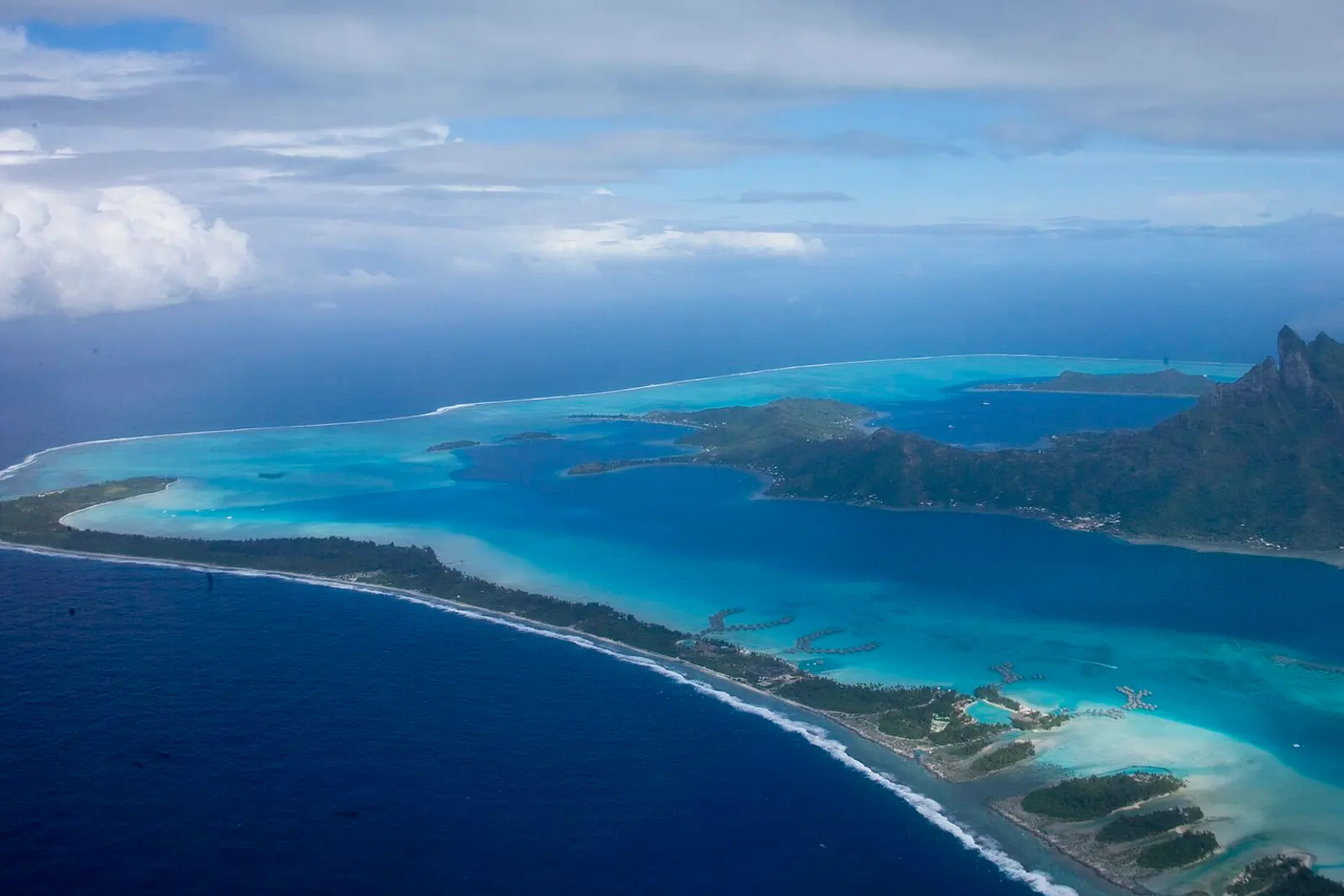
Overwater bungalow, beach villa or a pension
The postcard is the overwater bungalow, and travelers say the first morning lives up to it. Water moves under a wood floor, light bounces up through the glass panel in the floor, and a stingray can glide under the deck at dinner time. Reports are just as clear about the trade offs. The structure carries every footstep, walkway cart and early boat wake, outdoor speakers on the decks reach the next bungalow, and the walkways can be hot underfoot.
A beach villa is the quieter choice. A family that tried both in 2026 found the beachfront side of the same motu cooler, windier and with fewer mosquitoes, and picked the villa again on purpose. Another report found the overwater category faces the resort rather than Mount Otemanu at some properties, so the view category matters more than the label. Ask which way your room faces and how the walkway is built before you book.
A pension on the main island is the third path, and the one that changes the budget. Guesthouses near Vaitape and Matira are far below resort rates, and several writers say the best use of a splurge is a few nights over the water at the end of a main island stay. Many reports describe one or two nights at a resort as the sweet spot, with a beach villa for a longer stay.
Motu resort or main island: what you give up
Almost every large resort sits on its own motu and is reached by boat. That gives privacy and a lagoon at your door, but the island is out of reach on foot. Guests describe a free daily shuttle to Vaitape at some resorts, a paid one at others, and in one case a shuttle plus a taxi of 15 to 20 minutes to get from a resort base to the village. Check the schedule, because a missed return boat can mean a long wait.
The main island flips that. Matira Beach is public and free, Vaitape has the supermarkets, the bakery and the food trucks, and a rental car or bike covers the island ring road. A writer who stayed lagoon front on Matira cooked breakfast and lunch from the supermarkets and still ate well. A family of four on a 2025 resort stay felt isolated by the third day, with excursions needing advance booking and meals limited to the resort, and left early. The cost of the main island is boat noise in the day, fewer fine dining options within walking distance, and no butler. For first timers, a split stay works: a few nights on the main island, then one or two at a resort.
Getting there, the airport boat and the ferries
Everyone reaches Bora Bora through Papeete. The airport sits on its own islet called Motu Mute, so every arrival includes a boat crossing of about 15 minutes. Air Moana says its free shuttle runs between the airport and the Vaitape dock for its ticket holders, leaves Vaitape 1 hour 15 minutes before each flight, and drops you near a taxi stand and car rental agencies. Air Tahiti's own pages say its shuttle fare is included in the ticket and that it leaves Vaitape 1 hour 30 minutes before departure. Resorts run their own boats and charge for them separately.
Flights are the fast option. Travelers describe about 50 minutes from Tahiti. A couple in 2025 were stuck three extra nights on the island by an airport strike, so leave a spare day around your international flight.
Ferries are the budget option. The official fare table lists the Apetahi Express between Tahiti and the Leeward Islands at 8,000 XPF one way in school periods and 9,000 XPF in holidays, about 67 to 75 EUR or 74 to 83 USD at the checked rate. Travelers describe an overnight or long crossing and a rough arrival at a cargo pier. For Moorea, the Tauati Ferry lists 1,100 XPF one way (about 9.22 EUR, 10.13 USD).
What the food and extras really cost
Meals are where the bill grows. A guest at a luxury resort says dining there carries premium prices even by local standards, a honeymoon couple found restaurant prices matched elsewhere on the island, and a writer reports cocktails near 39 USD each. Resorts bill a daily destination charge on top, and one 2026 guest saw it as its own line on the folio. A half board or breakfast included plan is worth pricing against a la carte, since the plan usually saves money when most meals are at the resort.
The main island is the cheaper counterpart. Travelers describe food trucks in Vaitape with grilled fish plates, small snack bars near Matira, and two supermarkets for self catering. Fresh produce, good meat and dairy carry the biggest markups because almost everything arrives by boat, while French staples with red price tags are cheaper. A tourist tax is collected per person per night by the host. The territory reformed it in a 2025 law, and communes had until 31 October 2026 to set grids for stays from 1 January 2027, so ask your host what applies.
Lagoon tours: sharks, rays, jet skis and the 4x4
The shark and ray snorkel is the signature day. Travelers describe blacktip reef sharks, stingrays, sometimes manta or eagle rays, coral gardens and lunch on a motu. Cruise passengers called it among their best excursions, and a family on a private small boat got more time in the water. Groups and wildlife vary: the same species appear, but crowds, wind and the time of day change how it feels.
How to choose an operator: favor a small boat or a private charter, ask whether the stop includes feeding and how many boats share it, and bring your own fins if you care about fit, since reports mention basic gear. Morning trips are the usual advice for rays. Jet ski combos add speed and a shorter snorkel; they suit those who want to cover the lagoon quickly.
The American coastal guns from the war are the usual target of a four wheel drive tour. A 2026 family report notes the cannon hike can also be done on foot at no cost, while a guided 4x4 covers the rougher road and the high views. Book through a local operator or your hotel and expect a bumpy ride.
Adding Moorea and Tahiti, passes and trip length
Reports favor pairing Bora Bora with another island. Moorea is a short ferry from Papeete and, per official fares, costs a fraction of a flight. Writers who split time between islands describe Moorea as greener and cheaper and Bora Bora as the larger, more luxurious resort island. A common pattern is two nights near Papeete, three or four on Moorea and three or four on Bora Bora.
A multi island Air Tahiti pass can beat separate tickets when you add islands such as Huahine or Raiatea; one writer says the Bora Bora pass costs less than the inter island flights bought one by one. No official pass price could be retrieved for this guide, so check the airline before booking. Many travelers say three to five nights is enough for the main island and a motu night.
Rules, closures and when it rains
Entry rules differ by passport. UK government advice says travelers can visit without a visa for up to 90 days, that the passport must be valid for at least 3 months after leaving, and that a yellow fever certificate is needed if arriving from a risk country. Other nationalities should check their own government pages.
Closures changed the map in 2026. A resort on Motu Piti Aau closed on 1 June 2026 for a long renovation with no confirmed reopening date, and another large resort closed for several months earlier in the year. Confirm that the property you pick is open for your dates.
The dry months from May to October are the busy and costly ones. The wet months from about December to March bring thunderstorms, more mosquitoes and lower prices; a family that planned a February to April stay on purpose said the rain mostly came in bursts and the savings were real. Shoulder months of April, May, September and October suit those who want both.