Sofia / The verdict
Is the Central Mineral Baths in Sofia worth it?
Worth it as a museum and a photo stop rather than a bath. The Secessionist landmark has held the Sofia History Museum since 2015, entry is EUR 5, and the free mineral fountains beside it are the only water you will touch; travelers wanting a soak go to Bankya instead.
By The Real Traveler Experiences team.
The Sofia story
Sofia is the cheapest capital weekend in the EU and nobody seems to have noticed. The centre stacks Roman ruins, an Ottoman mosque, a gold-domed cathedral and a Stalinist Largo within a ten-minute walk, everything costs a fraction of Western prices, and Vitosha mountain looms at the end of the main shopping street.
The verdict in 30 seconds
It depends
Worth it as a museum and a photo stop rather than a bath. The Secessionist landmark has held the Sofia History Museum since 2015, entry is EUR 5, and the free mineral fountains beside it are the only water you will touch; travelers wanting a soak go to Bankya instead.
Go if
- You want the quickest grounding in Sofia's 8,000-year timeline in a landmark interior
- You are happy to taste warm mineral water at the free public fountains rather than bathe in it
- You are already doing the Serdika, mosque and synagogue cluster on the same square
Skip if
- You came to actually bathe in a historic bathhouse, which the building no longer offers
- You are museumed out and only want architecture, in which case the exterior and fountains are free
- You are in Sofia on a Monday between November and April, when the museum is shut
What it costs
- Sofia History Museum, adult: €5. Official source, checked Oct 2026.
- Sofia History Museum, child 7-18, student, PhD student or senior: €2 (Under 7 and visitors with disabilities free). Official source, checked Oct 2026.
- Family ticket (2 adults plus up to 3 children under 18): €10. Official source, checked Oct 2026.
- Audio guide: €3. Official source, checked Oct 2026.
- Free entry day (first Thursday of the month): €0 (The public mineral fountains outside are free every day). Official source, checked Oct 2026.
What travelers report
Based on 12 traveler reports (May 2025 to Jul 2026) and the official sources linked on this page. 0 were negative.
What people like
- 6 of 12 reports praise the free mineral fountains and the sight of locals filling bottles all day.
- 5 of 12 reports call the Secessionist building itself the highlight, inside and out.
- Reports that paid for the museum describe a compact, good-value walk through 8,000 years of city history.
- The square cluster of mosque, synagogue and Roman ruins gets credit for making the stop efficient.
What people complain about
- 3 of 12 reports flag the core disappointment: the name promises bathing and the building offers none.
- The spring water is hot and lightly sulphurous, which surprises travelers expecting a cool drinking fountain.
- 2 of 12 reports skipped the interior entirely, judging the exterior and fountains sufficient.
- The official schedule adds a Monday closure between November and April.
How to do it right
- Reset expectations first: the building is a museum rather than a working spa, and the only bathing infrastructure in the center is the free drinking fountains outside.
- Buy the EUR 5 museum ticket on site; reports describe a compact two-floor visit covering prehistory through the royal era in about 1 to 2 hours.
- Fill a bottle at the mineral fountains on the mosque-side wall; the water runs hot at roughly 51 degrees and locals queue with jugs all day.
- Time it for the first Thursday of the month if you want free entry, or a weekday for the quietest halls.
- If soaking is the real goal, plan a half-day to Bankya (15 km) or a full day to Sapareva Banya (70 km) instead.
- Check seasonal hours: May to October it opens daily 10:00 to 18:00, while November to April it closes Mondays.
The trap to avoid
Reading the name and packing a swimsuit. The baths closed as baths in 1986 and the building reopened as a museum in 2015; travelers still arrive expecting thermal pools and leave with a history lesson instead. The free mineral fountains beside the mosque are the only place you will touch the famous water in the center.
Why this verdict
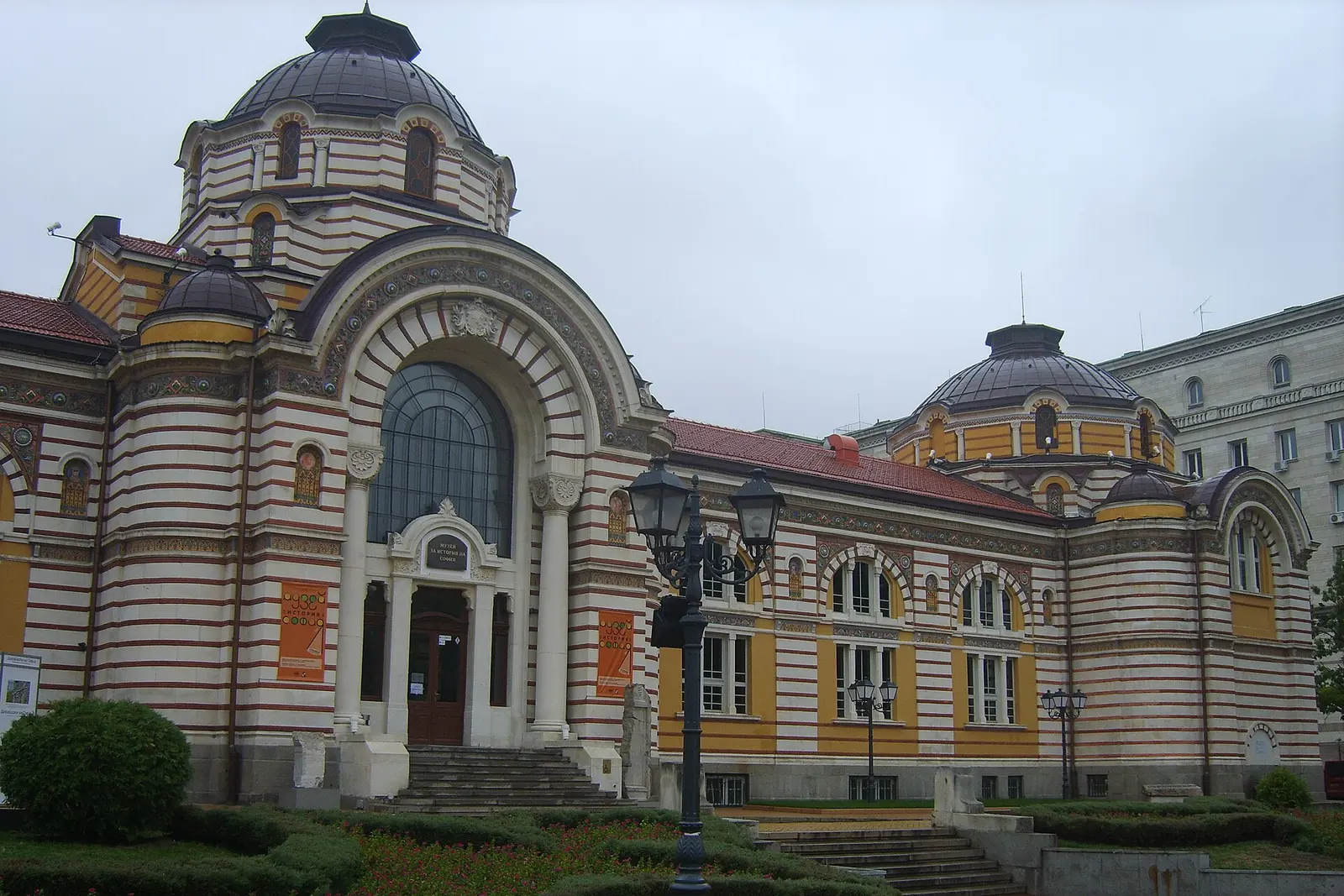
The name is the problem: travelers who arrive expecting to bathe in a grand old bathhouse discover a museum, and that mismatch writes most of the negative notes. Read it as two attractions and the picture clears. First, the building: a 1913 Secessionist landmark in mustard and red that reports consistently call one of Sofia’s most photogenic facades, on a square that already bundles a mosque, a synagogue and Roman ruins. Second, the museum inside: EUR 5, compact halls from prehistory through the monarchy era, and repeated calls of good value from the reports that paid.
Between the two sits the free third thing, the public mineral fountains on the wall, where warm sulphuric water runs around the clock and locals fill bottles all day. Several reports treat those fountains as the real experience, ahead of the museum itself: you taste Sofia’s famous spring water the same way residents do, which is the closest the center comes to a bathhouse moment.
The depends verdict exists for one group: travelers who want to soak in thermal water in a historic setting. That is not available here or anywhere in central Sofia, and reports are blunt about it. For them the answer is Bankya’s municipal pools 15 km out or Sapareva Banya for a full day. Everyone else gets a handsome museum, a free water ritual and a square worth a lap.
Timing and tickets
The museum publishes euro-only prices: EUR 5 adults, EUR 2 concessions and under-18 students, EUR 10 family, free under 7, and free entry on the first Thursday of each month. May to October it opens daily 10:00 to 18:00; November to April it closes on Mondays, with last admission at 17:30. An audio guide adds EUR 3. The fountains outside need no ticket at all.
Book or check times
Sofia History Museum tickets and price listSofia History Museum main page
Where to stay
Staying in Sofia?
Which area of Sofia to stay in, based on traveler reports. Search Sofia hotels on Expedia partner site
Questions
Can you bathe at the Central Mineral Baths in Sofia?
No. The building stopped operating as public baths in 1986 and reopened in 2015 as the Sofia History Museum. The free mineral fountains outside pour the same spring water for drinking and bottle-filling, and working thermal baths are in Bankya and further afield.
How much does the Sofia History Museum cost?
EUR 5 for adults, EUR 2 for children 7 to 18, students and seniors, EUR 10 for a family of 2 adults plus up to 3 kids under 18, and free for under-7s. Entry is free the first Thursday of each month, per the museum's official price list.
Are the mineral fountains at the Central Baths free?
Yes: the public fountains beside the building run 24 hours a day, free. Reports describe water at about 51 degrees with a light sulphur smell; bring a bottle and let it cool before drinking.
When is the Sofia History Museum open?
May through October it is open daily 10:00 to 18:00; November through April it runs Tuesday to Sunday 10:00 to 18:00 and closes Mondays. The ticket office closes at 17:30, per the museum.
Is the Central Mineral Baths museum worth it?
Reports say yes for the price: the building itself is the exhibit, the collection walks through Sofia from prehistory to the monarchy era, and the EUR 5 entry is repeatedly called good value. Travelers who came for bathing are the only consistent dissenters.
Pack for it
Gear verdicts from our sister site, Real Buyer Experiences: