Sarajevo / The verdict
Are Bascarsija and the old town worth it?
Yes, and it is the city's anchor sight: a 15th-century Ottoman bazaar that still works, ringed by the Sebilj fountain, copper workshops and coffee houses, free to wander and best before the midday crowds.
By The Real Traveler Experiences team. We earn a commission if you book through our links. It never changes a verdict.
The Sarajevo story
Sarajevo is where an Ottoman bazaar meets an Austro-Hungarian boulevard in one street: Bascarsija's coppersmith alleys and coffee ritual on one side, the Latin Bridge and empire facades on the other, with the siege history of the 1990s never far below the surface. It is one of Europe's most distinctive city breaks and one of its cheapest.
The verdict in 30 seconds
Go
Yes, and it is the city's anchor sight: a 15th-century Ottoman bazaar that still works, ringed by the Sebilj fountain, copper workshops and coffee houses, free to wander and best before the midday crowds.
Go if
- First-time visitors who want the Ottoman core of the city in one compact walk
- Travelers who enjoy craft quarters, coffee ritual and people-watching over monuments
- Photographers who can come early, when the lanes are empty and the light is low
- Budget travelers, since almost everything here costs little or nothing
Skip if
- You dislike crowds at their peak: reports describe shoulder-to-shoulder lanes from late morning through mid-afternoon in season
- Polished, rounded cobbles are a problem for you: the quarter is slippery underfoot on the climbs
- Souvenir rows grate on you: the front lanes repeat much of the same stock, while the real smiths sit a street deeper
What it costs
- Bascarsija quarter, streets and Sebilj square: €0 (public streets and squares, free to wander at any hour). Official source, checked Oct 2026.
- Gazi Husrev-beg Mosque, tourist entry: KM 3 (3 KM per person, English-speaking mosque guide included; visitors work around prayer times). Official source, checked Oct 2026.
- Gazi Husrev-beg Museum: KM 3 (3 KM per person, in the Kurshumli Madrasa on the bazaar's edge). Official source, checked Oct 2026.
What travelers report
Based on 14 traveler reports (Apr 2025 to Sep 2026) and the official sources linked on this page. 0 were negative.
What people like
- Reports call it the essential first stop of a Sarajevo stay: a living bazaar rather than a museum piece.
- The copper street is repeatedly singled out as the real thing, with smiths still hammering in their workshops.
- Travelers love the coffee ritual as an event in itself, not just a drink between sights.
- The scale wins points: the whole Ottoman core fits in a 90-minute walk, leaving room for the rest of the city.
What people complain about
- Midday crowds in season turn the narrow lanes into a queue; early and late hours are the fix.
- Much of the front-lane souvenir stock is identical imports rather than local craft.
- The polished cobbles are slippery underfoot, especially on the uphill streets after rain.
- Some visitors find the quarter smaller than expected and combine it with a walking tour to fill the gaps.
How to do it right
- Walk in before 10:00 or after about 18:00; midday is when tour groups stack the narrow lanes.
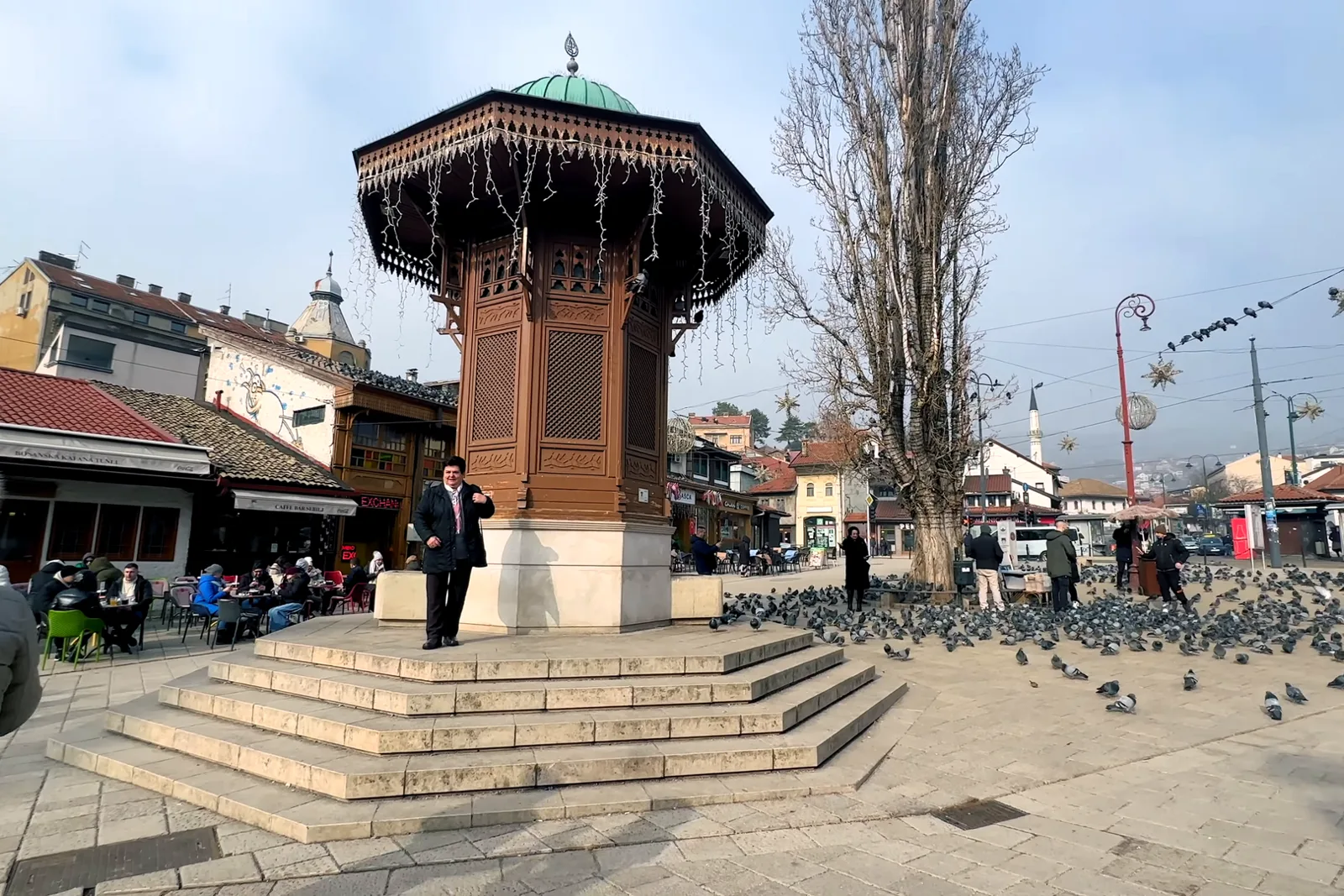
- Run the simple loop: Sebilj fountain and the pigeon square, Kazandziluk copper street, Morica Han courtyard, then the Gazi Husrev-beg complex.
- Step into a coppersmith's workshop rather than the souvenir frontage if you want a hand-made piece; the smiths still work on Kazandziluk.
- Sit for a Bosnian coffee served in the copper dzezva with lokum; it is a ritual, not a drink, and takes 20 minutes.
- Carry small KM cash: market stalls, coffee houses and the mosque entry are cash-first.
- Take tram 1, 3 or 4 to Bascarsija if coming from the station or the west end; the stop is named for the quarter.
The trap to avoid
The trap is treating the front row as the quarter: the lanes nearest the square repeat imported souvenir stock, while the working coppersmiths and the real coffee houses sit one street back. The other trap is timing; the same lanes that feel magical at 8 am are a queue by noon in season.
What to do instead
Why this verdict
The old town is not a backdrop to a Sarajevo trip; it is the reason the trip works. The bazaar has traded on these lanes since the 15th century, the copper smiths still hammer on Kazandziluk, and the coffee still comes in a dzezva as a ritual, not a drink. Reports land on the same word over and over: living. This is a market where locals shop, not a reconstruction for visitors.
When to walk it
Every complaint in the log is a clock problem. In season the lanes clog from late morning through mid-afternoon as the tour groups and day trippers stack in, and the same streets that feel magical at 8 am are a queue by noon. Go before 10:00 or after about 18:00 and the complaint disappears; the quarter is social late into the evening, and by night it belongs to locals drinking coffee again.
How to do it well
Almost everything is free or near-free: the streets cost nothing, the mosque and museum are 3 KM each, and the most expensive mistake is buying the imported souvenir rows instead of the working smiths. Run the loop rather than a wander: Sebilj fountain and the pigeon square, Kazandziluk for the working smiths (the real stock, not the imported souvenir rows one lane forward), Morica Han’s courtyard, and the Gazi Husrev-beg Mosque at 3 KM with its 3 KM museum beside it. Then sit down: a Bosnian coffee with lokum is 20 unhurried minutes and the single best use of time in the quarter. Small KM cash covers everything here. Combine it with a walking tour on day one if you want the history attached to the stones, and keep the evening for eating on Bravadziluk.
Book or check times
Gazi Husrev-beg Waqf tourist visits (mosque and museum entry)Beg's Mosque visitor informationCity tourism board arrival and orientation page
We earn a commission if you book through our links. It never changes a verdict. How this works
Check guided walking tour timespartner site
Where to stay
Staying in Sarajevo?
Bascarsija
Guest House KandiljCheck rates on Expediapartner siteBascarsija
Hotel Old SarajevoCheck rates on Expediapartner siteBascarsija
Halvat GuesthouseCheck rates on Expediapartner siteWhich area of Sarajevo to stay in, based on traveler reports. Search Sarajevo hotels on Expedia partner site
Questions
Is Bascarsija free to visit?
Yes, the streets, the Sebilj square and the market lanes are public and free. Only specific interiors charge: the Gazi Husrev-beg Mosque and its museum are 3 KM each.
How long do you need in the old town?
Reports put the compact loop at about 90 minutes; add a coffee ritual, a mosque visit and lunch on Bravadziluk and it fills a relaxed half day.
When is Bascarsija least crowded?
Before about 10:00 and after roughly 18:00. Midday in season is when the tour groups and day trippers pack the narrow lanes.
What is worth buying in the bazaar?
Handmade copper from the working smiths on Kazandziluk: a dzezva coffee pot or a tray, from about 15 to 20 BAM for a plain piece. Much of the front-row souvenir stock is generic.
Is the old town safe at night?
Reports describe the quarter as calm and social into the evening, with locals out for coffee. Normal city care applies; the bigger risk is slick cobbles, not crime.
Pack for it
Gear verdicts from our sister site, Real Buyer Experiences: