Fuerteventura / The verdict
Are the Corralejo dunes worth the trip?
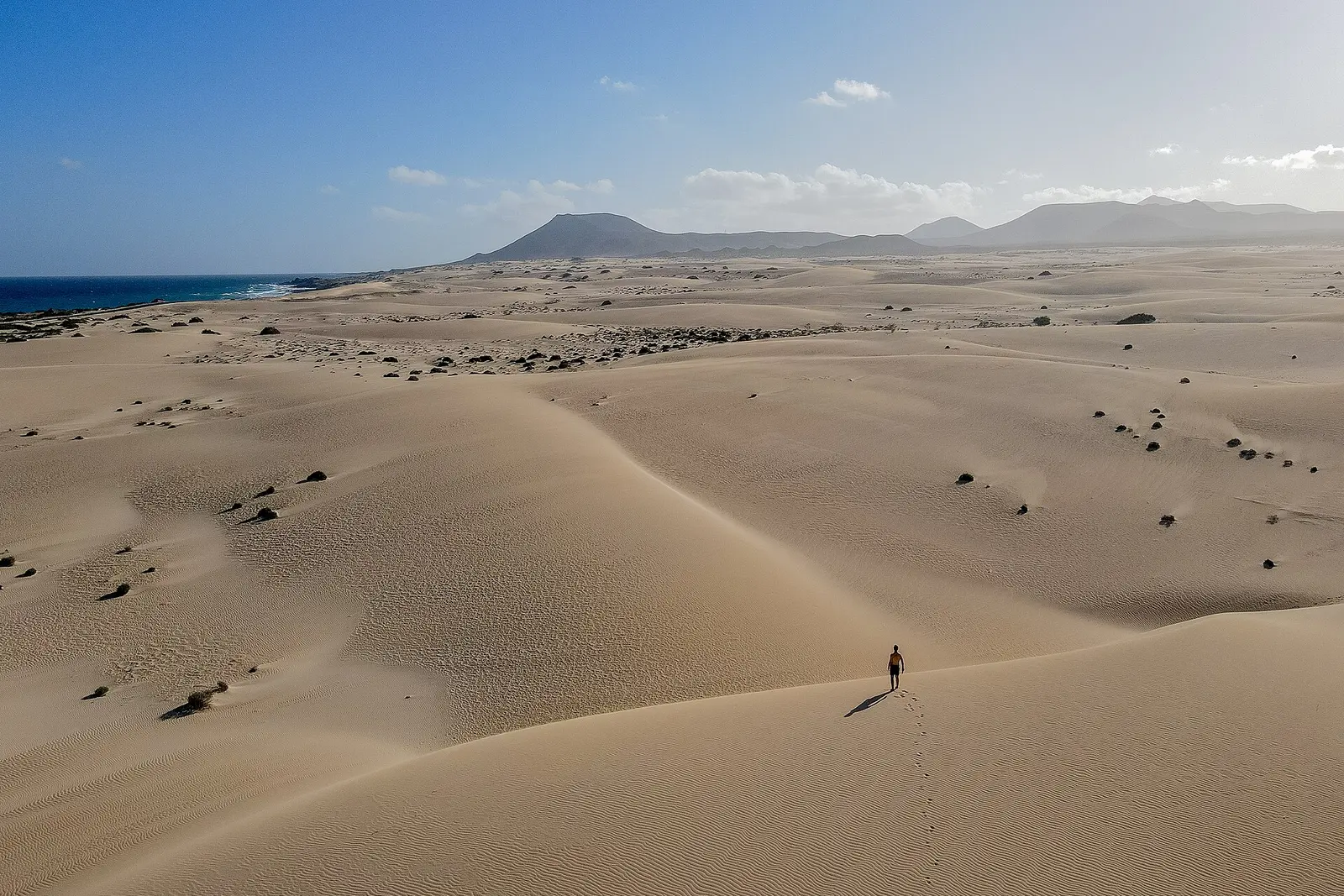
Yes: the largest dune field in the Canaries costs nothing to enter, rolls down to the Grandes Playas beaches and frames Lobos and Lanzarote, a landscape several reports call the island's one unmissable sight. Go early or late for the light, and keep swimming inside the flagged, lifeguarded stretches.
By The Real Traveler Experiences team.
The Fuerteventura story
Fuerteventura is the Canaries' beach island: the Corralejo dunes spilling into turquoise water, the Jandia peninsula hiding some of Europe's emptiest beaches behind an unpaved mountain road, and the Sotavento lagoons that made the island a wind and kite capital. If the trip is about sand and sea first, this is the best island in the archipelago for it.
The verdict in 30 seconds
Go
Yes: the largest dune field in the Canaries costs nothing to enter, rolls down to the Grandes Playas beaches and frames Lobos and Lanzarote, a landscape several reports call the island's one unmissable sight. Go early or late for the light, and keep swimming inside the flagged, lifeguarded stretches.
Go if
- You are staying in Corralejo or the north and want the island's signature landscape within minutes
- You want a free day mixing dune walking, photography and beach time
- You kite or windsurf; Flag Beach is the island's watersports hub
Skip if
- You need shade, services or guaranteed calm water; wind and currents are the rule here
- You want to roam the whole dune field; access keeps to delimited tracks and the beaches to protect the habitat
- You are chasing a serviced sunbed day; only the hotel-end stretches carry equipment
What it costs
- Corralejo Natural Park entry: €0 (Protected park and beaches are free and open; access on foot via delimited tracks and FV-1 parking bays). Official source, checked Oct 2026.
- Bus line 6, Puerto del Rosario to Corralejo: €3.40 (The transit option for car-free visitors; roughly every 15 to 30 minutes Monday to Saturday). Official source, checked Oct 2026.
What travelers report
Based on 12 traveler reports (Dec 2024 to Jul 2026) and the official sources linked on this page. 2 were negative.
What people like
- A genuine dune sea rolling to the Atlantic for free, the largest in the Canaries.
- Views across to Lobos and Lanzarote that reports keep calling postcard-grade.
- Grandes Playas gives kilometres of pale sand even at full occupancy.
- Flag Beach's kite and windsurf scene supplies the colour most photos miss.
- Montaña Roja caps the south end with the park's best viewpoint.
What people complain about
- Wind is constant; unweighted shelters fly and loose kit gets sandblasted.
- No shade, water or services on most of the field; carry everything in.
- Currents and rips are underestimated; a fatal drowning hit Corralejo in September 2025.
- Off-track wandering is banned across sensitive zones, frustrating roamers.
- Parking bays fill in season and roadside sand drifts onto the tarmac.
How to do it right
- Drive or bus up the FV-1; roadside parking bays line the park and line 6 links Puerto del Rosario to Corralejo for EUR 3.40.
- The classic access is straight over the sand from a parking bay to Grandes Playas; the stretch between the two pre-park hotels and Flag Beach is the busiest section.
- Flag Beach, closest to town, carries the kite and windsurf schools and hosts the annual kite festival; rock pools appear at low tide.
- The park's rules limit walking to delimited tracks inside the mobile dune field, so follow the beach or the marked crossings rather than the interior.
- Montaña Roja at the park's south end gives the panoramic shot over the field toward Lobos.
- Swim near the lifeguarded sections by the hotels; September 2025 saw a fatal drowning at a Corralejo beach, and reports flag currents plus sparse cover elsewhere on the open stretches.
The trap to avoid
Treating Grandes Playas as a safe swim-first beach. The Atlantic is open here, rip currents are real, lifeguard cover concentrates at the hotel end, and a man of about 50 drowned at Corralejo in September 2025 on the same day a man died at Cofete. Reports also warn the breeze that makes the dunes bearable will strip an unweighted shelter and burn uncovered skin fast.
Why this verdict
The dune field north-east of Corralejo is the island’s signature landscape and it costs nothing. About 2,600 hectares of pale, organogenic sand roll from the FV-1 down to nine kilometres of beach, with Lobos and Lanzarote framed offshore. Reports from every season describe the same thing: a place that reads like a desert at the roadside and a postcard at the waterline, with enough space that crowds dissipate.
The caveats are wind and water. The same trade wind that built the field keeps it moving and keeps visitors disciplined about shade: there is none, and loose kit gets sandblasted. Swimming is the bigger flag. The Atlantic here is open and lifeguard cover concentrates near the pre-park hotels; a man drowned at a Corralejo beach in September 2025, and the year’s island drowning toll drew repeated press coverage. The guidance across reports is consistent: swim the flagged, lifeguarded stretches and treat the rest as scenery.
The park’s rules limit walking to delimited tracks inside the mobile field, which reports say frustrates roamers but protects the habitat and the birds the Natura 2000 listing exists for. The compromise route most reports describe is simple: park at a roadside bay, cross to the beach on foot, walk the sand, and finish at Flag Beach for the kite show or Montaña Roja for the view.
Book or check times
Official tourism: Grandes Playas de CorralejoTiadhe line 6 timetable
Where to stay
Staying in Fuerteventura?
Which area of Fuerteventura to stay in, based on traveler reports. Search Fuerteventura hotels on Expedia partner site
Questions
Do you have to pay to visit the Corralejo dunes?
No. The natural park and the Grandes Playas beaches are free and open all day; keep to the delimited tracks and park in the roadside bays.
Is the sand really from the Sahara?
No. The Cabildo and guides describe it as organogenic: crushed shells and marine skeletons ground down over millennia and blown inland by the trade wind, which is also why the field keeps moving.
Can you swim at the dunes beaches?
Yes, with care. Swim at the lifeguarded stretches near the hotels; currents on the open stretches have caused drownings and rescues, including a fatality in September 2025.
How do you get there without a car?
Line 6 runs Puerto del Rosario to Corralejo for EUR 3.40 and line 8 links Corralejo with El Cotillo hourly; from town, Flag Beach is walkable and the deeper bays a bike or taxi hop.
When is the best time to visit?
Early morning or late afternoon for light, cooler sand and fewer footprints; wind rises through the day and there is no shade or water on the open field.
Why are two big hotels inside the park?
They predate the 1982 protection decree and stand as grandfathered exceptions; the building freeze since then is why the rest of the coast stays bare.
Pack for it
Gear verdicts from our sister site, Real Buyer Experiences: