Cordoba / The verdict
Are the Juderia and synagogue worth it?
Yes: the Juderia is the quarter you will wander anyway behind the Mezquita, and the tiny Mudejar synagogue on Calle Judios is free, takes about 15 minutes, and is one of only three medieval synagogues left in Spain. The reports that were underwhelmed expected a museum; the ones that loved it read the room slowly and walked the lanes without a checklist.
By The Real Traveler Experiences team. We earn a commission if you book through our links. It never changes a verdict.
The Cordoba story
Cordoba packs one of Europe's greatest monuments into a walkable, low-key city: the Mezquita's forest of columns alone justifies the trip, and the Juderia's lanes, the Alcazar gardens, the flower patios and a serious tapas culture fill the rest. It is calmer and cheaper than Seville or Granada.
The verdict in 30 seconds
Go
Yes: the Juderia is the quarter you will wander anyway behind the Mezquita, and the tiny Mudejar synagogue on Calle Judios is free, takes about 15 minutes, and is one of only three medieval synagogues left in Spain. The reports that were underwhelmed expected a museum; the ones that loved it read the room slowly and walked the lanes without a checklist.
Go if
- You want the classic Cordoba wander: whitewashed lanes, flower pots, hidden squares and the city's layered history in a few streets.
- You care about Sephardic heritage: this is one of three medieval synagogues surviving in Spain and the only one in Andalucia.
- You like free sights: the synagogue costs nothing and most of the quarter's landmarks are streets, not tickets.
- You are already at the Mezquita: the synagogue is three minutes away on foot.
Skip if
- You expect a large museum experience: the prayer hall is about 40 square meters and the whole visit runs 10 to 15 minutes.
- You travel only on Mondays, when the synagogue is closed except on holidays and holiday eves.
- You dislike tourist-souvenir streets: parts of Calle Judios and the lanes near the Mezquita are heavily commercialized.
- You are in Cordoba July 13 to 24 2026, when the synagogue is shut for stucco conservation works.
What it costs
- Cordoba Synagogue entry: €0 (free; open Tuesday to Sunday about 9:00 to 15:00, closed Mondays except holidays; closed for conservation July 13 to 24 2026). Official source, checked Oct 2026.
- Casa Andalusi museum, adult: €4 (restored 12th century house on Calle Judios; the combined ticket with the Alquimia museum is about 8 EUR). Official source, checked Oct 2026.
- Zoco artisan courtyard entry: €0 (municipal artisan souk on Calle Judios; free to browse, workshops and small shops inside). Official source, checked Oct 2026.
What travelers report
Based on 12 traveler reports (Dec 2024 to Sep 2026) and the official sources linked on this page. 1 was negative.
What people like
- The synagogue's survival story is the emotional core of the praise: converted to church, hospital and guild hall, its Hebrew inscriptions stayed hidden under plaster until 1884.
- The Mudejar stucco work covering the upper walls is repeatedly called intricate and unexpectedly moving for such a small room.
- The quarter itself wins almost everyone: reports describe the wandering as the best free thing in Cordoba, with the lanes quieter once you leave the Mezquita perimeter.
- Free entry is praised as rare and welcome next to the city's 13 to 15 EUR monument tickets.
- The concentration of small extras, the Zoco, Casa Andalusi, Casa de Sefarad and San Bartolome, is singled out as what turns a ten minute stop into a worthwhile morning.
What people complain about
- The size is the top complaint: travelers expecting a museum find a single small prayer room and are back on the street in minutes.
- The souvenir-shop density along Calle Judios reads as over-touristed to some reports, especially in peak season.
- Monday closures catch people planning a one day Cordoba stop, and the July 2026 conservation shutdown surprised summer itineraries.
- Pickpocket warnings around the Mezquita and Juderia lanes appeared in local coverage in late 2026.
- Signage and interpretation inside the synagogue are thin, which is why reports often recommend a guide or the Casa de Sefarad for context.
How to do it right
- Start at the Puerta de Almodovar and drift north through the lanes; the quarter is small enough that getting politely lost is the method rather than the problem.
- Do the synagogue mid-morning: it opens Tuesday to Sunday about 9:00 to 15:00, stays free, and takes 10 to 15 minutes to read the stucco walls and the women's gallery.
- Pair it with the private museums on the same street: Casa Andalusi at 4 EUR (8 with the Alquimia museum) and the Casa de Sefarad opposite Plaza Maimonides, which keeps Tuesday to Saturday hours.
- Check the closure calendar before a July 2026 trip: the synagogue shut July 13 to 24 for stucco conservation, and it closes Mondays year round except holidays.
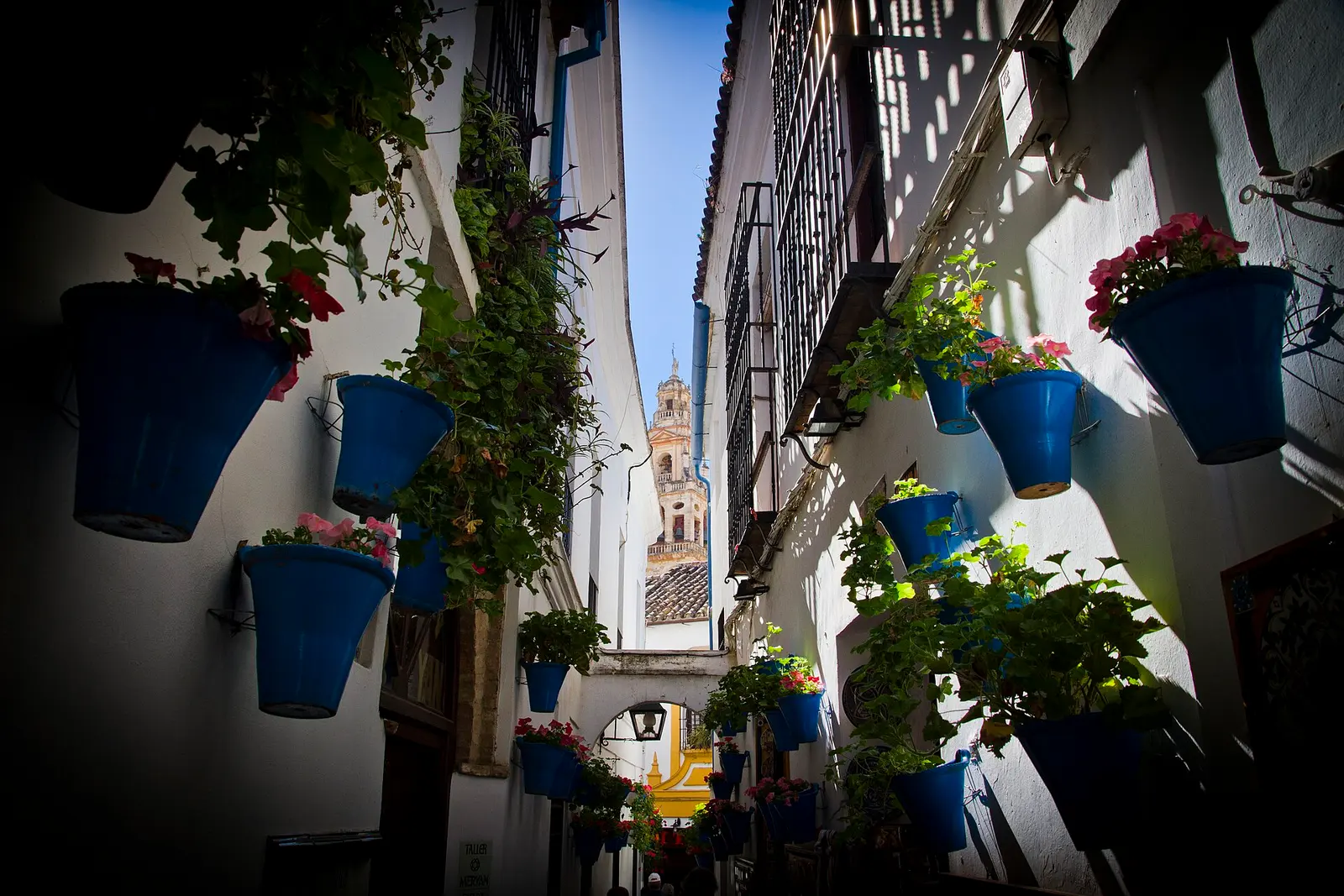
- Keep the visit in the flow of the Juderia rather than a dedicated trip; the reports that enjoyed it most combined the synagogue, the Zoco courtyard, Calleja de las Flores and a slow loop back to the Mezquita.
- Groups larger than six must request entry in advance through the Junta's ARES system, so keep the stop to individual visitors unless you have booked.
The trap to avoid
Expecting the synagogue to be the whole draw: it is a single exquisite room, so travelers who arrive just for it sometimes leave in ten minutes slightly deflated. The reports that rate the quarter highest treat the synagogue as the anchor inside a longer loop that also takes in the Zoco artisan courtyard, the Casa Andalusi and Casa de Sefarad, Plaza Maimonides and the Capilla de San Bartolome rather than a standalone stop.
What to do instead
Why this verdict
The Juderia answers two different questions. As a neighborhood, it is an easy go: the whitewashed lanes west of the Mezquita are the most characteristic walking in Cordoba, free by definition, and the reports agree that wandering without a plan is the right way to do them. As a monument, the synagogue needs expectation management: it is a single room of about 40 square meters built in 1315, and the visit is a 10 to 15 minute stop rather than an afternoon. But it is also the only medieval synagogue left in Andalucia, one of three in all of Spain, and it costs nothing, which makes it hard to argue against.
The history is the payoff. The prayer hall’s stucco walls and Hebrew inscriptions survived because the building spent five centuries as a church, a hospital and a guild hall, the original purpose only re-emerging in 1884 when a patch of plaster fell away. Reports that read the room slowly call it quietly moving; reports that expected a museum call it tiny. Both are right, which is why the verdict stays go: at free and 15 minutes, the risk is nil.
Build the stop into a loop instead of a destination: synagogue, then the Zoco artisan courtyard, Casa Andalusi or Casa de Sefarad, Plaza Maimonides, and the lanes back to the Calleja de las Flores. Note the practicalities: closed Mondays, 9:00 to 15:00 only, groups over six need advance clearance, and the monument shut July 13 to 24 2026 for stucco conservation while a new visitor center is built beside it.
If it is not for you
Travelers who measure sights in square meters should swap the stop for the patios or the Mezquita’s free morning hour; the lanes themselves will still be there on the walk back.
Book or check times
Synagogue hours and conservation newsJewish quarter on the city tourism siteCasa de Sefarad museum
We earn a commission if you book through our links. It never changes a verdict. How this works
See a Jewish quarter walking tourpartner siteSee a combined mosque and Juderia tourpartner site
Where to stay
Staying in Cordoba?
Which area of Cordoba to stay in, based on traveler reports. Search Cordoba hotels on Expedia partner site
Questions
Is the Cordoba synagogue worth visiting?
For most travelers yes, because it is free, central and historically singular: a 1315 Mudejar prayer hall, one of only three medieval synagogues left in Spain and the only survivor in Andalucia. The caveat is size: it is one small room and the visit runs about 10 to 15 minutes.
How much does the synagogue cost?
Nothing. Entry is free under the Junta de Andalucia, which manages the monument. Groups of more than six people need an advance request through the ARES system.
What else is there in the Juderia besides the synagogue?
The quarter itself is the sight: whitewashed lanes around Calle Judios, the Zoco artisan courtyard, Casa Andalusi, the Casa de Sefarad museum, Plaza Maimonides with its statue, the Capilla de San Bartolome, the Puerta de Almodovar and the Calleja de las Flores photo stop.
How long do you need in the Juderia?
Reports suggest 60 to 90 minutes for an unhurried loop including the synagogue and one small museum, more if you browse the artisan shops or stop for lunch on one of the squares.
Is the Juderia safe?
It is a busy tourist district and walkable at all hours, but September 2026 local coverage flagged recurring pickpocket complaints around the Mezquita and Juderia streets, so keep the usual city precautions: bag in front, phone off the cafe table.
Can you visit the synagogue on Monday?
No, except when the Monday falls on a holiday or the eve of one. Regular hours are Tuesday to Sunday about 9:00 to 15:00, with last entry shortly before closing.
Pack for it
Gear verdicts from our sister site, Real Buyer Experiences: