Vilnius / The verdict
Is a Hill of Crosses day trip from Vilnius worth it?
Depends on how much logistics friction you will tolerate: the hill is free, strange and moving for about an hour, but it sits two-plus hours from Vilnius with an awkward last leg, so the practical play is a guided round trip rather than piecing together trains and taxis.
By The Real Traveler Experiences team. We earn a commission if you book through our links. It never changes a verdict.
The Vilnius story
Vilnius keeps landing near the top of travelers' Baltic lists, and the reports agree on why: a UNESCO baroque [Old Town](/vilnius/vilnius-old-town/) you can cross on foot in twenty minutes, a cafe culture that stays local rather than tourist priced, and a self-declared artists' republic in [Uzupis](/vilnius/uzupis/) that visitors find either charming or twee. Cathedral Square anchors the city and nearly everything a short break needs sits within a fifteen-minute radius.
The verdict in 30 seconds
It depends
Depends on how much logistics friction you will tolerate: the hill is free, strange and moving for about an hour, but it sits two-plus hours from Vilnius with an awkward last leg, so the practical play is a guided round trip rather than piecing together trains and taxis.
Go if
- Travelers who collect unusual, specifically Lithuanian sights
- Photographers and anyone drawn to Soviet-era history and Catholic tradition
- Visitors who have already done the easy wins like Trakai and want the stranger one
Skip if
- You have only a day or two in Vilnius and want easy logistics
- You are on a tight budget and guided tours are out of reach
- Religious memorial sites are not your thing; the hill is the only real draw out there
What it costs
- Hill of Crosses entry: €0 (the official site confirms free entry year-round with no tickets required). Official source, checked Oct 2026.
- Hill of Crosses car parking: €1 (approximately 1 EUR per car per the official site; tour buses pay about 7 EUR). Official source, checked Oct 2026.
What travelers report
Based on 12 traveler reports (Oct 2024 to Sep 2026) and the official sources linked on this page. 0 were negative.
What people like
- Visitors across faiths describe the hill as moving and stranger than any photograph conveys.
- The site is free, open year-round, and the visitor center sells crosses to add to the hill.
- A guided tour turns an awkward two-leg transfer into an easy half-day with context included.
- The Soviet bulldozing history gives the place real weight, not just a photo op.
- Families report children loved buying and planting their own cross.
What people complain about
- The trip from Vilnius is long: over two hours each way plus a last leg that demands a taxi or a sparse bus.
- The hill rewards an hour at most, so the travel-to-site ratio is poor.
- Tour buses pack the car park midday in season and can crowd the mound.
- The return bus from the Domantai stop is infrequent and missing it gets expensive.
- Parking is paid and the machine setup trips up some drivers.
How to do it right
- Decide DIY versus guided first, because that choice drives the whole day: reports put guided round trips from Vilnius at about 35 to 60 EUR, while DIY means a roughly two-hour train to Šiauliai plus a taxi or the infrequent Joniškis-direction bus for the last 15 kilometers.
- If DIY, ride LTG Link to Šiauliai, then take a Bolt or taxi to the hill: one guide logged 11.90 to 13.80 EUR for the roughly 15-kilometer leg, far simpler than the bay-12 bus and the two-kilometer walk from the Domantai stop.
- Buy a cross in the visitor center if you want the full ritual: adding a cross to the hill is the point of the place for pilgrims, and visitors with kids describe it as the thing the children remember.
- Plan 45 to 90 minutes on the hill itself: even positive reports say it does not take long, so do not allocate a whole afternoon there.
- Go with a tour if the return leg matters: the bus back from the Domantai stop runs at long gaps and missing it turns a cheap day into an expensive taxi ride; guided trips bundle the drive, the hill and often Šiauliai or a memorial stop.
- Time it for early or late light if you care about photos: the car park fills with tour buses midday in season, and visitors describe golden hour as the atmosphere that makes the trip.
The trap to avoid
The last leg: the hill is free, but it sits 12 kilometers north of Šiauliai with sparse local buses, and the return run from the Domantai stop has wide gaps. Reports call the transport, not the sight, the hard part, and the cheap DIY option turns expensive the moment you miss a bus and pay for taxis both ways.
What to do instead
Why this verdict
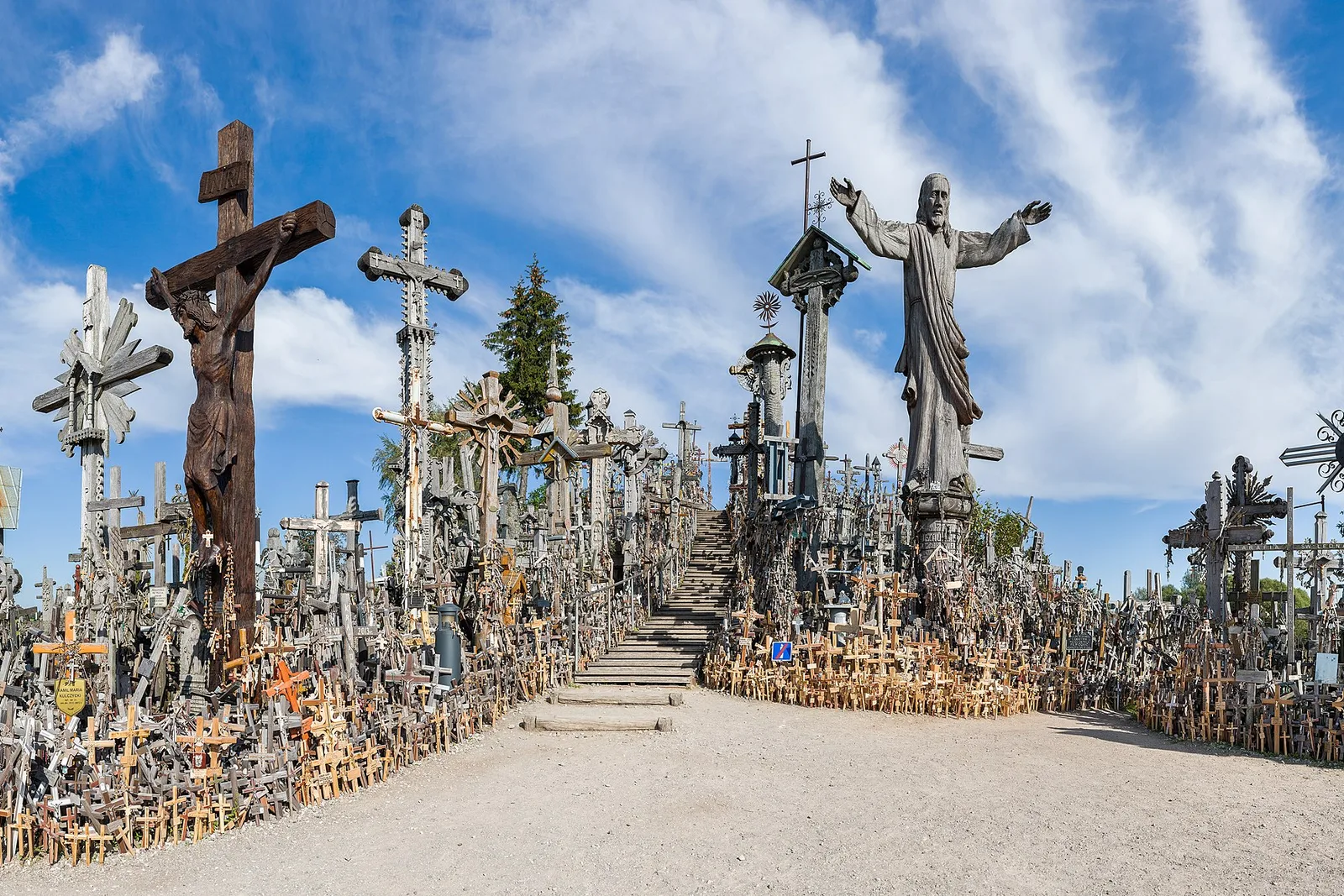
The Hill of Crosses is free, open all year and one of the strangest sights in the Baltics. Reports from believers, skeptics and photographers all land on the same verdict about the site itself: it is moving, more affecting than photos suggest, and it takes about an hour. The Soviet-era story of a hill bulldozed flat and replanted with crosses again and again gives the place its weight.
The catch is geography. The hill sits twelve kilometers north of Šiauliai, which is two-plus hours from Vilnius by train, and the last leg has no easy fix: a sparse local bus plus a two-kilometer walk, or a taxi. Reports that went DIY describe the return bus as the failure mode, and the cheap option turns expensive fast once taxis enter the picture both ways. Guided round trips run about 35 to 60 EUR and bundle the drive, the hill and often a second stop.
So the verdict splits on logistics. Travelers collecting unusual sights, photographers chasing golden-hour light, and anyone drawn to the Catholic and Soviet history should go, ideally on a tour that owns the transport. Budget purists, rushed itineraries and anyone lukewarm on religious sites should let this one go or save it for a Baltics road trip.
Timing and tickets
There is no ticket: entry is free year-round and the only cost on the official price page is parking, about 1 EUR per car. The practical money is transport: a train to Šiauliai runs a few hours each way at roughly 9 to 14 EUR in reports, the local taxi leg about 12 EUR, and guided tours 35 to 60 EUR. The visitor center keeps posted hours and sells crosses if you want to add one to the hill.
Book or check times
Hill of Crosses official prices and entry infoOfficial Šiauliai district directions pageLTG Link Vilnius to Šiauliai timetable
We earn a commission if you book through our links. It never changes a verdict. How this works
See Hill of Crosses day trips from Vilniuspartner siteSee the full-day Hill of Crosses tourpartner site
Where to stay
Staying in Vilnius?
Which area of Vilnius to stay in, based on traveler reports. Search Vilnius hotels on Expedia partner site
Questions
How do you get from Vilnius to the Hill of Crosses?
The usual routes are a roughly two-hour LTG Link train to Šiauliai then a taxi or the Joniškis-direction bus from bay 12 for the last 15 kilometers, or a guided day trip that handles the whole transfer; reports put guided options around 35 to 60 EUR and note the DIY return buses are infrequent.
Is the Hill of Crosses free to visit?
Yes: the official site confirms free entry year-round with no ticket required; the only visitor cost is parking at about 1 EUR per car.
How long do you need at the Hill of Crosses?
About 45 to 90 minutes covers the hill, the paths and the visitor center for most travelers; even enthusiastic reports say the site does not take long, so the day is mostly travel.
Is a Hill of Crosses day trip worth it from Vilnius?
For travelers drawn to unusual, specifically Lithuanian sights, yes: reports consistently call it moving and strange in a good way. For everyone else the depends verdict holds, because two-plus hours each way for an hour on the hill only makes sense with a tour doing the driving.
Can you visit the Hill of Crosses without a car or a tour?
Yes, but it is the fiddly version: train to Šiauliai, then a Bolt around 12 EUR or a local bus plus a two-kilometer walk, with the return bus the weak link; several guides explicitly recommend the guided route for that reason.
Why is the Hill of Crosses significant?
The hill is a pilgrimage site where Lithuanians have planted crosses for generations, bulldozed repeatedly under Soviet rule and rebuilt each time; reports highlight that history as what elevates it beyond a roadside curiosity.
Pack for it
Gear verdicts from our sister site, Real Buyer Experiences: