Madeira / The verdict
Are Funchal old town and Mercado dos Lavradores worth seeing?
Yes, as a free walk: the painted doors and small restaurants of Rua de Santa Maria are worth an easy hour, and the market is worth a look. The one rule the news coverage agrees on: admire the fruit stalls, buy nothing.
By The Real Traveler Experiences team. We earn a commission if you book through our links. It never changes a verdict.
The Madeira story
Madeira earns its reputation as the island where a proper city, serious mountains and a working laurel forest sit forty minutes apart. Funchal is a real place rather than a resort set, the levada walks and sea cliffs are as good as the brochures claim, and the mild spring-like climate is not marketing: travelers swim and hike in the same week in November.
The verdict in 30 seconds
Go
Yes, as a free walk: the painted doors and small restaurants of Rua de Santa Maria are worth an easy hour, and the market is worth a look. The one rule the news coverage agrees on: admire the fruit stalls, buy nothing.
Go if
- You have a morning or evening free in central Funchal
- You like street art, photography and working neighborhoods over ticketed sights
- You want a casual dinner on a cobbled street of small restaurants
Skip if
- You only have time for levada walks or the gardens on a short stay
- You find hard-sell vendor pressure stressful rather than easy to ignore
- You plan to buy fruit and souvenirs at the market and cannot walk away from an unmarked price
What travelers report
Based on 5 traveler reports (Jan 2025 to Oct 2025) and the official sources linked on this page. 3 were negative.
What people like
- The painted doors along Rua de Santa Maria form an ever-changing open-air gallery, with more than 100 artists contributing since the 2010 project began.
- The cobbled street is lined with small restaurants and cafes, which makes it an easy place to end a day in Funchal.
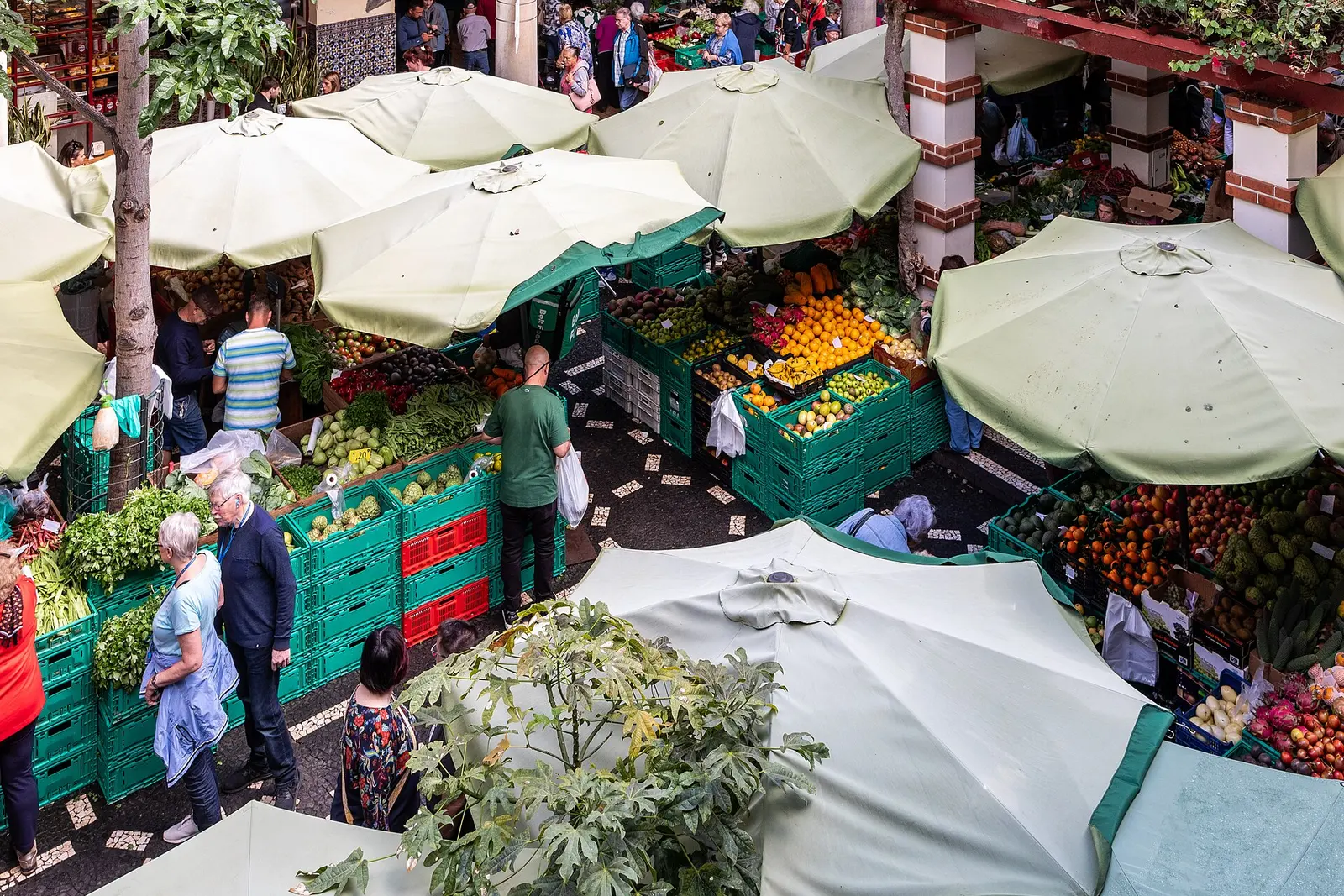
- The market sits in the center of Funchal and is the island's best-known place for fresh and tropical produce.
What people complain about
- Market fruit stalls are a documented tourist trap: unmarked prices and news-reported bills of EUR 72 to EUR 151 for small bags of fruit.
- One news report puts prices up to EUR 89 per kilo, and a visitor quoted in it was billed almost EUR 10 for three small items after a sampling pitch.
- Readers commenting on the EUR 72 story add an older EUR 58 bill and a guide's advice never to buy fruit there, so the pattern is not new.
- Rua de Santa Maria is not closed to traffic: one visitor describes it as pedestrian-friendly with some car traffic.
How to do it right
- Walk Rua de Santa Maria to see the painted doors, and plan dinner at one of the small restaurants along it.
- Check the market's official hours before you go: Monday to Thursday 07:00 to 19:00, Friday 07:00 to 20:00, Saturday 07:00 to 14:00, closed Sunday.
- Look at the fruit stalls but buy nothing: coverage documents unmarked prices and bills such as EUR 72 for six fruits, and a visitor quoted in it found the same items for less at a shop across the road.
- If you want fruit, buy it at an ordinary shop and ask for the price before anything is weighed.
- Expect some car traffic on Rua de Santa Maria; it is a cobbled street, not a closed pedestrian zone.
The trap to avoid
Buying fruit at Mercado dos Lavradores. Local news has documented tourists paying EUR 72 for six fruits and EUR 151.10 for one bag, stalls without marked prices and a sampling pitch that ended in a bill of almost EUR 10 for three small items. Browsing the stalls costs nothing; the fruit business is the documented trap.
Why this verdict
The case for going is simple: the old town costs nothing to walk and the street is lively. Two traveler blogs describe Rua de Santa Maria’s painted doors as a rewarding walk, lined with small restaurants and cafes, and the project behind them, begun in 2010 with more than 100 artists, is the reason the street feels lived in rather than staged.
The Mercado dos Lavradores splits the log. It is the island’s best-known fresh-produce market and sits in the center of Funchal, but the fruit stalls are a documented trap: local news has recorded a EUR 151.10 fruit bill, a EUR 72 six-fruit bill in October 2025 and unmarked prices, and readers add older cases. That record is consistent enough that the advice travels with the visit: walk the market, then buy your fruit in an ordinary shop.
Timing and tickets
Nothing here takes a ticket. The official market hours are Monday to Thursday 07:00 to 19:00, Friday to 20:00 and Saturday to 14:00, closed Sunday. The street is open at all hours; the restaurants set the evening pace.
Book or check times
Mercado dos Lavradores (official tourism page)
We earn a commission if you book through our links. It never changes a verdict. How this works
See guided old town walkspartner siteSee food and wine tourspartner site
Where to stay
Staying in Madeira?
Which area of Madeira to stay in, based on traveler reports. Search Madeira hotels on Expedia partner site
Questions
How much does it cost to visit the old town and the market?
Walking the old town streets costs nothing. Your costs come from what you eat, drink or buy, and market fruit is the documented rip-off to avoid.
What are the Mercado dos Lavradores opening hours?
The official tourism board lists Monday to Thursday 07:00 to 19:00, Friday 07:00 to 20:00 and Saturday 07:00 to 14:00, closed Sundays.
Is it true that vendors overcharge tourists at the market?
Local news coverage says yes, repeatedly. It documents unmarked prices, a bag of fruit billed at EUR 151.10 and a group charged EUR 72 for six fruits in October 2025, and readers add older incidents. The standard advice: browse the market, buy fruit elsewhere.
Is the old town pedestrian-only?
No. One visitor describes Rua de Santa Maria as a pedestrian-friendly cobblestone street with some car traffic. It is still an easy walk, just not a closed pedestrian street.
What are the painted doors?
A street-art project begun in 2010 on Rua de Santa Maria, where more than 100 artists painted old doors. Visitors describe the art as ever-changing, with new work still appearing.