Gran Canaria / The verdict
Are the Maspalomas dunes worth it?
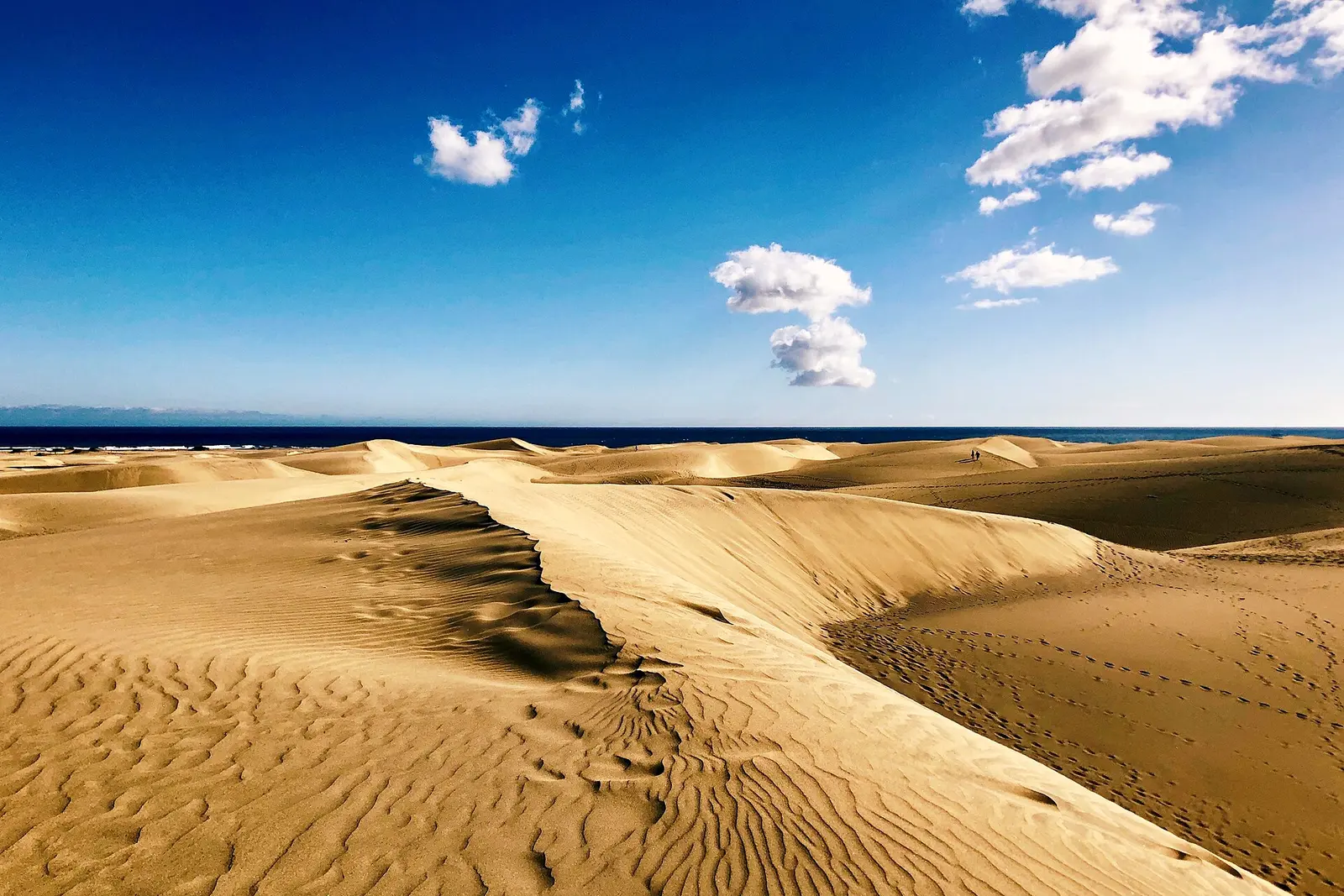
Yes, for most visitors: the dunes are the island's signature landscape, a free protected reserve you enter on foot and explore for as long as the light holds. The real cost is the rules, because access is limited to marked paths and off-trail walking draws fines, plus midday sand that gets brutally hot.
By The Real Traveler Experiences team. We earn a commission if you book through our links. It never changes a verdict.
The Gran Canaria story
Gran Canaria packs a continent's worth of terrain into one small island: the Saharan dune field at Maspalomas meeting the ocean in the south, a capital city with a real old town and a surfable urban beach at Las Canteras in the north, and a mountainous interior of pine forest, ravines and the Roque Nublo monolith. It is the most complete Canary after Tenerife and has the best city in the archipelago.
The verdict in 30 seconds
Go
Yes, for most visitors: the dunes are the island's signature landscape, a free protected reserve you enter on foot and explore for as long as the light holds. The real cost is the rules, because access is limited to marked paths and off-trail walking draws fines, plus midday sand that gets brutally hot.
Go if
- You are staying in Maspalomas, Meloneras or Playa del Inglés and can walk in
- You want one signature Gran Canaria photo stop without paying an entry fee
- You enjoy a long beach walk and have 1 to 3 hours for the Playa del Inglés to lighthouse crossing
Skip if
- You cannot shift out of midday; there is no shade and the sand burns
- You want to climb and roam freely; off the marked paths is prohibited and wardens do fine
- Windy days bother you; trade winds can whip the sand uncomfortably
What it costs
- Dunas de Maspalomas reserve entry: €0 (Reserva Natural Especial covering about 404 hectares; open around the clock on the marked paths). Official source, checked Oct 2026.
- Camel ride, adult: €18 (children 3 to 12 pay EUR 13 and babies ride free; 09:15 to 14:15 daily, last admission 14:15). Official source, checked Oct 2026.
What travelers report
Based on 12 traveler reports (Jan 2025 to Aug 2026) and the official sources linked on this page. 1 was negative.
What people like
- A genuine dune sea rolling to the Atlantic, free to enter and open all hours.
- The Mirador de las Dunas viewpoint by Hotel Riu gives the classic panorama within minutes of parking.
- The Playa del Inglés to lighthouse crossing makes a memorable 1 to 2 hour beach walk.
- Sunrise and late light turn the ridges gold and empty; several reports call it the island's best free sight.
What people complain about
- No shade anywhere on the open dunes, and midday sand heat is punishing.
- Large cordoned areas frustrate visitors who expect to roam and climb freely.
- Wardens enforce the rules; off-trail walking has drawn hundreds of fines in a single year.
- Evenings pack the main crests with sunset crowds, and every ridge is covered in footprints by then.
How to do it right
- Start at the Mirador de las Dunas beside Hotel Riu Palace Maspalomas for the classic first view, then take the marked path down between the cordoned areas.
- Alternative entries: the Faro de Maspalomas side for the lagoon end, or the Paseo Costa Canaria from Playa del Inglés to come in over the crests.
- If walking the full Playa del Inglés to lighthouse crossing, allow about 1 to 2 hours on foot through the sand and back along the waterline.
- Bring water, a hat and sun protection; reports and signs agree there is no shade and the sand gets hot fast after mid-morning.
- Drivers can use the free lot by the Cita shopping centre for the Riu-side entry, or paid parking near the lighthouse and Anexo II.
- For the camel ride, head to the station on Paseo Charca behind the dunes; mornings only, last admission 14:15, and reports suggest pre-booking in season.
The trap to avoid
Treating the reserve as an open sandbox. Large stretches are fenced or cordoned for regeneration, and authorities handed out hundreds of fines for off-trail walking in one recent year; stick to the marked paths and the open sand they lead to.
Why this verdict
Every recent account lands on the same side: the dunes are the one sight in the south nobody should skip, and they cost nothing. The reserve covers about 404 hectares of protected sand running from the resort strip to the Atlantic, and reports describe the first crests at the Riu viewpoint producing genuine surprise even in visitors who expected a photo stop and nothing more. Several guides rank it the island’s best free sight outright.
The catches are real but manageable. Much of the field is cordoned for regeneration, and this is enforced: regional press counted 632 island environmental fines in 2024, around a third of them for people leaving the marked paths in the dunes. The practical read is that you walk the signposted corridors and the open-sand crossing between Playa del Inglés and the lighthouse, which is still plenty of dune to feel remote.
Timing matters more than anything. Midday brings punishing sand heat with zero shade, and by evening the popular crests carry both crowds and footprints; one photographer recommends early morning instead, when the night wind has reset the ridges. Windy days whip the sand, so check the forecast. The camel ride is the classic add-on at EUR 18 per adult, mornings only from the Paseo Charca station, with a last admission at 14:15.
Timing and tickets
Entry is free at all hours. Plan 1 to 2 hours for the Playa del Inglés to lighthouse crossing, or 20 minutes for the viewpoint and first ridge. For the camels, go before the 14:15 last admission and consider pre-booking in season.
Book or check times
Official reserve page: Dunas de MaspalomasCamello Safari official bookingGlobal bus timetables
We earn a commission if you book through our links. It never changes a verdict. How this works
See the camel ridepartner site
Where to stay
Staying in Gran Canaria?
Which area of Gran Canaria to stay in, based on traveler reports. Search Gran Canaria hotels on Expedia partner site
Questions
Do you have to pay to enter the Maspalomas dunes?
No. The reserve is free and open around the clock; you just keep to the marked paths and the open-sand crossing routes.
Can you walk anywhere in the dunes?
No. Much of the reserve is cordoned off for dune regeneration and bird habitat, and off-trail walking is prohibited; island authorities issued hundreds of fines in a single year, many for leaving the paths.
How long do the dunes take?
An hour covers the viewpoint and a wander on the first crests. The full crossing between Playa del Inglés and the lighthouse takes about 1 to 2 hours, and a golden-hour visit easily fills 2 to 3.
When is the best time of day?
Early morning and late afternoon. One photography report points out that evening dunes are full of footprints and crowds; the wind wipes the ridges clean overnight, so sunrise gives cleaner photos.
Is the camel ride worth adding?
If you want the novelty, yes: the official operator charges EUR 18 per adult and EUR 13 for children 3 to 12, runs mornings only with last admission at 14:15, and the ride lasts about 30 to 35 minutes.
Can you reach the dunes by bus?
Yes. Reports list Global lines stopping at Faro de Maspalomas and beside Hotel Riu; from Las Palmas, line 30 reaches the lighthouse in about 75 minutes and line 50 serves Playa del Inglés in about 45.
Pack for it
Gear verdicts from our sister site, Real Buyer Experiences: