Bologna / The verdict
Bologna or Florence?
See both if you can: they sit 37 to 40 minutes apart by fast train from 9.90 EUR. If you must pick one, Bologna wins for food, value and breathing room, while Florence wins when the Renaissance icons are the point of the trip.
By The Real Traveler Experiences team. We earn a commission if you book through our links. It never changes a verdict.
The Bologna story
Bologna is Italy's food-first city: medieval towers above a grid of porticoes, the oldest university in Europe, and a market quarter where the aperitivo board counts as dinner. The portico network makes walking painless in any weather, the food scene deserves its reputation, and the city works as a trip of its own or the tastiest stop on a Milan to Florence run.
The verdict in 30 seconds
Our pick: Both cities by train (runner-up: Florence)
See both if you can: they sit 37 to 40 minutes apart by fast train from 9.90 EUR. If you must pick one, Bologna wins for food, value and breathing room, while Florence wins when the Renaissance icons are the point of the trip.
Go if
- You are torn between food culture and headline art and want a concrete answer for your trip
- You have four or more days and can reasonably see both cities properly
- You are deciding whether to day-trip from one base or split nights between the two
Skip if
- You have already seen Florence's big sights and want the full comparison anyway
- You expect a single right answer for every traveler regardless of what they came to Italy for
- You are set on Venice or Rome and neither city is on your route
The options
Bologna It depends
Food-first travelers, repeat Italy visitors and anyone who wants an atmospheric, lived-in city with the region's best rail links and far fewer crowds.
Good
- Reports call it Italy's food capital, with markets, trattorie and a strong everyday street life around the porticoes.
- Stays notably calmer than Florence: most sights are free or under 15 EUR and rarely sell out.
- Works as the region's rail hub for easy day trips to Modena, Ravenna, Parma and beyond.
Watch out
- Has no single blockbuster sight on the level of Florence's art, which can disappoint travelers chasing icons.
- Feels quieter and less polished around the edges, which some travelers read as ordinary.
- Its headline climb, the Asinelli tower, has been closed while the neighboring tower is stabilized, per a 2026 guide.
Bologna official tourism siteSee hotel options in Bolognapartner site
Florence It depends
First-time Italy visitors who came for the Renaissance: the Uffizi, the Duomo and Michelangelo's David and who accept the price and crowd load that comes with them.
Good
- Packs more world-famous art into a few streets than almost anywhere in Europe, which is why it stays on the classic itinerary.
- Rewards a structured trip: book ahead and the masterpieces are reachable in a couple of days.
- Offers the classic Tuscany base for travelers continuing to Pisa, Siena or Chianti.
Watch out
- Carries heavy crowds and booking pressure: marquee sights need tickets booked weeks ahead in season.
- Costs more at every level, from 25 to 30 EUR marquee tickets to the region's highest hotel rates.
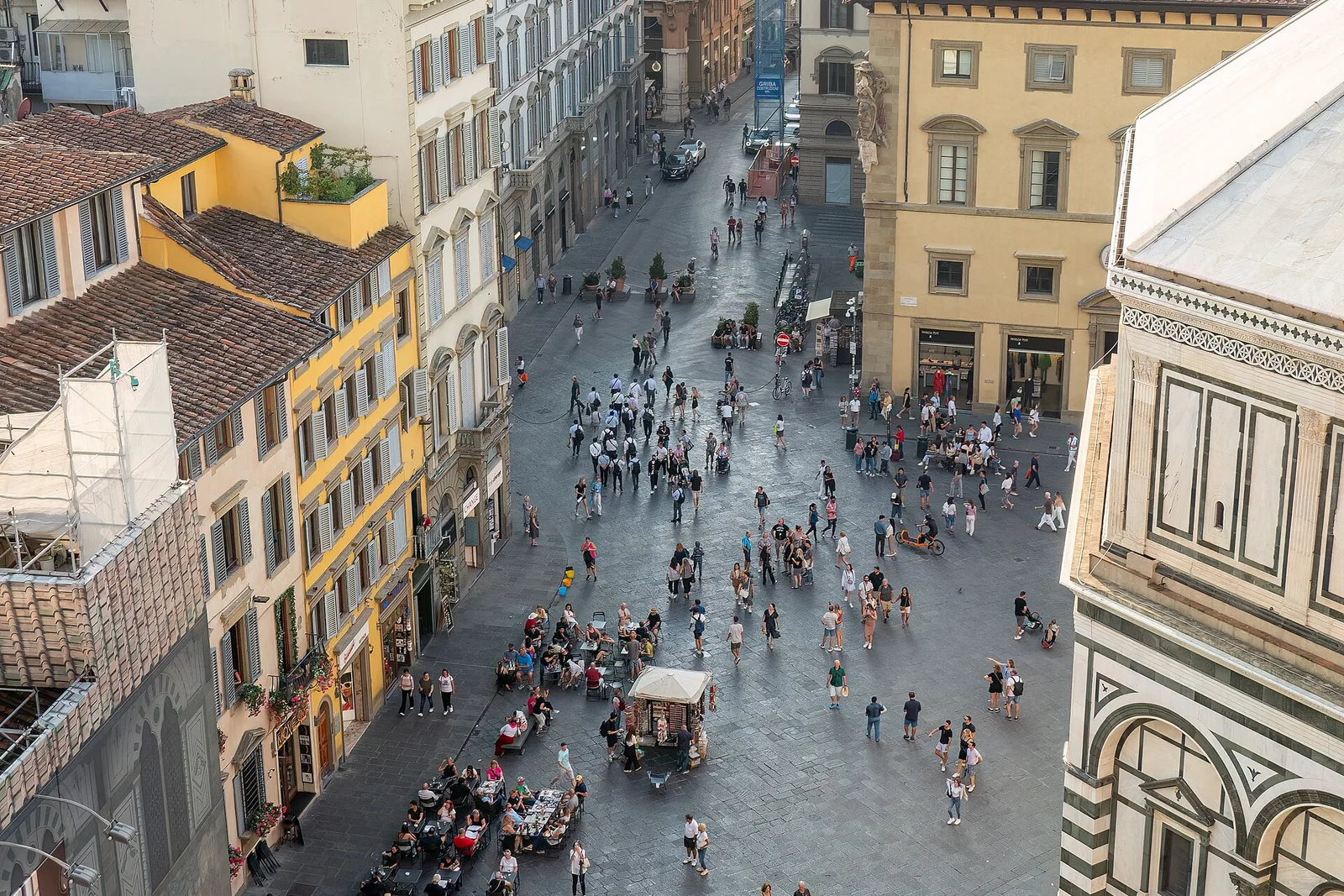
- Several reports describe the center as feeling overwhelmed by mass tourism, with queue fatigue a real factor.
Uffizi Galleries official ticketsFlorence Duomo complex official ticketsSee hotel options in Florencepartner site
Both cities by train Go
Anyone with four or more days: the cities are 37 to 40 minutes apart by fast train, so splitting or day-tripping gets you both experiences properly.
Good
- The fast train takes 37 to 40 minutes from 9.90 EUR, making this the easiest two-city pairing in Italy.
- Bases in one city with a day trip in the other work well: Bologna's cheaper rooms offset a Florence visit.
- Gets you the food and the art without compromise, which is what most comparisons end up recommending.
Watch out
- Requires enough days to do both justice; squeezing both into a weekend shortchanges each.
- Means managing two centers rather than settling into one, which slower travelers may not want.
- Still requires advance bookings for the Florence side.
A one-night stop in each city Skip
Nobody: one night per city means arriving, queuing and leaving before either place shows itself properly.
Good
- Covers both cities on paper for travelers who feel they must see everything.
Watch out
- Leaves no time for the unhurried wandering both cities reward, with check-ins and luggage transfers eating the day.
- Florence's timed-sight system and Bologna's evening food culture both need more than a single evening to land.
- Reports consistently advise picking a base or splitting longer rather than stacking one-night stops.
| Criterion | Bologna | Florence | Both cities by train | A one-night stop in each city |
|---|---|---|---|---|
| Signature draw | Food culture and the porticoes | The Renaissance icons | Both, properly done | Neither city properly |
| Crowd level reports describe | Lively but manageable | Heavy in season, with booked-out slots | One calm city, one busy one | Rushed through both |
| Booking pressure | Low; most sights are walk-up | High; marquee sights sell out weeks ahead | Managed with early Florence bookings | Highest risk of missed sights |
| Cost of marquee sights | Mostly free or under 15 EUR | 25 to 30 EUR each on the day | Both price tiers in one trip | Same spend, less time |
| Days needed to do it justice | 1 to 2 days | 2 to 3 days | 4 days or more | More than one night each |
| Day-trip rail links | Hub for Emilia-Romagna: Modena, Ravenna, Parma | Hub for Tuscany: Pisa, Siena, Lucca | 37 to 40 minutes apart on the fast line | Time lost to transfers |
What it costs
- Italo high-speed train, Bologna Centrale to Florence SMN, one way: €9.90 (from 9.90 EUR booked ahead; about 37 minutes; roughly 32 trains a day; Trenitalia fast trains take about 40 minutes). Official source, checked Oct 2026.
- Uffizi Gallery, Florence: €25 (25 EUR on the day; 29 EUR booked in advance). Official source, checked Oct 2026.
- Brunelleschi Pass, Florence Duomo complex: €30 (dome climb, bell tower, museum, Baptistery and Santa Reparata; Baptistery mosaics currently under restoration). Official source, checked Oct 2026.
- San Luca Express tourist train, Bologna, adult round trip: €15 (Bologna's marquee paid outing; the portico walk itself is free). Official source, checked Oct 2026.
What travelers report
Based on 13 traveler reports (Jun 2025 to Jul 2026) and the official sources linked on this page. 1 was negative.
What people like
- Bologna's food culture and relaxed pace draw the most enthusiastic comparisons, especially from travelers returning to Italy.
- Florence's art draws get universal respect, with travelers calling the Uffizi and Duomo worth the effort despite the crowds.
- The 37-minute train link makes the both-cities plan feel easy in practice, reports say.
- Travelers praise Bologna's lower prices and lack of booking stress across every category.
What people complain about
- Florence's crowds and sold-out time slots are the most repeated complaint, with mass tourism squeezed into a small center.
- Bologna can read as ordinary to travelers expecting Tuscan postcards and big-name sights.
- Florence's costs rank highest in the comparison, from 30 EUR passes to the region's top hotel rates.
- Squeezing both into short stays leaves travelers feeling they saw neither city properly.
How to do it right
- Base yourself in the city that matches your reason to go: Florence for art-first trips, Bologna for food-first or hub-and-spoke day trips.
- If doing both, book the Florence marquee sights first: Uffizi slots and the Brunelleschi Pass are the pieces that sell out.
- Take the fast train between them: 37 to 40 minutes from 9.90 EUR on Italo, or about 40 minutes on Trenitalia's faster services.
- Give each city at least two nights if splitting stays, or base in Bologna and day-trip Florence to keep hotel costs down.
- Skip the one-night-each approach: it buys arrival days in two cities instead of time in either.
The trap to avoid
Treating the choice as either-or and squeezing both into a weekend. The pairing only works at its 37-minute distance if each city gets real time; a night in each is the version reports warn against.
What to do instead
Why this verdict
The evidence splits cleanly along what the traveler came for, which is why the pick is to do both rather than crown a winner. The reports that favor Bologna do so on food, price and elbow room: they describe a lived-in city where meals, markets and the porticoes are the sights, with almost nothing requiring an advance slot. The reports that favor Florence concede every one of those points and still reach for it, because the Uffizi, the Duomo and the David are sights that exist nowhere else and that is what many trips are for.
The practical case for the both-cities option is the distance. At 37 to 40 minutes on the fast line from 9.90 EUR, this is the easiest pairing in Italy, and reports describe day-tripping between them as routine. That makes the pick structural rather than hedged: with that link, the only real constraint is time, which is why the verdict goes to the four-plus-day version and the one-night-each version is the skip.
For travelers forced to choose, the log’s clearest answer is that Florence earns it for a first Italy trip, since the art is the reason to go and the crowds are a solvable problem with bookings. Bologna earns it for repeat visitors and food-first travelers, where the quieter streets and lower prices are the prize rather than the compromise.
Timing and tickets
Florence is the side that books out: the Uffizi runs 25 EUR on the day and 29 EUR in advance, and the Brunelleschi Pass is 30 EUR, with the Baptistery’s mosaics currently under restoration. Bologna needs almost no booking: its marquee paid outing, the San Luca Express, is 15 EUR and most of the rest is free. The fast train between them runs from 9.90 EUR on Italo, with roughly 32 daily departures.
Book or check times
Italo official tickets, Bologna to FlorenceUffizi Galleries official ticketsFlorence Duomo complex official ticketsBologna official tourism site
We earn a commission if you book through our links. It never changes a verdict. How this works
See hotel options in Bolognapartner siteSee hotel options in Florencepartner site
Questions
Which city is better for food?
Bologna, and it is the point the reports agree on most. The markets, trattorie and food-tour culture around the Quadrilatero are why travelers pick it, while Florence's food scene, though good, is not the reason anyone chooses it.
Which city is better for a first trip to Italy?
Florence for most first-timers, because the Renaissance sights are the reason to go. Reports suggest Bologna suits a second visit or travelers who care more about atmosphere and eating than checking off masterpieces.
How far apart are they and what does the train cost?
The cities sit about 37 to 40 minutes apart on the fast lines. Italo advertises fares from 9.90 EUR booked ahead on the Bologna to Florence route, and Trenitalia runs fast services on the same corridor.
Which city is cheaper?
Bologna, across the board. Its marquee paid sights top out around 15 EUR versus 25 to 30 EUR in Florence, hotels run cheaper and the food culture costs less per day. A news report links Florence's crowds to a mass-tourism squeeze on prices too.
Can you day-trip between Bologna and Florence?
Yes, and it is the recommended alternative to splitting nights. At 37 to 40 minutes each way, either city works as a base; Bologna's cheaper rooms make it the more economical base for a Florence day visit.
Is Florence really that crowded?
Reports say yes in season, particularly around the Uffizi and Duomo. A 2026 travel vlog and several guides describe queue fatigue and booked-out slots, though booking ahead and starting early are the workarounds the same reports recommend.