Santiago de Compostela / The verdict
Where to stay in Santiago: which area?
Stay in the Casco Antiguo, the walled old town around the cathedral: every guide puts first-timers there for the walkable sights, the tapas streets and the pilgrim-energy evenings. Pick El Ensanche for quieter nights, easier parking and better-value rooms ten minutes out, or San Pedro for a calmer neighborhood on the Camino's last approach.
By The Real Traveler Experiences team. We earn a commission if you book through our links. It never changes a verdict.
The Santiago de Compostela story
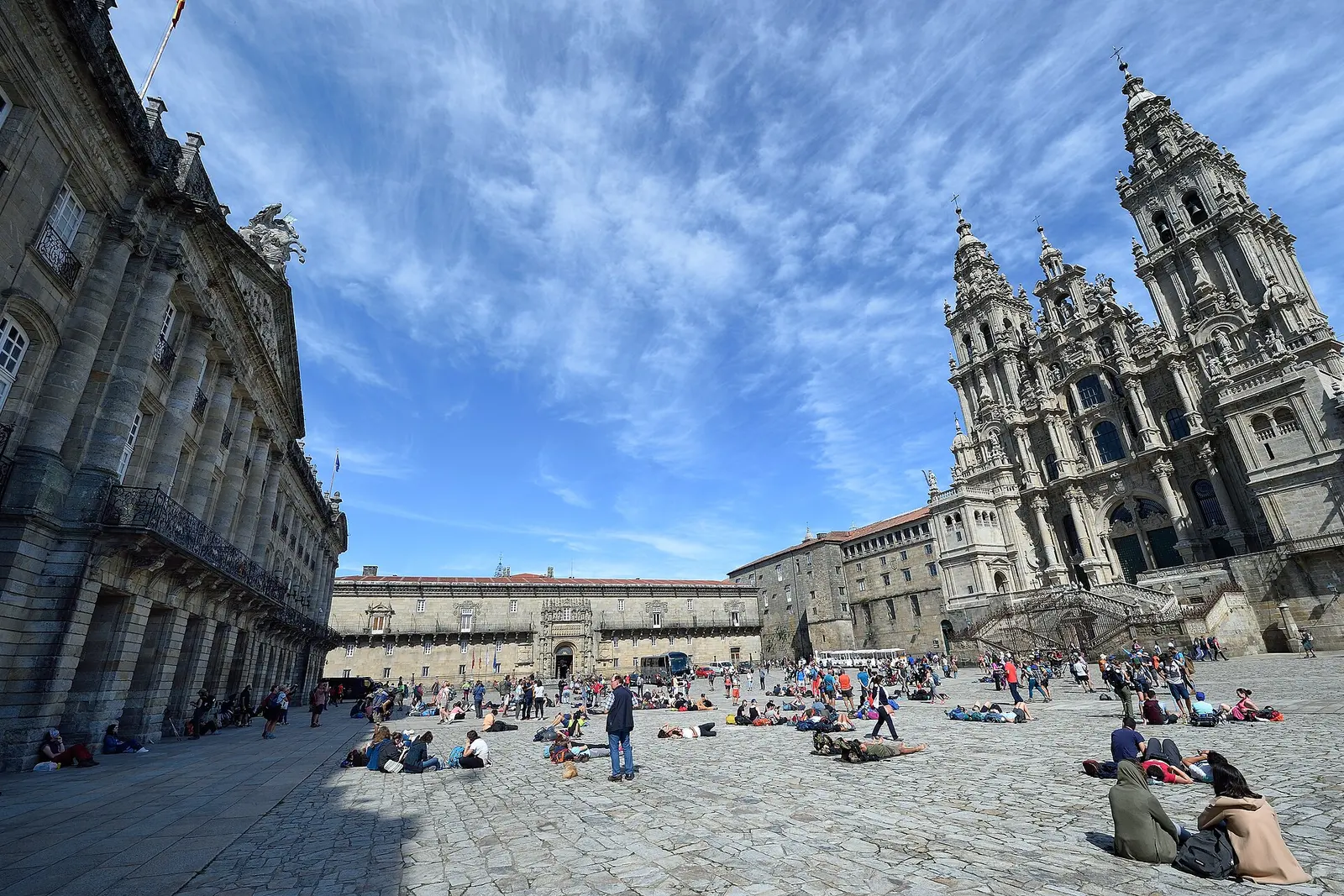
Santiago de Compostela is the end of the Camino and feels like it: a granite old town built around one of Christendom's great cathedrals, full of arriving pilgrims, bagpipers in the Praza do Obradoiro, and a food culture running from the Abastos market stalls to serious Galician seafood restaurants.
The verdict in 30 seconds
Our pick: Casco Antiguo, the old town (runner-up: El Ensanche, the new town)
Stay in the Casco Antiguo, the walled old town around the cathedral: every guide puts first-timers there for the walkable sights, the tapas streets and the pilgrim-energy evenings. Pick El Ensanche for quieter nights, easier parking and better-value rooms ten minutes out, or San Pedro for a calmer neighborhood on the Camino's last approach.
Go if
- First-timers who want the cathedral, market and tapas streets on foot; the Casco Antiguo puts all of it within ten minutes
- Pilgrims finishing the Camino; the certificate office sits in the old town and San Pedro holds the last-stage albergues
- Drivers and long-stayers who value parking and laundry; El Ensanche handles both the old town cannot
- Budget travelers; San Pedro's pensions and albergues run the cheapest beds in town
Skip if
- You need silence at night; the old town's tapas streets run late and reports warn about weekend noise
- You plan to drive daily; the historic center is pedestrianized and parking means paid lots at the edge
- You want a pool or a gym; the center is pensions and boutique mansions rather than resort stock
- You only need a bed before a dawn flight; even then the city is just 12 km away, so the airport strip rarely pays off
The options
Casco Antiguo, the old town Go
First-timers and sightseers who want the cathedral, market and tapas streets on foot.
Good
- Everything is walkable: cathedral, Praza do Obradoiro, Mercado de Abastos and the tapas axis sit inside the walled core.
- The atmosphere is the point; reports describe evening crowds of pilgrims finishing the Camino on the square.
- The Parador and a run of medieval mansions give it character stock the newer districts lack.
Watch out
- Night noise on the tapas axis; weekend reports warn about late crowds until the early hours.
- No cars: pedestrianized streets, luggage drag from the taxi drop and paid parking lots only.
- The priciest streets in town in season; the same tier costs more inside the walls.
Correos left-luggage at Rua do Franco 4Santiago Turismo, official accommodation guide
El Ensanche, the new town Go
Drivers, longer stays and travelers who want quiet nights a short walk from the sights.
Good
- Real-world value: the same room tier runs cheaper than inside the walls and parking actually exists.
- Ten to fifteen minutes' flat walk to the cathedral; close enough to use the old town without paying for it.
- Quieter, residential evenings with local cafes on its own avenues.
Watch out
- A city district rather than the postcard; the medieval feel starts at the old-town edge.
- The walk home goes uphill from the center for some addresses.
- Fewer character stays: it is mostly mid-range hotels and apartment blocks.
Hotels in El Ensanchepartner site
San Pedro and Belvis Go
Pilgrims, budget travelers and anyone wanting a village-quiet neighborhood on the Camino's last approach.
Good
- The pilgrim quarter: Seminario Menor albergue, finishing walkers and the classic bar strip along Rua de San Pedro.
- The quietest of the three; reports describe a small-village feel with Belvis park below.
- The cheapest beds in town, from albergue bunks to design pensions.
Watch out
- Ten to fifteen minutes from the cathedral, downhill in, uphill back at night.
- Albergue stock means shared rooms and early departures; not everyone wants dorm life.
- Fewer evening options than the center after the pilgrim bars close early.
Near Lavacolla airport Skip
Almost nobody: one dawn departure justifies it, nothing else does.
Good
- A five-minute airport shuttle and free parking; useful the night before a very early flight.
Watch out
- Twelve kilometers out on a road strip with nothing around; reports call it a transit stop rather than a base.
- Every day in town costs a bus ride or taxi each way.
- You miss the evening city entirely, which is most of what Santiago is for.
| Criterion | Casco Antiguo, the old town | El Ensanche, the new town | San Pedro and Belvis | Near Lavacolla airport |
|---|---|---|---|---|
| Walk to the cathedral | 2 to 10 minutes | 10 to 15 minutes | 10 to 15 minutes | 12 km away; 6A bus or taxi |
| Night-time noise | Tapas-street buzz until late on weekends | Residential and quiet | The quietest of the three | Silent, with nothing around |
| Typical stay | Pensions, historic mansions, the Parador | Mid-range hotels and apartments | Albergues and budget pensions | Roadside hotel stock |
| Car and parking | Pedestrianized; paid lots at the edge | Street and garage parking | Possible and easier than the center | Free parking at the door |
| Food and bars | Everything on foot: Franco, the market, the squares | Local cafes on its own avenues | Pilgrim bars on Rua de San Pedro | The hotel restaurant or a drive |
| Price feel | The highest in town in season | Noticeably cheaper for the same tier | The cheapest beds in town | Cheap, but transit eats it |
What it costs
- Correos left-luggage service at the Rua do Franco 4 post office: €4 (EUR 4 per bag per day including VAT, run by the postal service two minutes from the cathedral; the fix for the town's late check-ins and early Camino finishes). Official source, checked Oct 2026.
What travelers report
Based on 12 traveler reports (Jan 2025 to Sep 2026) and the official sources linked on this page. 0 were negative.
What people like
- Old-town pensions convert travelers: the walkable cathedral, market and tapas nights get the warmest reports (5 of 12)
- The Parador and the historic mansions; reports call sleeping in a medieval building part of the trip (3 reports)
- San Pedro's quietness and its pilgrim village feel ten minutes from the center (3 reports)
- El Ensanche's value: the same money goes further and parking actually exists (2 reports)
What people complain about
- Old-town noise on weekend nights, especially along Rua do Franco and the party squares (4 of 12 reports)
- Access and parking pain: pedestrianized streets, luggage drag and paid lots at the edge (3 reports)
- Season pricing and sellouts; the holy-year build-up squeezes the best-value pensions first (3 reports)
- Thin walls and dated bathrooms in some historic pension stock (2 reports)
How to do it right
- Book early: 2026 is the build-up year to the 2027 Xacobeo holy year and guides warn the best-value pensions sell out months ahead in season.
- Choose by street as well as area: the old town's party axis is Rua do Franco and Plaza de Cervantes, so a pension two lanes over sleeps noticeably better.
- Check in late is normal, around 15:00; drop bags at the Correos left-luggage office on Rua do Franco 4 (EUR 4 a day) or ask the pension to hold them.
- Pilgrims split between the huge Seminario Menor albergue in San Pedro and private pensions nearer the cathedral; the walk between them is about ten minutes.
- El Ensanche trades cathedral views for real savings: the same room tier runs cheaper and you can actually park near it.
- Skip the airport strip for city stays: Lavacolla sits 12 km out with nothing around; the 6A bus links it to the center but adds dead transit time to every day.
The trap to avoid
Booking the airport hotel for a city stay. The Lavacolla strip sits 12 km out with a petrol station and road hotel stock and nothing else; reports call it a dawn-flight play only. The same logic applies to the intermodal strip south of the tracks unless you are catching a very early bus.
What to do instead
Why this pick
The evidence agrees more completely than on most where-to-stay pages: first-timers go to the Casco Antiguo. Every guide in the file puts the classic visit inside the walls because the cathedral, the market, the tapas streets and the evening pilgrim arrivals are all on foot, and reports describe the nights there as most of what the city is. The trade-offs are real but mild: weekend noise on the tapas axis, pedestrianized access, paid parking and the town’s top prices. Pilgrims arriving off the trail add a second vote, since the certificate office sits inside the walls too.
El Ensanche is the real runner-up rather than a compromise. Reports call it the same city ten minutes out and noticeably cheaper, and it solves the two old-town problems cleanly: it is quiet at night and you can park. It is the pick for drivers, longer stays and second visits. San Pedro and Belvis is the third genuine option rather than a fallback: a pilgrim quarter with the cheapest beds, the Seminario Menor albergue and the Rua de San Pedro bars, village-quiet yet a short walk from the center.
The airport strip is the page’s one non-answer. At 12 km out it is a transit stop for dawn flights; reports warn that anything else leaves you riding the 6A bus into town all week.
Timing and bookings
Prices climb toward the 2027 holy year and guides advise booking the best-value pensions months ahead for summer. Check-in runs to about 15:00 across the pension stock; the Correos left-luggage office at Rua do Franco 4 charges EUR 4 a bag per day and sits two minutes from the cathedral. Drivers should treat paid lots as part of the price anywhere inside the walls.
Book or check times
Correos left-luggage at Rua do Franco 4Santiago Turismo, official accommodation guideSeminario Menor pilgrims' albergue
We earn a commission if you book through our links. It never changes a verdict. How this works
Hotels in El Ensanchepartner site
Questions
Which area is best for a first visit?
The Casco Antiguo, the old town around the cathedral. Every guide puts first-timers there: the cathedral, market, tapas streets and pilgrim office are all within a ten-minute walk, and the streets after dark are most of what Santiago feels like.
Where do pilgrims finishing the Camino stay?
Most split between Seminario Menor, the huge pilgrims' albergue in the San Pedro neighborhood, and private pensions nearer the cathedral. Reports recommend booking the pension nights ahead in season; the albergue keeps bunks for arrivals.
Is the old town noisy at night?
On the tapas axis, yes: Rua do Franco and the squares around it run late on weekends, and reports warn about noise until the early hours. Pension location two lanes off the axis, or El Ensanche, solves it entirely.
Can I park in the old town?
Not really: the historic center is pedestrianized, and hotels there send guests to paid lots at the edge. Drivers do better in El Ensanche or San Pedro, where street parking and garages exist, and reports say the walk in is short.
Is the Parador worth it?
The Hostal dos Reis Catolicos on the cathedral square is one of Europe's oldest hotels and reports describe the stay as the splurge of the trip; guests paid around EUR 300 a night with breakfast in recent accounts. For the same money you get the location, the cloisters and the history.
What about staying near the airport?
Only for a very early departure. Lavacolla airport is 12 km out on a strip of road hotels with nothing around; for any other plan, reports say sleep in town and take the 6A bus or a taxi out in the morning.
Pack for it
Gear verdicts from our sister site, Real Buyer Experiences: