Santiago de Compostela / The verdict
Is Santiago's old town worth it?
Yes: the granite old town is free, compact and lived in, with pilgrim arrivals on the Obradoiro providing daily theater; rain and midday crowds are the only real costs.
By The Real Traveler Experiences team. We earn a commission if you book through our links. It never changes a verdict.
The Santiago de Compostela story
Santiago de Compostela is the end of the Camino and feels like it: a granite old town built around one of Christendom's great cathedrals, full of arriving pilgrims, bagpipers in the Praza do Obradoiro, and a food culture running from the Abastos market stalls to serious Galician seafood restaurants.
The verdict in 30 seconds
Go
Yes: the granite old town is free, compact and lived in, with pilgrim arrivals on the Obradoiro providing daily theater; rain and midday crowds are the only real costs.
Go if
- You want a walkable historic quarter where every sight sits within about ten minutes of the next
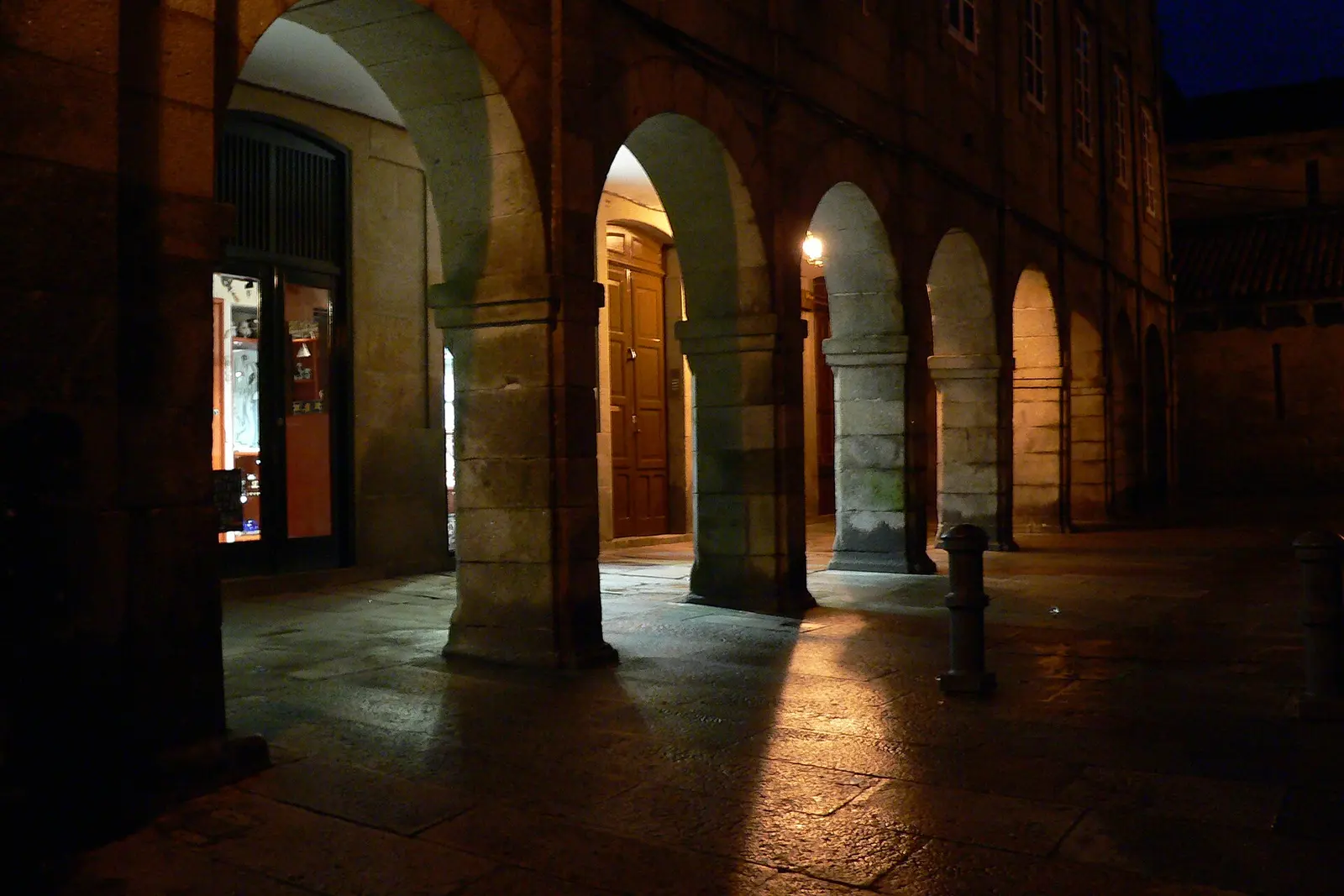
- You like granite streets and arcades that stay atmospheric in the rain
- You want to watch pilgrims arrive at Praza do Obradoiro, the city's daily spectacle
- You are happy paying only for the specific sights you enter, since the streets themselves are free
Skip if
- You need sunshine guarantees: this is one of Spain's wettest cities and showers arrive unannounced
- You dislike crowds at major monuments: the Obradoiro area packs out mid-morning to mid-afternoon in season
- You drive everywhere: the casco is largely pedestrianized with no useful parking inside
What it costs
- Entry: €0 (the old town is a public World Heritage district; you pay only for the monuments you enter). Official source, checked Oct 2026.
What travelers report
Based on 13 traveler reports (Apr 2025 to Aug 2026) and the official sources linked on this page. 3 were negative.
What people like
- Travelers call the granite streets and arcades unusually photogenic, even in rain.
- Watching pilgrims arrive at the Obradoiro is repeatedly described as the city's best free spectacle.
- The compact layout gets praise: cathedral, market, food streets and park all sit inside a short walk.
- The tapas scene around Rúa do Franco and the market earns strong marks for quality and prices.
What people complain about
- The rain is real: several accounts mention persistent showers even outside winter.
- The cathedral zone crowds up in peak season, and local press keeps covering the resident-displacement debate.
- Cobblestones and slopes make the casco harder work than it looks on a map.
- Some pilgrims find the city saturated after arrival, with a survey noting many ready to leave after one night.
How to do it right
- Anchor on Praza do Obradoiro, then loop the cathedral's other squares: Platerías, Quintana and Inmaculada.
- Walk Rúa do Vilar, Rúa do Franco and Rúa Nova, the arcaded granite streets where the tapas bars cluster.
- Push on to the Mercado de Abastos in the morning; locals and the tourism board call it the city's second most visited spot after the cathedral.
- Cross to the Alameda park for the classic postcard view back over the cathedral towers at dusk.
- Carry a rain layer year round: Galicia's weather is Atlantic and showers are routine even in summer.
- Visit the headline squares early or late: tour groups concentrate on the Obradoiro between mid morning and mid afternoon.
The trap to avoid
Judging the old town by the Obradoiro alone: the postcard square is its busiest corner, and the arcaded back streets a minute away are where the atmosphere actually lives.
Why this verdict
Go. Santiago’s casco viejo is the rare old town that earns its UNESCO listing on first contact: granite lanes, arcaded streets that exist because this is one of Spain’s wettest cities, and a monumental quarter small enough to loop in half a day. It has been a World Heritage Site since December 4, 1985, and the 40th anniversary coverage in December 2025 doubled as an frank civic debate about how many visitors the stones can hold.
The daily spectacle is free. On Praza do Obradoiro, pilgrims still arrive on foot and collapse in front of the facade; several accounts call it the most moving thing in the city, no ticket required. From there the useful circuit writes itself: Platerías, Quintana and Inmaculada around the cathedral, then Rúa do Vilar, Rúa do Franco and Rúa Nova under the arcades, then the Mercado de Abastos on a morning, then the Alameda at dusk for the postcard view.
The costs are weather and crowds. Rain is routine in every season, and the Obradoiro zone packs solid mid-morning to mid-afternoon in peak months. The counter is that the back streets stay calm, and a pilgrim survey found many arrivals ready to move on after a single night, which tells you the casco rewards timing more than duration.
It is also a real neighborhood, not a set: residents shop the market, students fill the bars, and the same press that celebrated the UNESCO anniversary debates how to keep it that way. Go early or late, carry a rain layer, and let the pilgrimage do the rest.
Book or check times
UNESCO listing: Santiago de Compostela Old TownTourism board: monuments of the historic quarter
We earn a commission if you book through our links. It never changes a verdict. How this works
See an official-guide walking tour of the old townpartner site
Questions
Is Santiago's old town free to visit?
Yes. The casco is a public district and a UNESCO World Heritage Site since 1985; you pay only for the monuments and museums you choose to enter.
How big is the old town?
Compact: a thorough loop of the cathedral squares, the arcaded streets and the market fits comfortably in half a day on foot, with most sights ten minutes apart.
When did the old town become a World Heritage Site?
UNESCO listed the old town on December 4, 1985, and the city marked the listing's 40th anniversary in December 2025.
Does it rain a lot in Santiago?
Yes. Santiago is one of Spain's wettest cities, and the granite arcades along streets like Rúa do Vilar exist for exactly that reason. Bring a light rain layer in any season.
Is the old town crowded?
The Obradoiro and cathedral zone crowd up mid-morning to mid-afternoon, especially in summer and Holy Years. One traveler survey found many pilgrims ready to leave after a single night, while the back streets a minute away stay calm.
Can I drive into the old town?
Effectively no: most of the casco is pedestrianized, so arrive on foot or leave the car at an edge car park.
Pack for it
Gear verdicts from our sister site, Real Buyer Experiences: