Santiago de Compostela / The verdict
Last 100 km of the Camino or a normal visit: which suits you?
Pick the last 100 km from Sarria if you have five days and want the full pilgrim ending: the Compostela certificate, the trail camaraderie and the walk over Monte do Gozo into the square. Choose a normal visit when time, mobility or the season's crowds argue against five days on the busiest stretch of the whole Camino.
By The Real Traveler Experiences team.
The Santiago de Compostela story
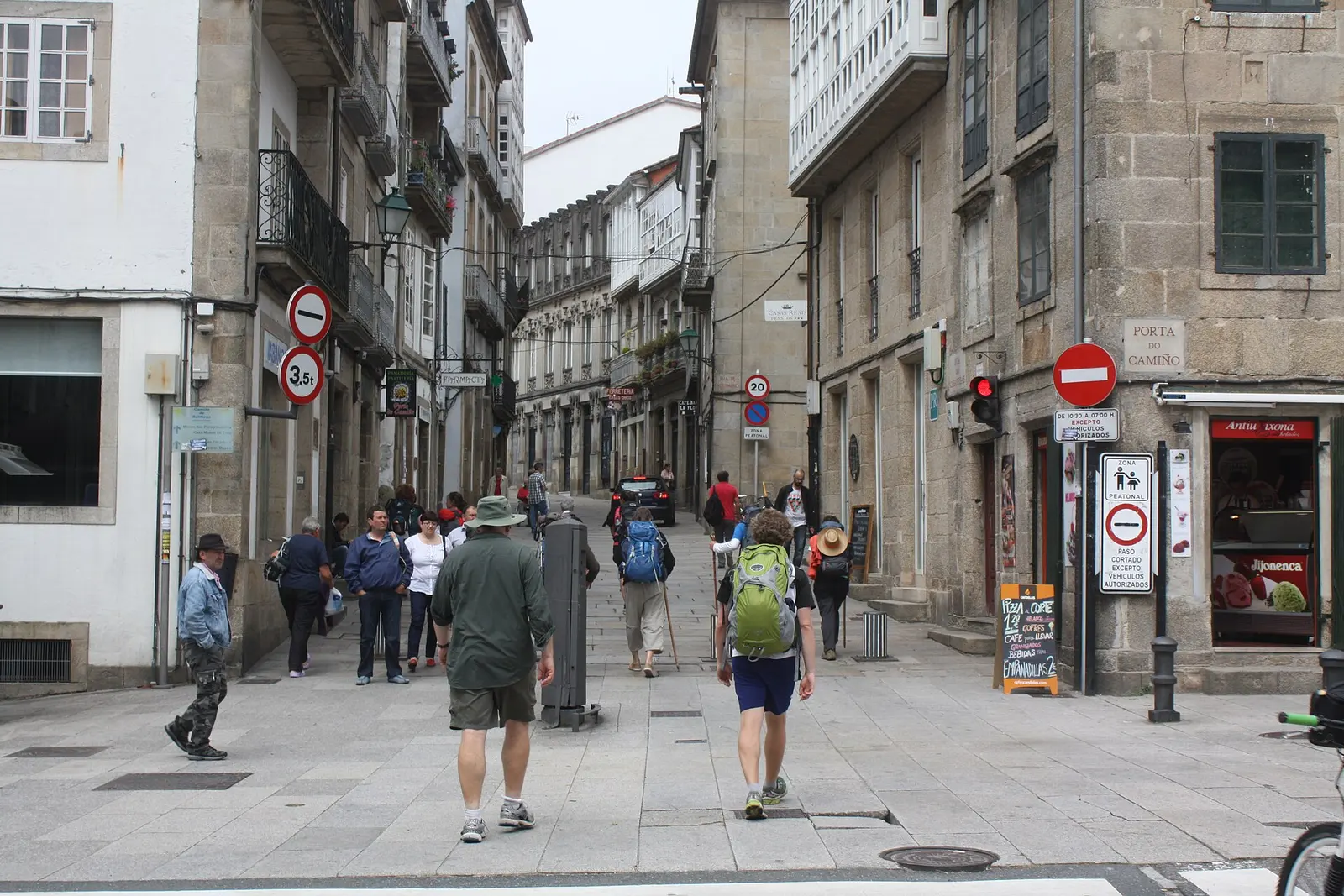
Santiago de Compostela is the end of the Camino and feels like it: a granite old town built around one of Christendom's great cathedrals, full of arriving pilgrims, bagpipers in the Praza do Obradoiro, and a food culture running from the Abastos market stalls to serious Galician seafood restaurants.
The verdict in 30 seconds
Our pick: Walk the last 100 km from Sarria (runner-up: Visit Santiago the normal way)
Pick the last 100 km from Sarria if you have five days and want the full pilgrim ending: the Compostela certificate, the trail camaraderie and the walk over Monte do Gozo into the square. Choose a normal visit when time, mobility or the season's crowds argue against five days on the busiest stretch of the whole Camino.
Go if
- Travelers who want to earn the Compostela; the Pilgrim's Reception Office requires the last 100 km on foot with two stamps a day on the credential
- First-time pilgrims who want the most serviced stretch; Sarria has the densest bed-and-bar network on the whole route
- Groups who need luggage moved; Correos transfers bags stage to stage for EUR 30 total
- Walkers with five days free who want the classic arrival rather than a snapshot
Skip if
- You have fewer than five days; Sarria to Santiago cannot really compress below that without skipping stages
- You picture a wilderness trail; reports describe a continuous stream of pilgrims and Sarria alone sent about 162,000 of them in 2025
- You cannot walk 19 to 28 km a day; the shortest realistic stage option still asks about 19 km daily
- You are traveling in July or August and want quiet; those are the peak months on the busiest stretch
The options
Walk the last 100 km from Sarria Go
Travelers with five days who want the Compostela and the pilgrim ending, on the most serviced stretch of the Camino.
Good
- The full experience: certificate at the Pilgrim's Reception Office, five stages of classic Galician countryside and the Monte do Gozo arrival.
- The easiest Camino stretch to organize: dense albergue-and-bar network, waymarking and Correos bag transfer at EUR 30 total.
- The social energy that first-timers actually sign up for; shared tables and trail friendships are the reports' most repeated praise.
Watch out
- The busiest stretch on the network: about 162,000 pilgrims set out from Sarria in 2025, and reports call it a procession in season.
- Beds run out fast in July and August; unprepared walkers describe early-start races and full albergues.
- Five days minimum in reality, which is most of a week's holiday spent walking.
Correos Paq Mochila bag transferPilgrim's Reception Office, Compostela rules
Visit Santiago the normal way Go
Travelers who want the cathedral, the food and the pilgrim atmosphere without five days of walking.
Good
- The city rewards non-walkers fully: the cathedral, the old town and the market plus Finisterre or food day trips fit a weekend.
- No logistics to manage: book a hotel, arrive by plane or train, and the pilgrim finish line is still on the square to watch.
- Works year-round; the winter city is quieter while the trail is nearly empty anyway.
Watch out
- No Compostela and no trail camaraderie; you watch other people's finish instead of making your own.
- You miss the arrival feeling reports call the payoff of the whole route.
- A purely city visit leaves the countryside half of the destination unseen.
Santiago Turismo, official city guideCathedral guided visits, official tickets
Sample one stage without finishing It depends
Curious travelers who want the trail feel and pilgrim crowds for a day without the five-day commitment.
Good
- A day stage out of Sarria, such as the 22 km to Portomarin, delivers the arrows, the stamps and the company in one shot.
- Cheap and reversible: taxi or bus back if it is not your thing, no booking chain required.
Watch out
- No Compostela; the certificate needs the full last 100 km with twice-daily stamps.
- Reports call it a taste rather than the experience; the payoff is cumulative and a single stage mostly gets the logistics.
- You still meet the busiest stretch in its busiest hours on a day walk.
Peak-season Sarria with no bookings Skip
Nobody, realistically; it is the failure mode reports warn about rather than a plan.
Good
- Spontaneity is the only upside, and July's energy on the trail is high.
Watch out
- Albergues fill completely in July and August; walkers report arriving to no beds and taxiing onward.
- The worst crowd version: school groups, tour groups and first-timers all share the same stages at once.
- The rescue option, booking beds as you go, mostly does not exist in the peak weeks.
| Criterion | Walk the last 100 km from Sarria | Visit Santiago the normal way | Sample one stage without finishing | Peak-season Sarria with no bookings |
|---|---|---|---|---|
| Days needed | Five classic stages, four to six days total | A weekend covers the city | One day on the trail | Same five days, minus the bed guarantees |
| Compostela certificate | Earned with two stamps a day | Not earned | Not earned | Earned, at the worst crowd level |
| Walking per day | 19 to 28 km | Sightseeing only | About 22 km once | 19 to 28 km regardless |
| Crowds reported | The busiest stretch of the Camino in season | City-center crowds near the cathedral | Thin once you leave the headline towns | The absolute worst of the calendar |
| Bed guarantee | Book ahead May to September | Ordinary hotel booking | Return the same day | Often none left on arrival |
| Luggage | Correos moves it stage to stage, EUR 30 total | Stays in the hotel room | Daypack only | On your back if bookings fall through |
What it costs
- Correos Paq Mochila rucksack transfer, Sarria to Santiago, total per bag: €30 (EUR 30 covers the whole Sarria to Santiago chain regardless of stage count, per bag up to 15 kg, in the March 16 to October 31 season; free cancellation to the day before). Official source, checked Oct 2026.
- Cathedral roofs and Carraca tower guided tour, general ticket: €15 (About 60 minutes and roughly 140 steps for the normal-visit option; reduced rate EUR 12, and it bundles same-day museum access). Official source, checked Oct 2026.
What travelers report
Based on 13 traveler reports (Apr 2025 to Aug 2026) and the official sources linked on this page. 0 were negative.
What people like
- The arrival over Monte do Gozo into the cathedral square lands as one of travel's great finishes (5 of 13 reports)
- The logistics are beginner-proof: beds, bars and bag transfer every few kilometers on the most serviced stretch (4 reports)
- The social layer, shared tables and first-timer energy that many walkers call the point (4 reports)
- Santiago rewards pilgrims on arrival, with the certificate office and the square completing the arc (3 reports)
What people complain about
- The crowds: reports describe a walking procession on the busiest stretch, worst May to September (5 of 13 reports)
- Bed scarcity that forces early starts or months-ahead booking in season (4 reports)
- The commercial feel of the most-touristed stages compared with quieter earlier sections (3 reports)
- The final stage into the city reads anticlimactic to some after days of countryside (2 reports)
How to do it right
- For the walk: fly or train to Sarria, collect a credential, and stamp it at least twice a day; the Pilgrim's Reception Office at Rua Carretas 33 in Santiago issues the Compostela free.
- Budget five days for the classic split: Sarria to Portomarin about 22 km, then Palas de Rei, Arzua and O Pedrouzo, then the final 19 km into the city.
- Book beds ahead from May to September; reports call this the busiest stretch of the entire Camino network and Sarria alone sent 161,901 pilgrims in 2025.
- Ship the bag if carrying it matters: Correos' Paq Mochila service moves it stage to stage for EUR 30 total in season, so you walk with a daypack.
- Start each day before about 08:00 to stay ahead of school groups and claim albergue beds where they are first-come.
- For the normal-visit version, base yourself in the old town, do the cathedral and market, and take the Finisterre or food options as day plans instead.
The trap to avoid
Arriving in Sarria in July or August with nothing booked. Reports describe full albergues, early-start bed races and a walking procession; the stretch takes more pilgrims than any other on earth between May and September. Reserve beds ahead or walk in April, October or the quieter edges of the season.
What to do instead
Why this pick
The evidence splits on what the last 100 km is for. Reports from walkers who chose it deliberately call it beginner-proof: five days of 19 to 28 km stages through oak woods and stone villages on the most serviced stretch of the whole network, ending in the square the Compostela certifies. Reports focused on the crowds say the same stretch is the busiest on earth between May and September, with Sarria alone sending about 162,000 pilgrims in 2025 and forums describing bed races and walking queues.
Both are true, and they point at different readers. If you have five days, want the certificate and can accept company, the walk is the pick: the crowd is the atmosphere most first-timers are actually after, and Correos’ EUR 30 bag transfer removes the hardest part of the logistics. If you want Santiago itself, the cathedral, the market and a Finisterre day trip, a normal visit answers in a weekend without a step walked.
The middle options resolve the rest. Sampling one stage out of Sarria earns no Compostela and reads in reports as a taste rather than the thing itself. And arriving in peak season with nothing booked is the one option the evidence says plainly not to do: that is when the crowds and the bed scarcity stack into the bad version of the experience.
Timing and tickets
The Compostela office at Rua Carretas 33 is open daily except December 25 and January 1; the certificate is free with a two-stamp-a-day credential. Correos runs Paq Mochila transfers from mid-March to October 31 at EUR 30 for the whole Sarria to Santiago chain. For a calmer trail, reports favor April and October over the July to September peak.
Book or check times
Correos Paq Mochila bag transferPilgrim's Reception Office, Compostela rulesSantiago Turismo, official city guideCathedral guided visits, official tickets
Questions
How long is the last 100 km actually?
About 114 km from Sarria to the cathedral door over five classic stages. The Compostela's 100 km minimum is the qualifying distance on foot, which is why Sarria, sitting just beyond it, is the most popular starting point on the route.
What does the Compostela require?
Walk the last 100 km (or cycle the last 200) with at least two credential stamps per day, then show it at the Pilgrim's Reception Office on Rua Carretas 33. The office is open daily except December 25 and January 1, and the certificate itself is free.
Can I send my bag ahead on the last 100 km?
Yes. Correos' Paq Mochila moves a bag of up to 15 kg stage to stage for EUR 30 total in the mid-March to October season, and private transfer companies do the same. Reports call bag transfer the single biggest comfort upgrade on the stretch.
How crowded is the last 100 km?
The busiest stretch of the whole Camino: Sarria alone sent 161,901 pilgrims in 2025, roughly two-thirds of the Frances route's total. Forum reports describe a stream of walkers in season, with school groups in spring and the heaviest traffic July to September.
Is the last 100 km hard?
No, by Camino standards: 19 to 28 km days over rolling Galician countryside on the most serviced stretch of the network, with beds, bars and bag transfer every few kilometers. The challenge is the crowds and the multi-day commitment rather than the terrain.
What if I only want a taste of the walk?
Walk one stage out of Sarria, such as the 22 km to Portomarin, and return by taxi or the next bus; you get the trail feel and the pilgrim crowd without the five days or the Compostela. Reports describe it as a reasonable sampler rather than the real thing.
Pack for it
Gear verdicts from our sister site, Real Buyer Experiences: