Zagreb / The verdict
Zagreb or Split: which city to visit?
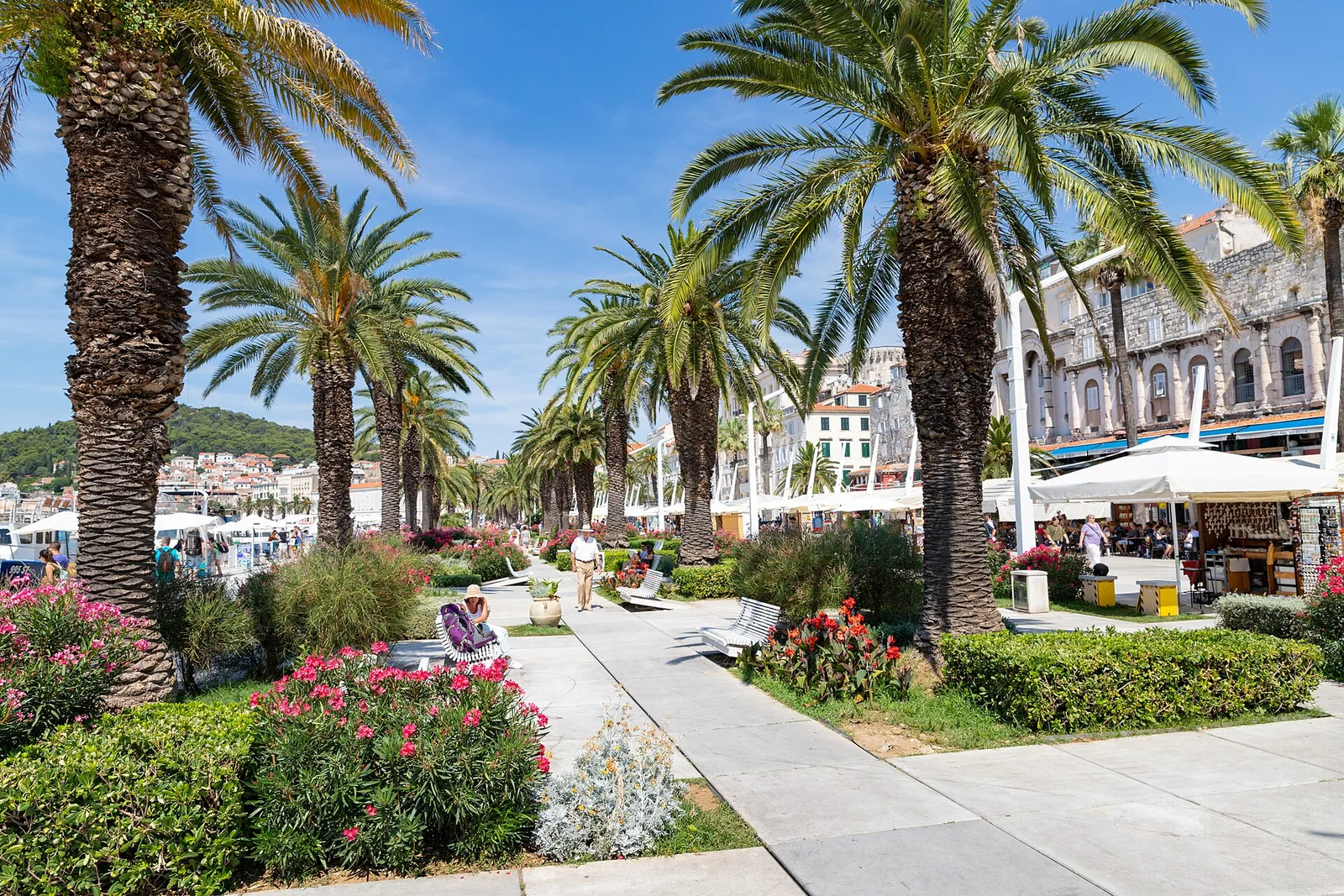
Pick Split for the Croatia the photos promise: the palace, the Riva and island ferries from the center. Pick Zagreb for a working capital with museums, cafes and the lowest prices, and November to April it wins outright. With a week or more, do both and put Plitvice between them.
By The Real Traveler Experiences team. We earn a commission if you book through our links. It never changes a verdict.
The Zagreb story
Zagreb is Croatia's inland capital, and most travelers meet it as a gateway on the way to the coast or [Plitvice](/zagreb/plitvice-day-trip/). Those who give it a day or two find a compact, cafe-powered city that rewards slowing down: the medieval [Upper Town](/zagreb/zagreb-upper-town/) with its gas lamps and Stone Gate above an Austro-Hungarian grid of parks, markets and museums, paced by the spica tradition of long Saturday coffees.
The verdict in 30 seconds
Our pick: Split (runner-up: Zagreb)
Pick Split for the Croatia the photos promise: the palace, the Riva and island ferries from the center. Pick Zagreb for a working capital with museums, cafes and the lowest prices, and November to April it wins outright. With a week or more, do both and put Plitvice between them.
Go if
- First-time Croatia trips in season: the coast is what most travelers came for
- Shoulder-season and winter trips, when Zagreb's cafes and Advent markets carry the country
- Travelers with a week-plus who can fly open-jaw and stop at Plitvice between the two
Skip if
- You have under five days for both cities; pick one
- You want only beaches and islands; Zagreb will not feed that
- You want only urban museums and cafes; Split will feel thin
The options
Split Go
First-time Croatia trips May to September: travelers who want the Roman palace, the seafront Riva and island day trips leaving from the center.
Good
- The Croatia most travelers picture: Diocletian's Palace woven into a living city, with ferries to Hvar, Brac and Vis from the door.
- Reports put day-to-day prices clearly below Zagreb's for tours and nightlife, though central rooms cost more in summer.
- The better-connected coastal base: islands, Trogir and Krka all sit in day-trip reach.
Watch out
- Peak summer packs the palace lanes and the ferry port; several reports call July and August the worst time to visit.
- More seasonal economy: some travelers find the center quieter to the point of emptier outside May to September.
- Fewer museums and less urban depth than the capital.
Split City Museum: palace substructures hours and pricesSee hotel options in this areapartner site
Zagreb Go
Off-season and city-life travelers: museums, the cafe ritual, Christmas markets and a capital that still runs on locals, plus the cheapest bed in the comparison.
Good
- The working capital: reports from every source call it the most underrated city in the country, with real cafe culture instead of tourist churn.
- Museums, galleries and the Austro-Hungarian grid give it the urban depth Split lacks.
- Reports put Zagreb clearly cheaper day to day, and it shines November to April when the coast sleeps.
Watch out
- No single unmissable sight: Zagreb is an atmosphere city, which disappoints travelers expecting a marquee monument.
- Inland and away from the water; on a tight coastal itinerary several reports say skip it rather than cut coast days.
- Quieter nightlife than Split's summer machine.
Zagreb tourist board, city guideSee hotel options in this areapartner site
Visit both, with Plitvice between It depends
Travelers with seven-plus days who can fly open-jaw or run one-way by bus, using the national park as the natural midpoint.
Good
- The near-unanimous recommendation in the log when time allows, since the cities deliver different Croatias.
- Plitvice sits on the direct route; one-way itineraries through the park are the standard play in the reports.
- Open-jaw flights into Zagreb and out of Split remove the backtrack entirely.
Watch out
- Needs a real week: under five days the cities-plus-park link turns into transit.
- One-way bus and train fares add up; the direct road is about four to five hours.
- Splitting a short trip can leave both cities feeling like a checklist.
Plitvice Lakes National Park price list and ticketsArriva Croatia intercity timetable and booking
One city as a day trip from the other Skip
No traveler the evidence supports; this option exists to catch the assumption that Zagreb and Split are an easy day apart.
Good
- A one-way transfer between bases is scenic past Plitvice.
Watch out
- The fastest link is about four to five hours each way, so a same-day return spends the whole day in transit.
- Intercity coaches run often but the round trip still eats a vacation day.
- You would arrive at peak crowds and leave before the evening atmosphere reports praise.
| Criterion | Split | Zagreb | Visit both, with Plitvice between | One city as a day trip from the other |
|---|---|---|---|---|
| Signature experience | A Roman palace you can sleep inside, plus the Riva waterfront | Museums, markets and the cafe ritual of a working capital | Both covered properly with the park between | Neither seen beyond a transit day |
| Reported prices | Summer premiums on central rooms; food and nightlife still fair | The cheapest base in the comparison day to day | Two cities plus the park ticket on one budget | The full transit cost twice over |
| Day trips from the base | Hvar, Brac, Vis, Trogir and Krka on the doorstep | Plitvice about two hours, Samobor under one | Each city's own trip ring | The other city is the day trip, badly |
| Season fit | May to September; off-season the coast thins out | November to April is when it beats the coast | Needs shoulder or high season for the ferries | A bad idea in any month |
| Crowds reported | Palace lanes pack midday in July and August | Rarely crowded; the upside of being underrated | Peak avoidance built into the route | Peak arrival guaranteed at midday |
| Getting between them | Ferries and flights onward along the coast | The rail and motorway hub for inland Croatia | About four to five hours by road via the park | The same four to five hours wasted twice |
What it costs
- Scheduled coach Zagreb to Split, one way: €28 (published fare valid from June 2026, about five hours; other carriers' advance fares run lower, reports put the range around 19 to 28 EUR). Official source, checked Oct 2026.
- Plitvice Lakes adult day ticket, June to September: €40 (the midpoint stop on a both-cities trip; 23 EUR April, May and October, 10 EUR November to March). Official source, checked Oct 2026.
- ZET tram, 90-minute ticket: €1.33 (Zagreb city transport; a day ticket is 3.98 EUR). Official source, checked Oct 2026.
What travelers report
Based on 12 traveler reports (Jun 2025 to Sep 2026) and the official sources linked on this page. 0 were negative.
What people like
- Travelers who did both call them complementary rather than competing: capital culture versus Adriatic life.
- Zagreb earns the 'most underrated city' tag in multiple reports and forums.
- Split's palace-as-living-city gets praised as a monument you sleep inside.
- The Plitvice midpoint makes the one-way route turn the one-way route into sightseeing rather than transit.
What people complain about
- Zagreb disappoints travelers expecting a marquee sight; it is an atmosphere city.
- Split's summer crowds pack the palace lanes midday, and parts of the center empty off-season.
- Doing both properly needs a week; tighter itineraries make each feel rushed.
- The direct transfer runs four to five hours, a real travel day.
How to do it right
- Decide by season first: Split leads May to September, Zagreb November to April.
- For a first Croatia trip in season, base in Split and take the islands and palace; inland Zagreb rewards a second visit.
- With seven-plus days, fly open-jaw into Zagreb and out of Split (or the reverse) and treat Plitvice as the day's stop between.
- Book intercity buses a day or two ahead in summer; the Zagreb to Split coaches fill on Friday and Sunday.
- In Zagreb keep transport costs near zero: a 90-minute tram ticket is 1.33 EUR and the center is walkable anyway.
- Do not day-trip between them: the fastest link runs about four to five hours each way.
The trap to avoid
Treating Zagreb as a layover. Reports from travelers who lingered call it the country's most underrated city; the ones who skipped it for coast days never gave it the two unhurried days the guides recommend.
What to do instead
Why this verdict
The reports do not pick a winner so much as a season. Split is the Croatia most travelers picture: a Roman palace you can sleep inside, the Riva at sunset and ferries to Hvar and Brac leaving from the center. Take it May to September and the coastal logic is airtight.
Zagreb is the contrarian pick with real support. Multiple reports and forum regulars call it the country’s most underrated city: a working capital with museums, a Saturday coffee ritual and prices clearly below the coast. It wins November to April without argument, and travelers who lingered describe the laid-back grid fondly. Its weakness is the absence of a marquee sight; it is an atmosphere city.
The standard play in the reports is not either-or. With seven-plus days, fly open-jaw: Zagreb in, Split out, with Plitvice as the midpoint stop. The itinerary guides in the log reserve two unhurried days for the capital and prefer an overnight at the park over a midday squeeze; the cities sit roughly four to five hours apart by road. What nobody recommends is day-tripping between them or cutting the trip to under five days for both.
Timing and tickets
Buses run Zagreb to Split in about five hours for roughly 19 to 28 EUR; the train takes longer on a scenic route. Plitvice entry runs 10 to 40 EUR by season. In Zagreb itself a 90-minute tram ticket is 1.33 EUR, and most of the center is walkable anyway.
Book or check times
Split City Museum: palace substructures hours and pricesZagreb tourist board, city guidePlitvice Lakes National Park price list and ticketsArriva Croatia intercity timetable and booking
We earn a commission if you book through our links. It never changes a verdict. How this works
See hotel options in this areapartner siteSee hotel options in this areapartner site
Questions
Is Zagreb or Split better for a first visit?
Split, for most first-timers in season: the palace, the waterfront and island ferries deliver the Croatia in the photos. Zagreb rewards travelers who prefer museums, cafes and lower prices.
How far is Zagreb from Split?
About 410 km by road. Coaches take roughly four to five hours for about 19 to 28 EUR; the train runs a slower scenic route; driving lets you stop at Plitvice midway.
Can I do Zagreb and Split in one trip?
Yes with a week or more, and reports say it is the right call: fly open-jaw, spend two days in Zagreb, a day or overnight at Plitvice, then Split and the islands.
Which city is cheaper?
Zagreb, clearly on day-to-day spend: reports put food, cafes and rooms below Split's summer rates. Split's premium concentrates on central rooms in July and August.
Which is better in winter?
Zagreb, and it is not close: the Advent market and year-round cafe life keep it alive while the coast thins out. Split works for mild-weather walks but the day-trip scene shrinks.
Is Split or Zagreb better as a base?
Split as a base for day trips: Hvar, Brac, Trogir and Krka are all in reach. Zagreb as a base for transit: it is the hub for inland Croatia and the cheapest entry point.