Zadar / The verdict
Is Zadar old town worth it?
Yes. Zadar's old town fits a Roman forum, the round St Donatus church, Venetian walls and a seafront of sea-and-light installations onto a walkable peninsula, and most of it costs nothing. Travelers call it calmer than Split or Dubrovnik; give it a day, end at the Sea Organ for sunset, and expect August crowds and square-side prices.
By The Real Traveler Experiences team. We earn a commission if you book through our links. It never changes a verdict.
The Zadar story
Zadar is the most underrated city on the Dalmatian coast: a Roman-and-Venetian old town on a small peninsula, a seafront where the Sea Organ plays music off the waves and the Greeting to the Sun lights the dusk, and five national parks within day-trip reach. It is Split's smaller, calmer rival.
The verdict in 30 seconds
Go
Yes. Zadar's old town fits a Roman forum, the round St Donatus church, Venetian walls and a seafront of sea-and-light installations onto a walkable peninsula, and most of it costs nothing. Travelers call it calmer than Split or Dubrovnik; give it a day, end at the Sea Organ for sunset, and expect August crowds and square-side prices.
Go if
- History walkers who like layers: Roman forum, early-medieval rotunda, Venetian gates and churches inside one walkable loop.
- Cruise and short-stay visitors: travelers report the core sights fit one day with the sunset free at the end.
- Travelers who find Split or Dubrovnik hectic: reports call Zadar the more relaxed Dalmatian old town.
- Travelers who want a base for island boat trips from the same waterfront.
Skip if
- You are a beach-first traveler: the peninsula is stone and pavement, and sandy beaches are outside the center.
- You visit on an August holiday and hate crowds: one August visitor found way too many people.
- Slippery surfaces or steep stairs worry you: travelers describe the polished stone streets as slippery and the bell tower stairs as unsafe-feeling.
What it costs
- Church of St Donatus, individual entry: €5 (Run by the Archaeological Museum Zadar; 3.50 EUR for Croatian pensioners, free under 10). Official source, checked Oct 2026.
- Archaeological Museum plus St Donatus combined ticket: €10 (Single ticket covering both institutions). Official source, checked Oct 2026.
- Museum of Ancient Glass, adult entry: €7 (5 EUR per person in groups of 5 or more; 4 EUR for schoolchildren). Official source, checked Oct 2026.
What travelers report
Based on 12 traveler reports (Apr 2025 to Aug 2026) and the official sources linked on this page. 0 were negative.
What people like
- 3 of 12 reports call Zadar more relaxed or less crowded than Split or Dubrovnik.
- Several reports describe the peninsula as compact and walkable, with one self-guided loop of about 2 miles covering 26 sights.
- The Sea Organ and Greeting to the Sun at sunset get praise in most reports, even from travelers who note the crowds there.
- A road-tripper rated the Archaeological Museum a major highlight and the Ancient Glass Museum unexpectedly enthralling.
What people complain about
- One August visitor found way too many people and paid 16 euros for an Aperol.
- A cruise visitor found the bell tower stairs unsafe-feeling and the bells unbelievably loud.
- The polished stone streets are slippery, according to one solo traveler.
- July and August are hotter, busier and more expensive, by one regular visitor's account; parking near the walls is limited.
How to do it right
- Enter through the Venetian Land Gate and follow the main street, Kalelarga, to the forum; one self-guided loop of about 2 miles covers 26 sights in about an hour.
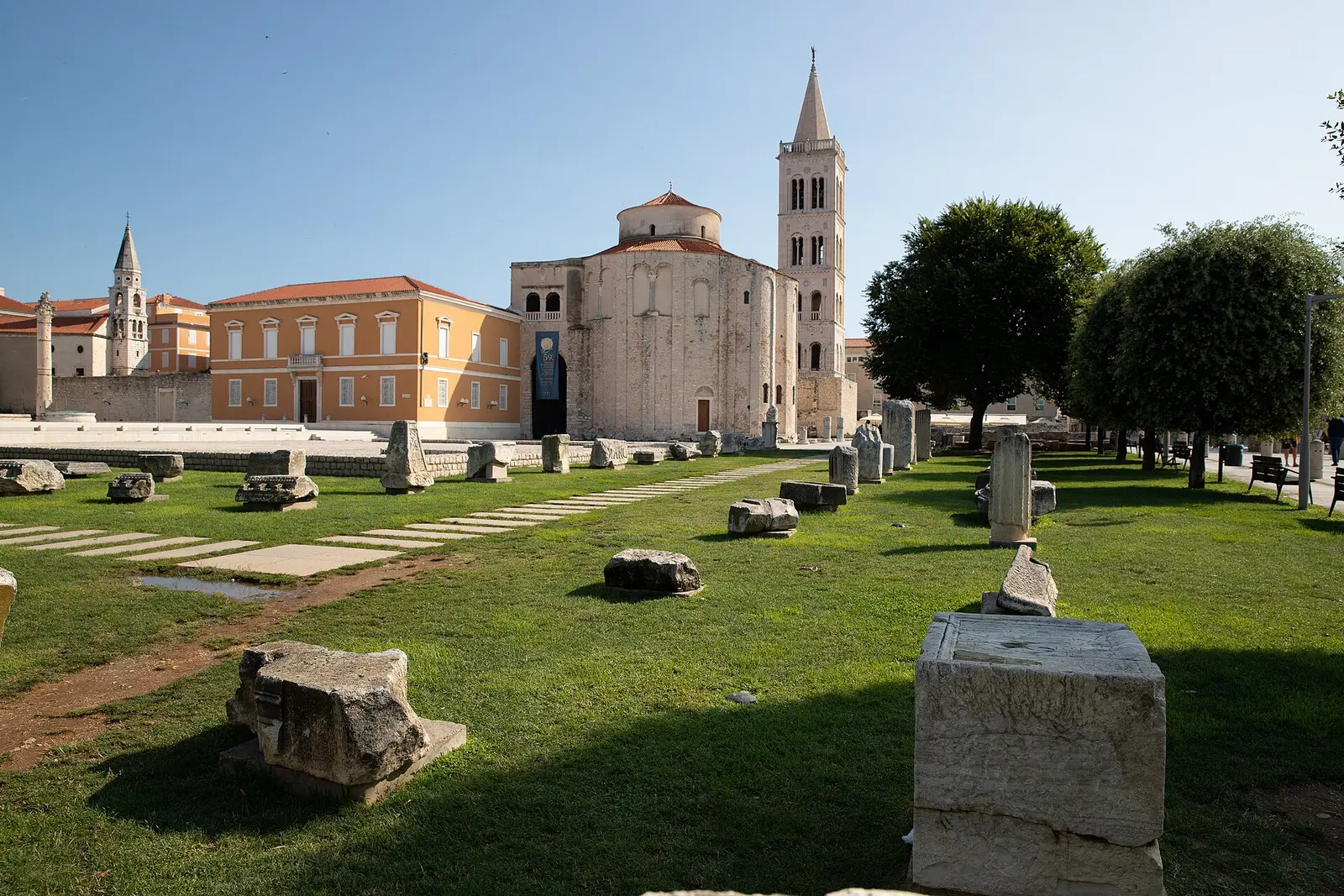
- Anchor on the Roman forum: St Donatus sits beside it and the cathedral's bell tower stands behind.
- Use the museums for the midday heat: one traveler found the Archaeological Museum and the Ancient Glass Museum open until 9 pm in season.
- Finish at the northwest tip, where the Sea Organ and Greeting to the Sun are free at sunset; travelers say it gets busy but is still worth it.
- Drivers should park outside the walls: one traveler found parking in the old town limited.
- Check bell tower season before you plan the climb: one traveler found it closed in March.
The trap to avoid
Eating and drinking on the postcard squares without checking prices. One August visitor paid 16 euros for an Aperol and called it outrageous, while another traveler found a back-alley konoba where most diners were Croatian. The second trap is timing: July and August are hotter, busier and pricier, by one regular visitor's account.
What to do instead
Why this verdict
Go, because the old town gives a lot for little money. The peninsula holds a Roman forum, the ninth-century St Donatus rotunda, a climbable bell tower, Venetian walls and two free sea installations, and travelers keep returning the same verdict: a more relaxed alternative to Split and Dubrovnik. A regular visitor finds it less polished and crowded than Dubrovnik and less chaotic than Split, a writer who moved there says it suits travelers who would rather not fight crowds for a sunset photo, and two cruise passengers called it an unexpectedly charming stop.
The town is compact. A traveling couple mapped a self-guided loop of about 2 miles that passes 26 sights in about an hour, and a road-tripper who spent two days there says one day is enough for the city itself. Most of it is free: the forum, the lanes, the walls and the sunset at the Sea Organ. Paid entries stay modest, and one traveler found the Archaeological Museum and the Ancient Glass Museum open until 9 pm in season, which rescues a hot afternoon.
The complaints are about timing and comfort, not the town. An August visitor on a public holiday found way too many people and paid 16 euros for an Aperol. The Sea Organ sunset gets busy, though travelers who mention the crowd still say to go. A cruise visitor found the bell tower stairs unsafe-feeling and the bells deafening, and a March visitor found the tower closed. A solo traveler found the polished streets slippery. None of these changes the verdict; they shape when you go and what shoes you wear.
Timing and tickets
St Donatus is 5 EUR per the Archaeological Museum’s list, free under 10, and a 10 EUR combined ticket adds the museum; the Museum of Ancient Glass lists 7 EUR for adults. Travelers who know the city favor May, June, September or early October over July and August. Early mornings show the lanes at their quietest, by one road-tripper’s account.
Start the walk at the Venetian Land Gate and follow Kalelarga toward the forum: one self-guided loop covers 26 sights in about an hour, and a long-time visitor’s walk takes in Five Wells Square and St Simeon’s church along the way. Eat one street back from the postcard squares: one visitor paid 16 euros for an Aperol there, while another found a back-alley konoba where most diners were Croatian. Drivers should use the paid lots outside the walls rather than hunting for parking inside.
Book or check times
Zadar tourism boardSt Donatus hours and tickets, Archaeological Museum ZadarMuseum of Ancient Glass ticket prices
We earn a commission if you book through our links. It never changes a verdict. How this works
See the old town walking tourpartner site
Questions
Is Zadar old town worth a day?
Yes. Travelers report that one day covers the old town itself: forum, St Donatus, a museum, the walls and the sunset at the Sea Organ. Add more time if you want a boat trip.
How does Zadar compare to Split or Dubrovnik?
Travelers call it more relaxed: less polished and crowded than Dubrovnik and less chaotic than Split, with a more local, lived-in feel. It has fewer headline monuments.
What does it cost to visit the old town?
Wandering the streets, forum and seafront is free. Paid entries are modest: St Donatus is 5 EUR, the combined Archaeological Museum ticket 10 EUR and the Museum of Ancient Glass 7 EUR, per the official price lists.
Can I drive into the old town?
One traveler found parking in the old town limited and recommends the paid lots just outside the walls.
Is the bell tower climb worth it?
For the view, travelers say yes, but one cruise visitor found the stairs unsafe-feeling and the bells unbelievably loud up close, and another found the tower closed in March.
When is the best time to go?
Travelers who know the city favor May, June, September or early October; July and August are hotter, busier and more expensive.
Pack for it
Gear verdicts from our sister site, Real Buyer Experiences: