Santiago de Compostela / The verdict
Is a Santiago food tour worth it?
It depends on what you are buying. At EUR 30 to 68 per person, a Santiago food tour buys a guide who orders for you, explains the dishes and turns dinner into a social evening, and reports from solo travelers and first-timers are warm. But Santiago's food scene is unusually open to self-guiding: the Mercado de Abastos, Rua do Franco and the old town's counters put the same pulpo, empanada and tarta within easy DIY reach, so confident eaters can skip the tour and eat just as well.
By The Real Traveler Experiences team.
The Santiago de Compostela story
Santiago de Compostela is the end of the Camino and feels like it: a granite old town built around one of Christendom's great cathedrals, full of arriving pilgrims, bagpipers in the Praza do Obradoiro, and a food culture running from the Abastos market stalls to serious Galician seafood restaurants.
The verdict in 30 seconds
It depends
It depends on what you are buying. At EUR 30 to 68 per person, a Santiago food tour buys a guide who orders for you, explains the dishes and turns dinner into a social evening, and reports from solo travelers and first-timers are warm. But Santiago's food scene is unusually open to self-guiding: the Mercado de Abastos, Rua do Franco and the old town's counters put the same pulpo, empanada and tarta within easy DIY reach, so confident eaters can skip the tour and eat just as well.
Go if
- First-time visitors who want Galician dishes decoded rather than just eaten; guides walk you through what pulpo a feira, raxo and tarta de Santiago actually are
- Solo travelers and pilgrims finishing the Camino alone who want dinner with company and conversation
- Anyone with one evening in the city who wants a planned route through the market and old-town bars with zero decisions
- Travelers arriving in Holy Year season who want a guide to steer them off the most touristed strip
Skip if
- You are comfortable reading a menu in Spanish; the market and Rua do Franco make self-guided grazing easy and cheaper
- You want a full sit-down dinner; most tours are a moving sequence of tapas and small plates, which some reports find light
- You are on a tight budget; EUR 30 to 68 per person buys a lot of tapas you can assemble yourself
- You eat early or late by Spanish standards; most departures cluster around 13:00 and 19:00 to 20:00
What it costs
- Galicia Travels Tapastasting: €30 (About 2 hours in one old-town bar: five tapas (raxo, empanada, chicharrones, Padron peppers, tarta de Santiago) plus two drinks; runs 13:00 and 20:00). Official source, checked Oct 2026.
- CaminoWays Santiago Tapas Tour: €60 (About 3 hours daily at 19:00, four or more bars, up to 8 tapas plus 4 drinks, meeting at Mercado Gastronomico La Galicia). Official source, checked Oct 2026.
- Vimbio most-local tapas tour: €68 (From EUR 68 per person, 3 hours, maximum 10 people, six tastings across two neighborhood bars with an official guide). Official source, checked Oct 2026.
What travelers report
Based on 12 traveler reports (Oct 2024 to Sep 2026) and the official sources linked on this page. 0 were negative.
What people like
- Guides who turn dinner into a walking lecture on Galicia and the Camino between stops (5 of 13 reports)
- The social evening for solo travelers and pilgrims who want company at the table (4 reports)
- Santiago's food scene itself: the market, the octopus, and bars dense enough to hop between (4 reports)
- Tours that end with a proper dessert stop and a local liquor pour (3 reports)
What people complain about
- The tasting volume reads as a light dinner to some travelers; a few describe leaving hungry on the shorter formats (4 reports)
- Much of the route covers bars a confident visitor could walk into unguided, which makes EUR 60-plus feel steep (3 reports)
- Food quality varies between operators, with one review site rating a budget tasting well below the premium tours (2 reports)
- Stops on the main tourist strip get singled out by locals as skippable (2 reports)
How to do it right
- Pick the format to match your appetite: the EUR 30 tasting format is a short survey in one bar, while the EUR 60 to 68 tours move between three to six bars over three hours.
- Book the evening departure; most tours run about 19:00 to 20:00, which lands you on the same schedule as the local tapeo.
- Arrive hungry but not starving; reports describe a meal's worth of small plates on the multi-bar formats, and the dessert stop is usually tarta de Santiago.
- Flag dietary restrictions at booking; the seafood-heavy route (pulpo, mussels, empanada) adapts if the operator knows ahead.
- Plan a DIY follow-up night at the Mercado de Abastos or the San Pedro street bars, where locals steer visitors off the busiest strip.
- In July, August and the Holy Year weeks, book several days ahead; small-group caps of about 10 sell out fast.
The trap to avoid
Expecting the tour to unlock food you cannot find alone. Santiago's tapas scene is compact and open: the market counters, Rua do Franco and the San Pedro street all take walk-ins. What the tour actually buys is the guide's context, the company and a pre-decided route, so solo travelers get more out of it than confident eaters do.
What to do instead
Why this verdict
The evidence splits cleanly on who is asking. Reports from solo travelers, pilgrims fresh off the Camino and first-timers rate the tours warmly for the same reason: a guide who orders confidently, explains what pulpo a feira and raxo are, and turns the evening into a shared table. Reviews of the shorter tasting formats are cooler, flagging variable food quality and portions that read as a snack to some.
The reason the answer is depends rather than go is the competition. Santiago’s food scene is unusually legible to a visitor: the Mercado de Abastos sells the produce at counters a few steps from the cathedral, Rua do Franco packs dozens of bars into about 150 meters, and local writing reports that a free tapa still lands with many drinks. A confident eater can assemble most of what the tours serve for less than EUR 30.
So the split in the reports: pay EUR 30 to 68 for the guide, the company and a pre-decided route, or spend that money self-guiding through the market and the San Pedro street bars where locals steer people off the tourist strip. The tour is the shortcut to context; the city is not hiding its food from you.
Timing and tickets
Most tours run daily at about 13:00 and 19:00 to 20:00; the evening slots land you inside the local tapeo window. Operator prices run EUR 30 for the single-bar tasting, EUR 60 for the multi-bar three-hour format and from EUR 68 for the neighborhood version, all checked 2026-10-03. Book ahead in the summer and Holy Year peak.
Book or check times
Galicia Travels TapastastingCaminoWays Santiago Tapas TourVimbio most-local tapas tour
Questions
How much does a Santiago food tour cost?
On the operators' own sites (checked 2026-10-03), the range runs EUR 30 to 68 per person. Galicia Travels sells a five-tapa tasting at EUR 30, CaminoWays runs a three-hour, four-plus-bar tapas tour at EUR 60, and Vimbio's neighborhood version starts at EUR 68. All tastings and several drinks are included.
What do you eat on a Santiago food tour?
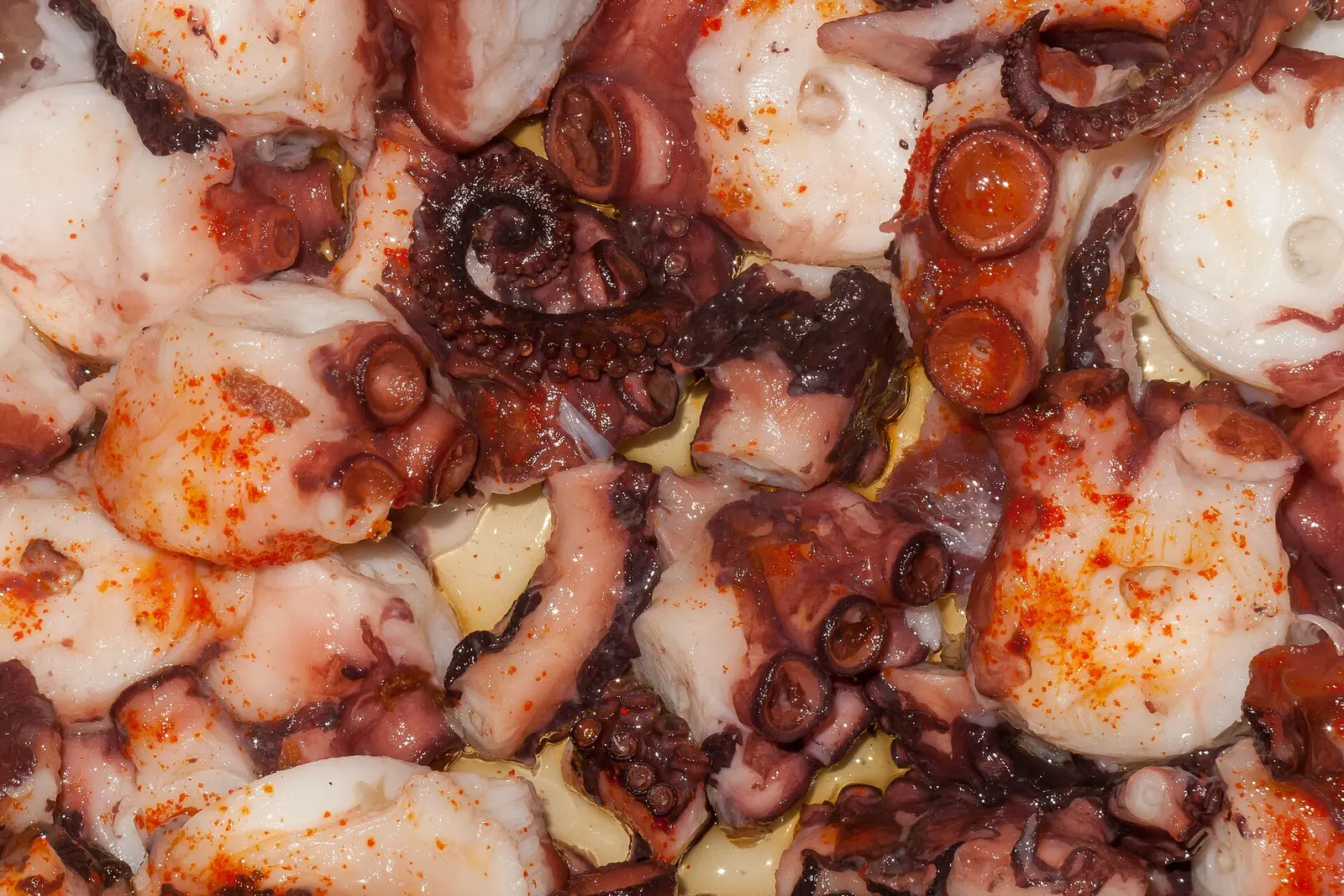
The standard lineup covers the Galician staples: pulpo a feira (octopus on a wooden plate), empanada, raxo or chicharrones, Padron peppers, local cheeses and tarta de Santiago, the almond cake that carries protected-status rules, with Albarino or Ribeiro wines and beer alongside.
How long do the tours run?
Two to three and a half hours. The single-bar tasting format is about two hours, and the multi-bar walking versions run about three hours, usually starting at 19:00 or 20:00 to match local dinner timing.
Is a Santiago food tour worth it if I already speak some Spanish?
Less so. Reports and local writers agree the city's food scene is open to self-guiding: the Mercado de Abastos sells the produce, Rua do Franco packs dozens of bars into about 150 meters, and many bars hand over a free tapa with each drink. The tour adds a guide's stories and company rather than access.
Can a Santiago food tour handle dietary restrictions?
Most operators say yes if told at booking, and small-group caps of about 10 make rerouting practical. Expect the default route to be seafood- and pork-heavy; vegetarians and pescatarians should confirm the substitutions in advance.
When do Santiago food tours run?
Lunch and dinner slots, typically 13:00 and 19:00 to 20:00. Some tours run daily; smaller operators add extra departures in summer and Holy Year season and go quiet in midwinter, so check the operator's calendar for your dates.