Lucerne / The verdict
Where to stay in Lucerne: which area?
Sleep in the Old Town if it is your first trip: the postcard lanes put every sight inside five minutes, while the station quarter is the practical pick for rail-heavy days and the lakeshore villages work only if the view beats the commute.
By The Real Traveler Experiences team. We earn a commission if you book through our links. It never changes a verdict.
The Lucerne story
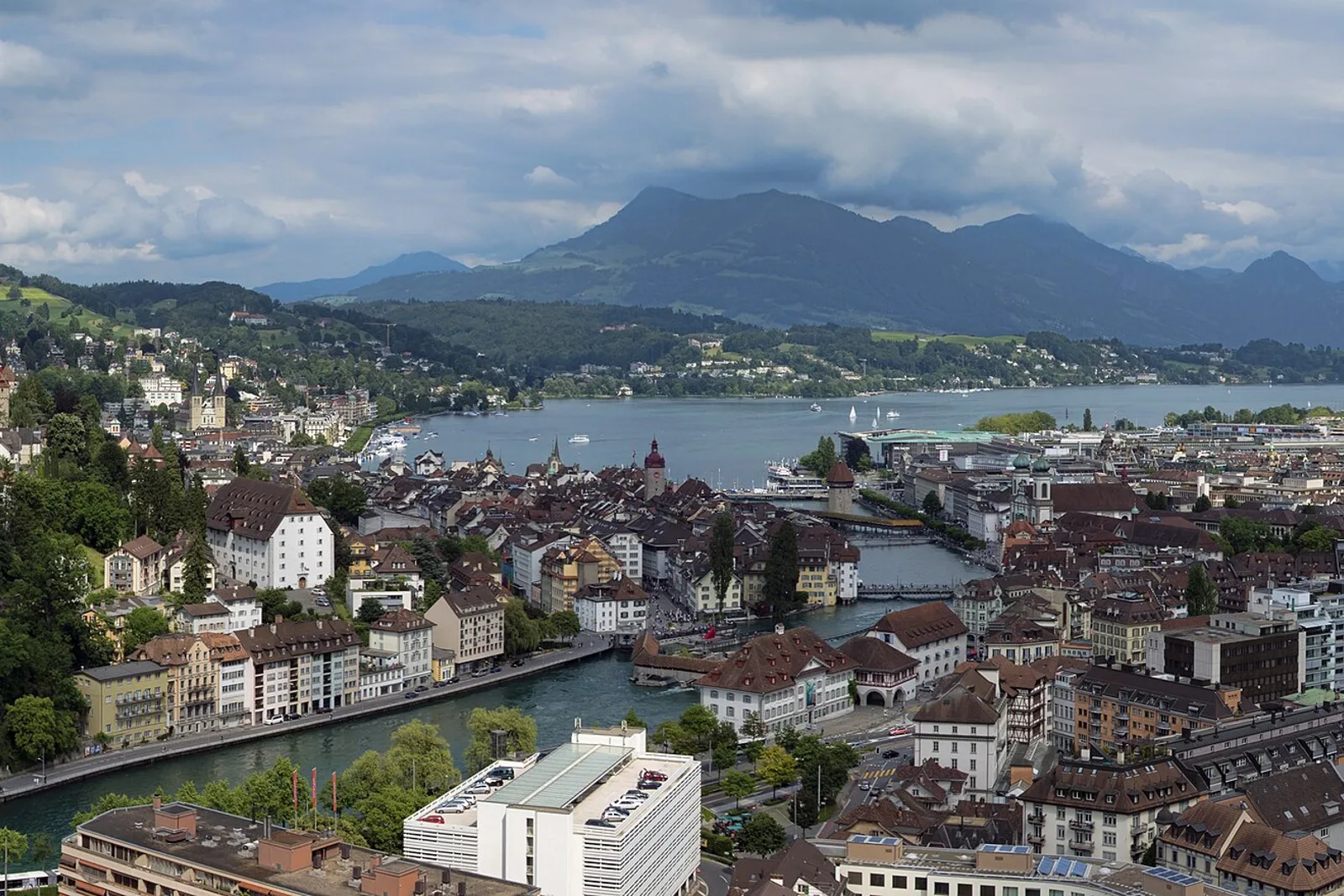
Lucerne is the Switzerland people picture before they arrive: a medieval old town wrapped around painted wooden bridges, a lake ringed by mountains, and two classic Alpine outings, Pilatus and Rigi, that start at the boat pier outside the station. The Kapellbrucke and Spreuerbrucke cross the Reuss between frescoed gables, and paddle steamers still run the lake fleet out to Alpnachstad, Vitznau and beyond.
The verdict in 30 seconds
Our pick: Old Town (Altstadt) (runner-up: Neustadt and the station quarter)
Sleep in the Old Town if it is your first trip: the postcard lanes put every sight inside five minutes, while the station quarter is the practical pick for rail-heavy days and the lakeshore villages work only if the view beats the commute.
Go if
- First-timers choosing between the historic centre, the station quarter and the lakefront villages
- Rail-and-boat itineraries that need a flat walk to platforms and piers
- Anyone weighing a cheaper room outside the centre against daily walking time
Skip if
- You have already booked; this page exists to pick the base, not the hotel
- You are passing through one night only; any clean room near the station does the job
The options
Old Town (Altstadt) Go
First-timers and romantics who want to sleep inside the postcard: painted lanes, the Chapel Bridge and dinner on the Reuss within minutes.
Good
- Everything walkable: Chapel Bridge, the Lion Monument, boat piers and the evening lanes after day-trippers leave.
- The atmosphere the reports buy Lucerne for: cobbles, frescoes and fountains that double as drinking taps.
- No transport dependency; even the station is a ten-minute flat walk.
Watch out
- The priciest rooms and the smallest floor plans in historic buildings.
- Noise on fair and festival nights; cobbles and pedestrian streets mean luggage rolls the last stretch.
- Some heritage rooms skip air conditioning, a real tradeoff flagged in summer threads.
Search Old Town hotelspartner site
Neustadt and the station quarter Go
Train-heavy itineraries, families with luggage and value hunters: five to ten flat minutes to the platforms, piers and the old town.
Good
- The logistics pick: roll off the train, drop bags, reach boats and buses without a climb.
- Newer stock and chains; reports peg 3-star rooms around CHF 190 to 270 against old-town premiums.
- A more local mix of bars and restaurants than the postcard lanes.
Watch out
- Commercial rather than charming; the blocks around the station trade atmosphere for access.
- A few loud corners near nightlife streets at night.
- Still priced Swiss: 'value' here means better value for Lucerne, not cheap.
Search station-area hotelspartner site
The lakefront villages (Weggis side) It depends
Couples and resort stays: hotels like the Beau Rivage in Weggis trade the city walk for open water, the Rigi railway at the quay and spa afternoons.
Good
- The wake-up view: open lake and the Rigi massif from the bed.
- Resort infrastructure: promenades, pools and spas that outclass any city room at the price.
- The commute is a boat ride on the scheduled SGV line, arguably the day's prettiest leg.
Watch out
- 20 to 60 minutes into town each way; reports flag the last boat back leaving in the late afternoon.
- Resort pricing plus a per-day commute; the view is the only saving.
- Evenings are quiet to dead; dinner in the city needs planning.
Search lakefront resortspartner site
The outer budget belt (Meggen, Horw, Kriens) Skip
Drivers counting francs and car-dependent itineraries where the room is only a place to crash.
Good
- The cheapest beds in the orbit, and the zone-10 Visitor Card keeps the bus ride free.
- Easy parking and highway access that the old town cannot offer.
Watch out
- The saving erodes daily: every sight and dinner is a bus or walk away.
- Business-park evenings; one report's lakeside-looking pin hid a 20-minute uphill haul.
- You booked Lucerne for the postcard; sleeping in the belt means visiting it, not living in it.
| Criterion | Old Town (Altstadt) | Neustadt and the station quarter | The lakefront villages (Weggis side) | The outer budget belt (Meggen, Horw, Kriens) |
|---|---|---|---|---|
| Walk to the sights | 2 to 5 minutes to the Chapel Bridge | 5 to 10 minutes, all flat | A boat or bus every trip | A bus or uphill walk every trip |
| Room for the money | Smallest and priciest | Newer rooms, better rates | Resort pricing | Cheapest nightly rates |
| Arriving with luggage | Cobblestones, no cars at the door | Flat walk from the platforms | Boat plus a shuttle or a climb | Easy parking, ride into town |
| Evenings | Riverfront dining on the doorstep | Lively, scruffier corners | Quiet, sometimes empty | Dead after dark |
| The view | Postcard lanes and bridges | City blocks | Open lake and mountains | Car parks |
| Best fit | First-timers, romantics | Rail day-trippers, families | Spa-and-sail couples | Drivers counting francs |
What it costs
- Lucerne tourist tax per guest-night, 3-star and below hotels: CHF 2.50 (CHF 2.80 in 4 and 5-star houses, CHF 2.40 in guest houses and hostels, CHF 2.30 in rooms and apartments; the canton adds CHF 1.10 per night from January 2026). Official source, checked Oct 2026.
- Visitor Card Lucerne: CHF 0 (Free with any paid city stay; covers buses and trains in fare zone 10 for the whole stay, boats excluded, plus discounts on Pilatus, Rigi and museums). Official source, checked Oct 2026.
- Lucerne to Weggis boat, one-way 2nd class: CHF 23 (What the lakefront commute costs by scheduled boat; return CHF 43). Official source, checked Oct 2026.
What travelers report
Based on 12 traveler reports (Jun 2025 to Aug 2026) and the official sources linked on this page. 0 were negative.
What people like
- The Old Town is the unanimous first-timer pick: painted lanes, the Chapel Bridge and riverside dining inside a five-minute walk.
- Station-quarter stays get praised for pure logistics: flat walks to platforms, piers and the bus to the transport museum.
- Every stay earns the Visitor Card, which covers zone-10 buses and trains for the whole visit.
- The lakefront villages deliver the wake-up view; a couple based in Vitznau call it the perfect quiet base, while warning the city life sits a boat ride away.
What people complain about
- Old Town rooms run small and pricey, and festival and fair nights fill the lanes; one family slept above a bistro that ran past midnight and solved it with closed windows.
- A lakeside-looking map pin can hide a 20-minute uphill haul; reports warn to check the walking profile, not the view.
- The station quarter reads commercial rather than charming, with a few loud corners after dark.
- Summer books out fast: reports put family rooms and festival weeks under pressure months ahead, and the tourist tax doubles from 2026.
How to do it right
- Pick the Old Town for the postcard base; Chapel Bridge, the Reuss quays and dinner all sit inside five minutes on foot.
- Choose the station quarter when trains and boats drive the itinerary; the walk to platforms stays flat and short.
- Book a lakefront village only for the resort mood; the boat or bus commute runs 20 to 60 minutes and the last return leaves early.
- Ask for the Visitor Card at check-in: zone-10 buses and trains ride free for the whole stay, boats excluded.
- Check the walking profile before booking a 'lakeside' pin; a bargain view room can be a daily uphill hike.
- Book festival weeks and July-August months ahead; reports warn six to eight weeks is the realistic minimum.
The trap to avoid
Booking the cheap-looking room outside the centre to save CHF 40 a night, then paying it back in bus rides, uphill walks and dead evenings. In a city this compact, the saving rarely survives the commute.
What to do instead
The answer
Sleep in the Old Town for a first trip. Lucerne is small enough that every central area ‘works’, but the reports split cleanly on what each buys: the Altstadt buys the trip you pictured, the station quarter buys logistics, and the lakefront villages buy the view at the price of the commute. The outer belt only saves money on paper.
The area you pick changes the trip less than the mistake the reports keep circling: booking a ‘lakeside’ pin without checking the walking profile. One planner nearly took a hotel that looked lakeside and sat a 20-minute uphill haul from the old town. In a city where the Visitor Card makes zone-10 transit free, the deciding question is not distance but gradient and evenings.
How to choose
Old Town for the full picture-postcard stay and easy nights. Station quarter for rail-heavy itineraries and family logistics. Weggis or Vitznau only when the resort is the point, with eyes open about the last boat back in the late afternoon. Skip the outer belt unless a car is part of the plan. Whichever you pick, book early for July, August and festival weeks, and ask for the Visitor Card at check-in.
Book or check times
Visitor Card Lucerne benefitsCity tourist tax regulationArrival and mobility in Lucerne
We earn a commission if you book through our links. It never changes a verdict. How this works
Search Old Town hotelspartner siteSearch station-area hotelspartner siteSearch lakefront resortspartner site
Questions
Which area is best to stay in Lucerne?
The Old Town for most first-timers: atmosphere, walkability and every landmark on the doorstep. The station quarter wins when day trips dominate the plan.
Old Town or near the station?
Old Town for charm and evenings; the station quarter for luggage, early trains and slightly better rates. They sit ten flat minutes apart, so the tradeoff is vibe, not distance.
Is Lucerne walkable enough that the area matters?
Mostly yes: the centre fits inside about a 15-minute walk. The area choice matters at the edges, where lakeside pins and outer districts add real walking or a bus ride each way.
What does the Visitor Card cover?
Every paid stay in the city includes it: free buses and trains in zone 10 for the whole stay, plus discounts on Pilatus, Rigi, museums and some lake attractions. Boats are not included.
How early should I book a Lucerne hotel?
Months ahead for July, August and festival weeks; reports put the realistic minimum at six to eight weeks in season, and family rooms go first.
Pack for it
Gear verdicts from our sister site, Real Buyer Experiences: