Zaragoza / The verdict
Is Zaragoza's Expo site and Ebro riverfront worth it?
Go for the aquarium, the Hadid bridge and a river kayak descent; skip the zone if you expect a polished attraction district, because post-Expo decay is part of the view.
By The Real Traveler Experiences team.
The Zaragoza story
Zaragoza is Spain's most under-visited major city: the towering Basilica del Pilar on the Ebro, the Aljaferia's Mudejar palace where Aragon's kings lived, a Roman forum quarter under the modern centre, Goya's hometown museums, and the tapas lanes of El Tubo, all at half the tourist density of Madrid or Barcelona.
The verdict in 30 seconds
It depends
Go for the aquarium, the Hadid bridge and a river kayak descent; skip the zone if you expect a polished attraction district, because post-Expo decay is part of the view.
Go if
- Families who want a half day around Europe's largest river aquarium
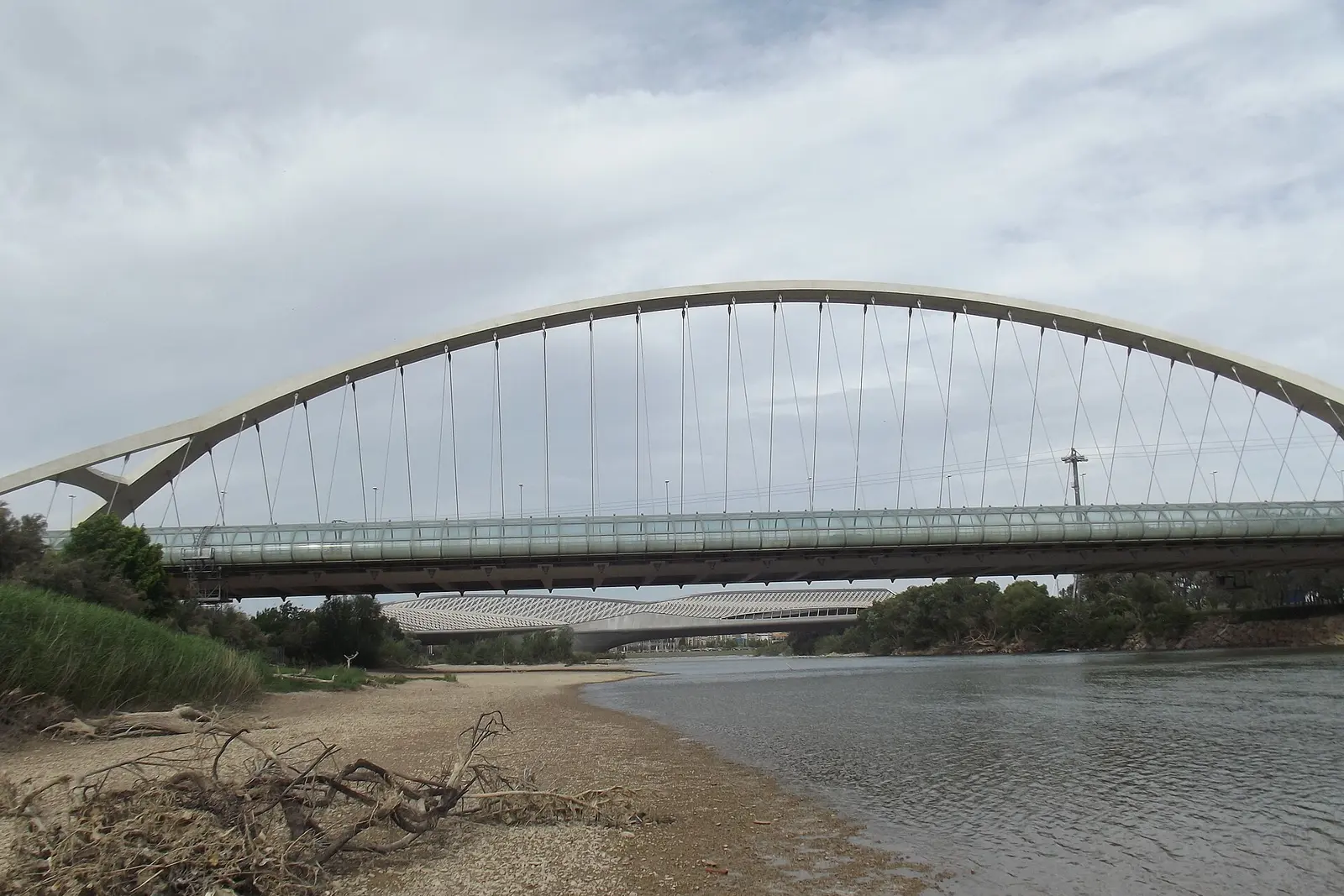
- Architecture fans after Zaha Hadid's bridge pavilion and the Expo 2008 shells
- Paddlers who like the idea of kayaking under the city's bridges
Skip if
- You mainly wanted to climb the Torre del Agua; it closed in December 2025 for conversion into a logistics landmark
- You are short on time and Zaragoza's old town is still unseen
- You dislike scruffy edges; parts of the riverfront are visibly under-maintained
What it costs
- Acuario de Zaragoza, general entry: €20 (4 to 14 year olds, seniors and disabled visitors 14 EUR; under 4 free; online family pack for 2 adults and 2 children 55 EUR; open daily 10:00 to 20:00, ticket desk closes one hour earlier). Official source, checked Oct 2026.
- Mobility City museum, Zaha Hadid bridge pavilion: €0 (Free entry; Tuesday to Saturday 10:00 to 14:00 and 16:00 to 20:00, Sundays and holidays 10:00 to 14:00). Official source, checked Oct 2026.
What travelers report
Based on 12 traveler reports (Mar 2025 to Aug 2026) and the official sources linked on this page. 0 were negative.
What people like
- The river aquarium earns the strongest marks: five continent tanks, the tunnel and the otters rated highly for a family half-day (3 of 12 reports).
- Kayak descents are described as an original way to see the city, including a 250-boat community run (1 of 12 reports).
- Walkers praise the flat riverside path linking the old town, the Hadid bridge and the Ranillas meander (4 of 12 reports).
- Basilica reflections and evening breezes make the north-bank walk the reports' favorite free sunset (3 of 12 reports).
What people complain about
- The Torre del Agua, the district's signature climb, is closed pending conversion with no public reopening date (1 of 12 reports).
- The legacy monitor's park walkthrough catalogues broken furniture, dead fountains and dated signage across the zone (1 of 12 reports).
- Parts of the riverside read scruffy, with dirtier stretches and dimmer lighting after dark (2 of 12 reports).
- The zone is a business district on weekdays and feels empty outside the aquarium's opening crowd (1 of 12 reports).
How to do it right
- Walk the riverbank from the Puente de Piedra: about thirty minutes on foot past the Parque Macanaz meander, or take city bus Ci1 or Ci2 toward Ranillas.
- Book the aquarium online for the family pack discount; inside, the five river tanks and the otter section take ninety minutes to two hours.
- Cross the Expo grounds on the Zaha Hadid bridge pavilion, which doubles as the free Mobility City museum.
- Kayak descents run Saturday mornings and summer Thursday evenings from March to October, launching upriver at Juslibol and finishing under the city bridges.
- Treat the Torre del Agua as a photo stop only: it is fenced for works, and the last public climbs ran in early December 2025.
- Time the walk back for dusk; the riverside bars around the Echegaray embankment do the best river views with a drink.
The trap to avoid
Older coverage still pitches the Torre del Agua as the zone's climbable icon. It is closed while it is converted into a logistics landmark; the Splash sculpture stays on the plaza outside, but there is no viewpoint until works finish.
What to do instead
Why this verdict
The Expo 2008 ground is two things at once. On one side it holds Zaragoza’s most distinctive modern artifacts: the largest river aquarium in Europe, a Zaha Hadid bridge pavilion that now houses a free mobility museum, and a water tower wrapped in a Splash sculpture. On the other it is a business park wrapped in parkland whose upkeep a volunteer association documents item by item: broken furniture, flooded fountains, empty planters and signage left over from 2008. What justifies the half-hour walk is concrete. The aquarium runs daily at 20 EUR flat, and recent visit reports rate the five continent tanks, the tunnel and the otters highly, with one seniors’ outing wishing it had booked double the time. Kayak descents run the urban leg of the Ebro past the lit basilica, and the riverside path itself is the walkers’ favorite free hour, with the caveat that quieter stretches go dim and less-kept at night. The Torre del Agua, the district’s signature climb, is closed while it is rebuilt as a logistics landmark, so the verdict hangs on whether the aquarium and the river walk fill your half day. For most travelers they do; sightseers expecting a polished attraction district should read the wear reports first.
Book or check times
Acuario de Zaragoza ticketsMobility City museumebroNAUTAS kayak descentsZaragoza city tourism portal
Questions
Is the Torre del Agua open?
No. The tower is closed while it is converted into a logistics landmark; the Splash sculpture outside remains visible, but there is no public reopening date.
How much is the Zaragoza aquarium?
General entry is 20 EUR and the 4 to 14, senior and disabled rates are 14 EUR, with under-4s free and an online family pack at 55 EUR. It opens daily 10:00 to 20:00.
Can you kayak the Ebro without experience?
Yes. Guided urban descents run in stable boats with a safety briefing, and community runs have welcomed hundreds of non-specialist paddlers.
How do you get to the Expo site from the center?
Walk thirty minutes along the north bank from the old town, or ride the Ci1 or Ci2 city bus. The riverside path is flat the whole way.
Is the riverfront safe and clean?
The main paths are fine and busy with locals, but watchdog reports document broken furniture, dead fountains and dated signage on the Frente Fluvial; expect scenic wear rather than dereliction.
Pack for it
Gear verdicts from our sister site, Real Buyer Experiences: