Warsaw / The verdict
Is the POLIN Museum in Warsaw worth it?
Yes. Reports put it among the best museums in Poland: eight chronological galleries cover a thousand years of Jewish life on Polish soil, not just the Holocaust, on the site of the former ghetto. Give it two to four hours, take the free audio guide, and know that Thursdays are free.
By The Real Traveler Experiences team. We earn a commission if you book through our links. It never changes a verdict.
The Warsaw story
Warsaw surprises travelers who arrive expecting a grey post-communist capital. The [Old Town](/warsaw/old-town-warsaw/) is a brick-by-brick postwar reconstruction so faithful it earned its own UNESCO listing, and the museums carry real weight: the [POLIN Museum](/warsaw/polin-museum/) on a thousand years of Jewish life and the [Warsaw Uprising Museum](/warsaw/warsaw-uprising-museum/) both rank among the most praised in the country's traveler reports.
The verdict in 30 seconds
Go
Yes. Reports put it among the best museums in Poland: eight chronological galleries cover a thousand years of Jewish life on Polish soil, not just the Holocaust, on the site of the former ghetto. Give it two to four hours, take the free audio guide, and know that Thursdays are free.
Go if
- You want the full sweep of Polish Jewish history, not only the wartime chapters
- You appreciate narrative exhibitions built from reconstructions, sound, documents and multimedia rather than objects in cases
- You can give it at least two hours; travelers call it too much to absorb faster
Skip if
- Your only free day is a Tuesday, when the museum is closed
- You want a short, object-driven museum; reports describe a dense 1,000-year narrative that punishes rushing
- You are at capacity for heavy history on this trip; the 20th-century galleries are sobering by all accounts
What it costs
- Combined ticket (core exhibition, temporary shows, Legacy Gallery, audio guide): zł 45 (reduced 35 PLN; groups of 10 or more 30 PLN per person). Official source, checked Oct 2026.
- Family ticket: zł 95 (two adults plus up to four children under 18). Official source, checked Oct 2026.
- Students 7-26 with a Polish student card: zł 1 (the deepest discount in Warsaw's museum scene). Official source, checked Oct 2026.
- Private guided tour, non-Polish languages: zł 350 (250 PLN in Polish; joining a scheduled shared tour costs 45 PLN per person). Official source, checked Oct 2026.
- Thursday admission: zł 0 (core and temporary exhibitions are free on Thursdays). Official source, checked Oct 2026.
What travelers report
Based on 13 traveler reports (Feb 2025 to Sep 2026) and the official sources linked on this page. 0 were negative.
What people like
- The scope: reports love that it restores a thousand years of Jewish life rather than opening with the Holocaust.
- The design: a striking wave-walled building opposite the Ghetto Heroes Monument and an exhibition built from reconstructions, sound and multimedia.
- The free audio guide included with every ticket, which reports call good.
- Repeat visitors keep finding new material: one has been three times without finishing, another says every visit turns up something new.
What people complain about
- The sheer volume overwhelms: multiple reports describe a firehose of information, and one calls the overload noticeable already in the first galleries.
- Easy to misjudge time; travelers report lingering too long in the early rooms and rushing the modern ones.
- It is intellectually demanding rather than object-driven, so visitors wanting artifacts and masterpieces can leave lukewarm.
- One roots-traveler argues the narrative paints an overly rosy picture of Polish tolerance toward Jews.
- Closed Tuesdays, which catches people stacking a midweek museum day.
How to do it right
- Check the day: the museum is closed Tuesdays; it runs 10:00 to 18:00 on Monday and Wednesday to Sunday, and until 20:00 on Saturdays.
- Note the last core-exhibition entry is two hours before closing, 16:00 most days and 18:00 on Saturdays.
- Buy a timed ticket at bilety.polin.pl or on site; the combined ticket already includes the audio guide.
- Pick up the free audio guide near the ticket desk and plan a minimum of two hours; reports say the full sweep rewards three to four, and one visitor stretched three planned hours past four.
- Walk about 20 minutes from the Old Town or take bus 111 or 180 to the Nalewki-Muzeum stop at Mordechaja Anielewicza 6.
- On Thursdays the core and temporary exhibitions are free.
- With children there is a dedicated kids' audio path; one family ended the visit before the Holocaust galleries on purpose.
The trap to avoid
Arriving late or expecting a Holocaust museum you can skim in an hour. This is a 1,000-year chronological narrative across eight galleries, and reports repeatedly warn that people burn out in the early rooms and then rush the modern sections. Enter before the 16:00 last core admission (18:00 Saturdays) and pace yourself, or come back, since the day ticket lets you take breaks.
Why this verdict
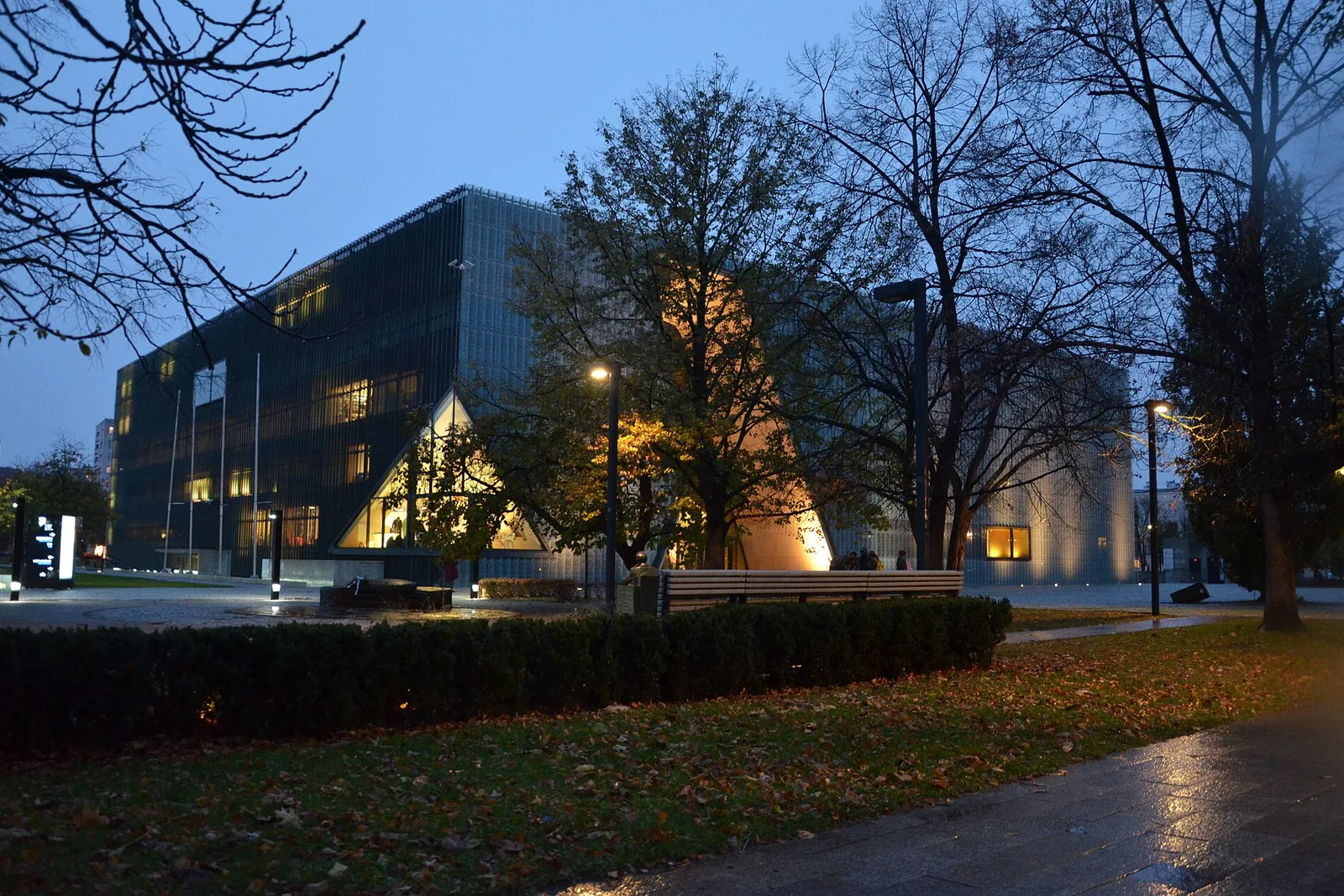
Reports converge on the same verdict: this is one of the best museums in Poland, and maybe the most ambitious history museum in the country. Across eight chronological galleries it tells a thousand years of Jewish life on Polish soil, which is why reviewers keep stressing it is not a Holocaust museum; the war chapters are devastating precisely because you have just walked through centuries of what was destroyed. The wave-walled building on the edge of the former ghetto, opposite the Ghetto Heroes Monument, does part of the work before you reach a single gallery.
The trade-off is volume. Travelers describe a firehose of stories, quotations, recordings and reconstructions, and several admit burning out in the medieval rooms and rushing the modern ones. A rare lukewarm editorial review found it intellectually serious but thin on iconic objects, and one roots-traveler argues the narrative is too gentle on Polish antisemitism. Budget real time, take the free audio guide included with every ticket, and pace yourself. Return visits pay off: reports from repeat visitors say they still have not seen it all.
Timing and tickets
The combined ticket is 45 PLN (35 reduced, 95 for families), and Thursdays are free for the core and temporary exhibitions. Closed Tuesdays; open 10:00 to 18:00 otherwise, Saturdays until 20:00, with last core entry two hours before close. It sits about a 20-minute walk from the Old Town Market Square, with buses 111 and 180 stopping at Nalewki-Muzeum when you would rather ride.
Book or check times
Admission, hours and free ThursdaysOnline ticket shop
We earn a commission if you book through our links. It never changes a verdict. How this works
See the small-group visitpartner site
Questions
How long does POLIN take?
The museum itself says minimum two hours for the core exhibition. Reports range from 90 minutes at a brisk pace to most of a day for thorough visitors, and the ticket is valid all day so you can break for lunch.
Is it only about the Holocaust?
No. The eight galleries cover a millennium of Jewish life in Polish lands: settlement, culture, trade and scholarship. The Holocaust is one part, which reports say makes those galleries hit harder because you have seen what was lost.
Is there a free day?
Yes, Thursdays: the core and temporary exhibitions are free.
Do I need a guide or audio guide?
The audio guide is free with every ticket and reports call it well done. A private guided tour is 350 PLN in non-Polish languages; one visitor felt a human guide would have let him dig into topics the audio only skims.