Siena / The verdict
Is attending the Palio di Siena worth it?
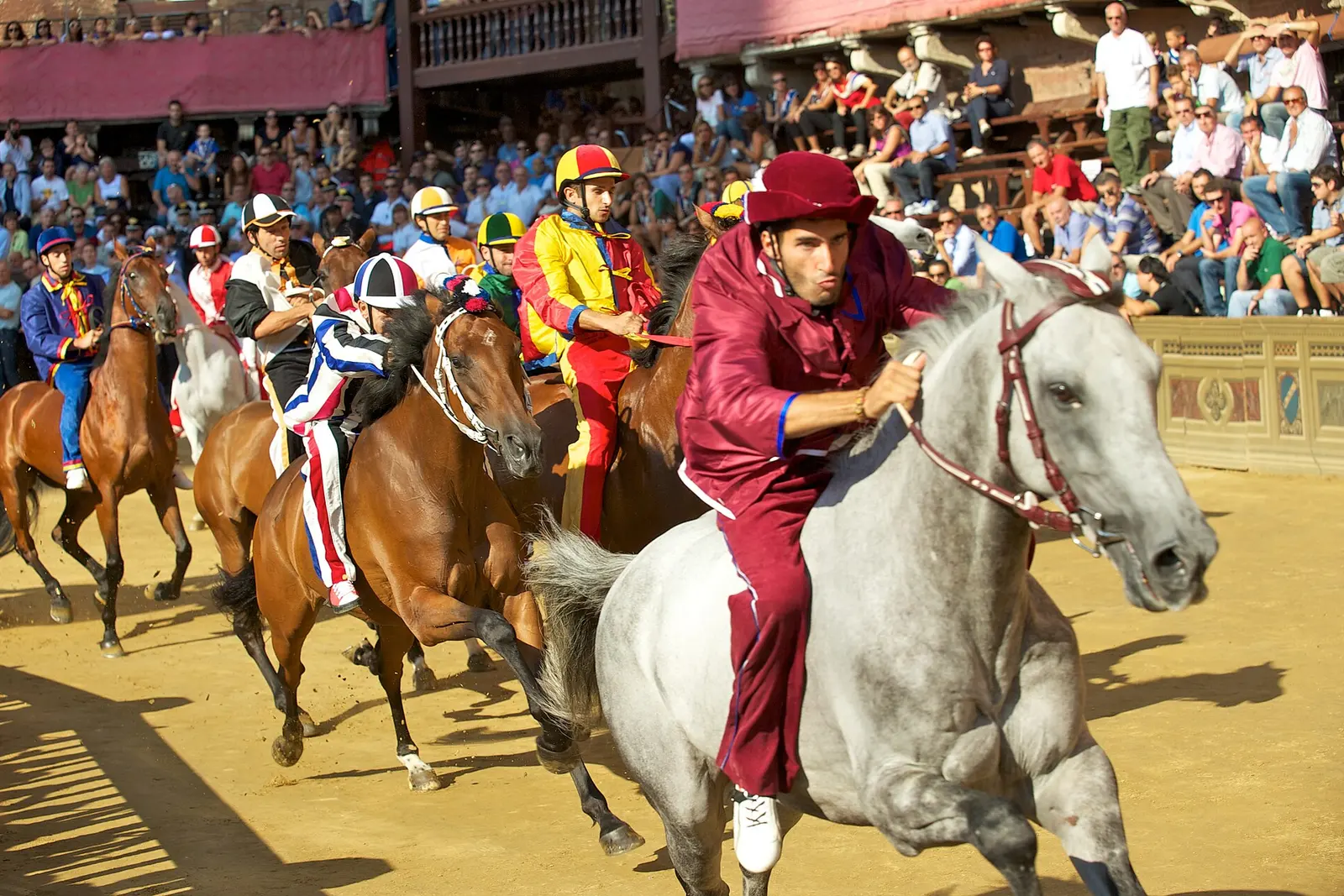
Yes, if you approach it as a pilgrimage rather than a sightseeing stop: the Palio is a bareback race that lasts about ninety seconds and organizes an entire city's year around it, the free center of the square is a genuine endurance test, and five of the last six races have been postponed by rain, so build slack days into the trip.
By The Real Traveler Experiences team.
The Siena story
Siena is the medieval counterpoint to Florence's Renaissance showpiece: a brick-built hill town wrapped around the shell-shaped Piazza del Campo, still run by the seventeen contrade that race the Palio twice a summer. The Duomo is arguably Italy's most ornate cathedral interior, and the whole centre is a pedestrian maze of flags, fountains and contrada museums, smaller and slower than Florence and all the better for it.
The verdict in 30 seconds
Go
Yes, if you approach it as a pilgrimage rather than a sightseeing stop: the Palio is a bareback race that lasts about ninety seconds and organizes an entire city's year around it, the free center of the square is a genuine endurance test, and five of the last six races have been postponed by rain, so build slack days into the trip.
Go if
- Anyone who wants to witness a living civic ritual rather than a show staged for visitors
- Travelers who can give the event several days: the trials, blessings, dinners and corteo are the real substance
- People willing to stand packed for hours in the Campo or to spend real money on a private seat
Skip if
- Anyone who cannot stand shoulder to shoulder for hours with no shade, no toilet and no exit once the square seals
- Visitors who just want a normal sightseeing day in Siena: Palio week makes the city harder rather than easier, to tour
- Travelers on a rigid schedule: rain has pushed five of the last six Palios by a day or two
What it costs
- Standing area inside Piazza del Campo on race day: €0 (free until capacity; reports advise being inside by early to mid-afternoon at the latest, entries seal about 45 minutes before the race). Official source, checked Oct 2026.
- Trial races (prove) on the three days before each Palio: €0 (six trials, morning and evening, free entry to the square with far smaller crowds). Official source, checked Oct 2026.
What travelers report
Based on 13 traveler reports (Mar 2025 to Aug 2026) and the official sources linked on this page. 1 was negative.
What people like
- Reports call it the most impassioned civic event in Italy: ninety seconds that organize a city for a year.
- The surrounding days deliver as much as the race: drummers in the streets, contrada dinners, horses blessed in churches.
- The prove trials give you the ritual free and without the crush.
- Even visitors caught in the scrum describe the silence before the mossa and the eruption after as unforgettable.
What people complain about
- The free center means hours packed tight in summer heat with no toilet, no seat and no exit once sealed.
- Paid seats have no box office: prices vary by private owner and the best spots go months ahead.
- Rain keeps moving the race: five of the last six Palios ran a day or two late.
- Palio week is the worst time for normal sightseeing: streets jam, museums crowd and hotel prices spike.
How to do it right
- Choose early between the free center of the Campo and a paid seat; there is no central box office, because every seat is private property
- For a grandstand (palco), window or balcony, contact the operators or owners months ahead, directly or through the specialist agencies; reports put bleacher seats around EUR 300 to 400 and windows or balconies quoted up toward EUR 600
- For the free center, get inside by mid-afternoon at the latest, take water, a hat and sun protection, and accept there is no toilet, no seat and no way out once the entrances seal
- Do not plan around the race alone: the four days leading up include the horse draw, six trial races, the blessing of each horse in its contrada church and the two-hour historical procession on race day
- If the date is impossible, attend a prove trial instead: same square, same ritual, free entry and a fraction of the crowd
- Keep the next day or two flexible: rain has repeatedly postponed the race, and the green flag on the Palazzo Pubblico is the official signal
The trap to avoid
Two surprises catch first-timers. The free center is not a spectator area but an endurance test: tens of thousands packed in, sealed shut about 45 minutes before the start, with no shade, seats or toilets in high-summer heat. And the date on your calendar is soft: the race is fixed on 2 July and 16 August, but rain postpones it regularly, so a rigid itinerary can miss the whole event.
What to do instead
Why this verdict
Reports converge on the same paradox: the Palio is a bareback horse race of about ninety seconds, and it is the most emotionally loaded public event most witnesses have ever seen. It is run twice a year, on 2 July and 16 August, by a city that organizes its year around it. Writers who came for the spectacle describe the four days around the race as the real event: the tratta draw, six trial races in the square, horses blessed inside contrada churches, district dinners and a two-hour costumed procession.
Two ways to watch
The free center of the Campo is where the Sienese stand, and it is punishing: tens of thousands packed shoulder to shoulder, the entrances sealed about 45 minutes before the start, no shade, no seats, no toilets, no exit. Get in by early afternoon at the latest. The alternative is a private seat, and that market confuses everyone the first time: there is no box office, because every grandstand, window and balcony belongs to someone. Reports put bleacher seats around EUR 300 to 400 and windows or balconies up toward EUR 600, arranged months ahead through the operators or specialist agencies.
The real risks
Rain is the unforgiving one. The dirt track cannot take a storm, and five of the last six Palios ran a day or two late; the August 2026 race finally ran on the 18th. Build slack into the trip, or watch a free trial instead.
Book or check times
Official Palio portal for the City of SienaRace-day schedule and advice from Visit Siena
Questions
When does the Palio run?
Twice a year on fixed dates: 2 July (Palio di Provenzano) and 16 August (Palio dell'Assunta), whatever the weekday. The four days before each race hold the trials, the horse blessings and the contrada dinners; the race itself takes about 90 seconds.
Can I watch the Palio for free?
Yes: the center of Piazza del Campo is free until it reaches capacity, which is where most Sienese stand. It is punishing, though: arrive early afternoon, expect to be sealed in about 45 minutes before the race, and there are no toilets, seats or shade.
How do I buy a grandstand or balcony seat?
There is no box office: seats belong to private owners and palco operators around the square, sold individually or through specialist agencies. Forum members report bleacher seats running around EUR 300 to 400, and trip reports put balconies and windows up toward EUR 600.
What happens if it rains?
Rain makes the dirt track unraceable and the Palio is postponed, announced by a green flag on the Palazzo Pubblico. It has happened a lot lately: both 2024 races, the July 2025 race and both 2026 races all ran late. Keep the following days free.
Is the free center suitable for children or anyone unsteady?
Reports compare the packed square to Times Square on New Year's Eve and call leaving early physically impossible. Families and anyone who needs a bathroom, a seat or an exit should pay for a seat or watch a trial race instead.
Are the trial races worth attending?
Yes. Six prove run morning and evening across the three days before each Palio, free to enter with far smaller crowds, and locals treat them as the gentlest way to experience the ritual.