Siena / The verdict
Siena or Florence: which to visit?
Split your time if you can: Florence holds the Renaissance art and big-city energy, Siena holds the intact medieval core and calmer evenings, and reports consistently say each earns at least a night. Choosing one comes down to whether you want museums or atmosphere.
By The Real Traveler Experiences team. We earn a commission if you book through our links. It never changes a verdict.
The Siena story
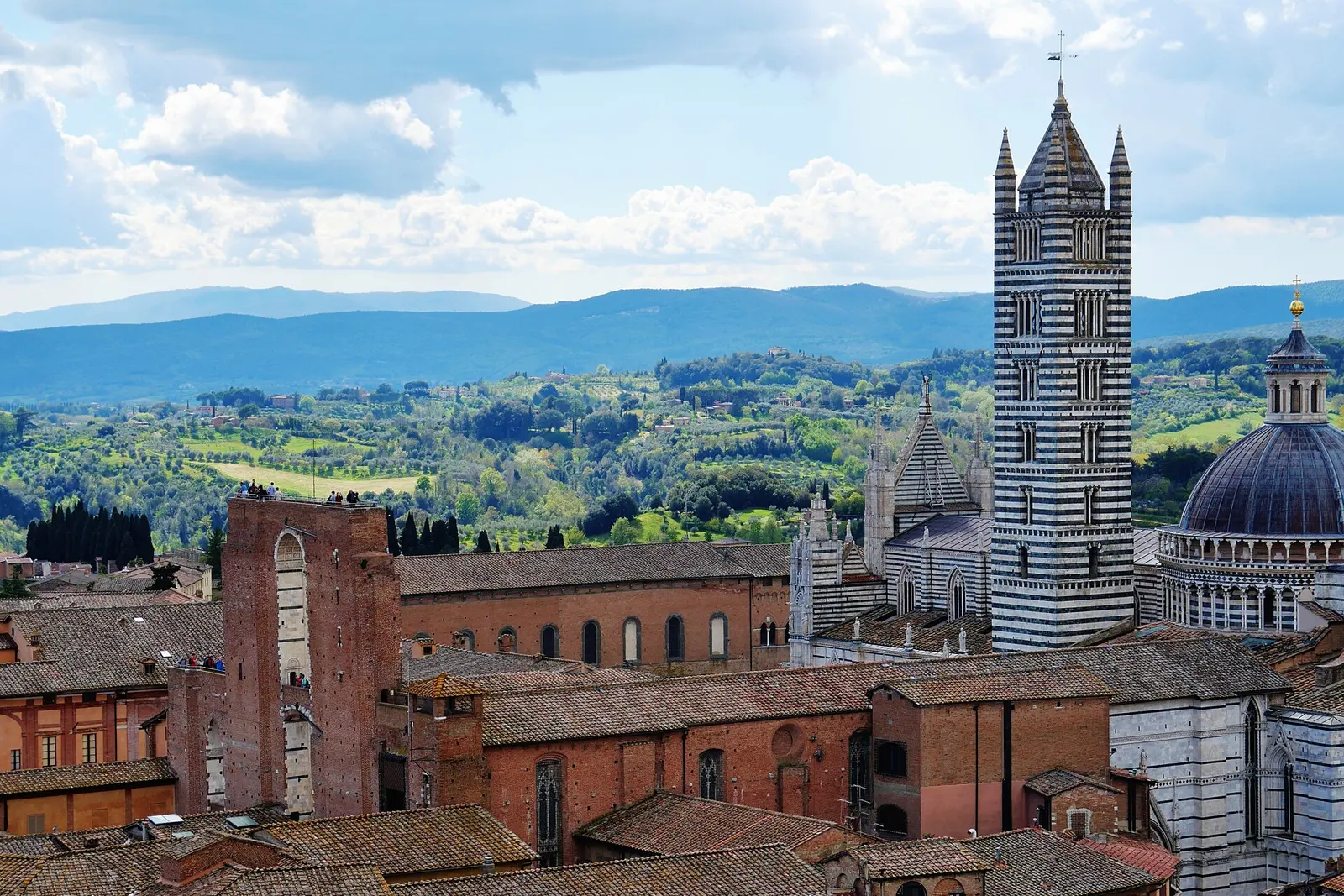
Siena is the medieval counterpoint to Florence's Renaissance showpiece: a brick-built hill town wrapped around the shell-shaped Piazza del Campo, still run by the seventeen contrade that race the Palio twice a summer. The Duomo is arguably Italy's most ornate cathedral interior, and the whole centre is a pedestrian maze of flags, fountains and contrada museums, smaller and slower than Florence and all the better for it.
The verdict in 30 seconds
Our pick: Split nights between both (runner-up: Florence)
Split your time if you can: Florence holds the Renaissance art and big-city energy, Siena holds the intact medieval core and calmer evenings, and reports consistently say each earns at least a night. Choosing one comes down to whether you want museums or atmosphere.
Go if
- You are planning a Tuscany trip and weighing whether to base in Florence, in Siena, or split nights between them
- You want the art-heavy city and the atmospheric medieval one compared on sights, crowds, cost and pace
- You are deciding whether Siena works as a day trip from Florence or deserves its own overnight
Skip if
- You want a single-objective trip and already know whether art or medieval atmosphere is your priority; the comparison answers itself
- You have under a full day; both cities reward more time than a stopover
- You expect nightlife or dining at Florence's scale from Siena; the smaller city is quieter by design
The options
Split nights between both Go
Most travelers with three or more nights who want both the art city and the medieval one without day-trip compromises.
Good
- Reports consistently call the two cities complementary rather than substitutes; each earns its own overnight.
- Florence delivers the art and energy, Siena delivers the intact medieval core and calm evenings, so splitting covers both.
- Avoids the day-trip tradeoffs where one city gets reduced to a few crowded midday hours.
Watch out
- Requires moving hotels, which costs a half day of logistics between the cities.
- Needs at least three nights total to make the split worthwhile.
- Slightly more planning than basing in one city.
Compare transfer optionspartner site
Florence Go
Travelers whose trip centers on the Uffizi, the Duomo and Renaissance art, or who want the biggest hotel and transport base.
Good
- Holds the Uffizi, the Duomo, the Accademia and the highest density of Renaissance art in Tuscany.
- Offers the largest range of hotels, restaurants and transport links of any city in the region.
- Works as the stronger base if your itinerary runs on museums and major sights.
Watch out
- Carries big-city crowds and pricing, and reports describe the center as saturated in season.
- Less of the lived-in medieval atmosphere that Siena keeps; the center is heavily tourist-facing.
- The scale means the major sights need booking ahead and queues are part of the day.
See hotel options in Florencepartner site
Siena It depends
Travelers who want an intact medieval city, calmer evenings and a base for the wine-and-hill-town countryside south of Florence.
Good
- Reports call it the most intact medieval core in Tuscany, with the Campo and contrade giving a different feel from Florence.
- Calmer and more compact, with lower prices and an evening atmosphere that rewards staying over.
- The better base for Chianti, San Gimignano and the Val d'Orcia, which sit between Siena and the south.
Watch out
- Smaller and quieter, so travelers wanting nightlife or Florence's dining range may find it thin.
- Lacks Florence's museum depth; the sights are one cathedral complex plus the contrade lanes.
- The station sits outside the walls about 2 kilometers from the Campo, adding a hop on arrival.
See hotel options in Sienapartner site
Siena as a day trip from Florence Skip
Only travelers locked into Florence who cannot move hotels and accept a compressed visit.
Good
- The bus from Florence to the Campo takes about 75 minutes, so the trip is easy logistically.
- Covers the Campo, the Duomo complex and a walk through the contrade in a long day.
- Works when a split stay is off the table.
Watch out
- Reports say the day trip misses Siena's payoff: the evening atmosphere after day visitors leave.
- You compress a city that rewards a slow evening into a few midday hours.
- Travelers who overnight in Siena describe a different city than the one day-trippers report.
| Criterion | Split nights between both | Florence | Siena | Siena as a day trip from Florence |
|---|---|---|---|---|
| Core appeal | Both: art city plus medieval core | Renaissance art and major museums | Intact medieval streets and atmosphere | Compressed version of Siena only |
| Typical pace | Balanced; a night or two in each | Busy; big-sight focus | Relaxed; compact and walkable | Rushed; midday hours only |
| Cost level | Mid: two bases, moderate rates | Highest: Florence pricing | Lower: smaller-city rates | Same as Florence plus transport |
| Evening atmosphere | Gets Siena's quiet lanes and Florence's energy | Lively but touristy | Calmer; the reward for staying | Missed: you are back in Florence by dusk |
| Base for day trips | Best: Florence north, Siena south | Strong for Tuscany broadly | Best for Chianti, San Gimignano and Val d'Orcia | None; Siena itself is the trip |
| Best for | Trips of three or more nights | Art-first itineraries | Medieval-atmosphere trips | Hotel-locked Florence stays only |
| Main downside | Hotel move costs a half day | Crowds and prices in season | Quieter; less museum depth | Misses the evening payoff |
What it costs
- OPA SI Pass (Duomo complex, Siena): €21 (covers the cathedral, crypt, baptistery and Museo dell'Opera). Official source, checked Oct 2026.
- Uffizi Gallery, Florence: €25 (standard high-season admission; reduced tickets apply for eligible visitors). Official source, checked Oct 2026.
What travelers report
Based on 12 traveler reports (Jan 2025 to Oct 2026) and the official sources linked on this page. 0 were negative.
What people like
- Travelers praise Siena's intact medieval core and call it calmer and more liveable than Florence.
- Florence earns superlatives for the Uffizi, the Duomo and the sheer density of Renaissance art.
- Reports say splitting nights between the two cities beats choosing one or day-tripping the other.
- Siena's contrade culture and evening atmosphere get warm remarks as a different kind of experience.
What people complain about
- Florence's crowds and prices wear on visitors in season, especially around the Duomo and Uffizi.
- Siena can feel too quiet for travelers wanting nightlife or a wide restaurant scene.
- Reports flag that treating Siena as a lesser Florence sets the wrong expectations; it is a different trip.
- One-off day-trippers miss the evening payoff in Siena that overnight reports praise most.
How to do it right
- Split nights between the cities if your trip allows: reports describe them as complementary, with Florence for art and Siena for atmosphere.
- Base in Florence if museums and Renaissance sights are the priority and you want the largest range of hotels and transport links.
- Base in Siena if you want a calmer, more compact base and day trips into Chianti, San Gimignano and the Val d'Orcia.
- If you can only day-trip one way, Florence to Siena by bus is the easy version: about 75 minutes to the Campo.
- Book Florence's big-ticket sights ahead in season; Siena's smaller scale means less advance planning.
The trap to avoid
Treating Siena as a lesser Florence. Reports consistently frame them as different trips: Florence for the art pilgrimage, Siena for the intact medieval city that still feels lived in. Choosing Siena expecting Renaissance-scale museums, or Florence expecting calm lanes, is the mismatch to avoid.
Why this verdict
Florence and Siena are less rivals than complements, and the reports land on the same answer: split your nights if the trip allows. Florence delivers the Uffizi, the Duomo and the Renaissance-art pilgrimage, with big-city scale and prices to match. Siena delivers the most intact medieval core in Tuscany, calmer evenings and a lived-in feel that Florence’s center has largely lost. A few days covering both beats choosing one.
The runner up is Florence alone, because its museum density suits the trips most travelers plan first: art, major sights, the widest hotel base. Siena alone is the depends pick for travelers whose trip is the atmosphere and the hill-town countryside south of Florence, where Siena is the better base. The one option the reports push back on is Siena as a day trip from Florence: the bus is easy at about 75 minutes, but day-trippers describe a compressed midday version of a city whose payoff is the evening. Travelers who stay over describe a different, better Siena.
So the straight answer is both, if you can. If not, match the city to the trip: Florence for the art pilgrimage, Siena for the medieval atmosphere and the wine-country base, and skip the day-trip version unless moving hotels is truly off the table.
Book or check times
Comune di Siena tourist informationUffizi Galleries official tickets
We earn a commission if you book through our links. It never changes a verdict. How this works
See hotel options in Florencepartner siteSee hotel options in Sienapartner siteCompare transfer optionspartner site
Questions
Is Siena or Florence better for a first Tuscany trip?
Reports favor splitting time when possible: Florence for the art and energy, Siena for the medieval core and calmer pace. If you must pick one, Florence suits museum-driven trips and Siena suits travelers who want a compact, atmospheric base.
Is Siena worth visiting if I am staying in Florence?
Yes. The bus from Florence to the Campo takes about 75 minutes, and reports describe Siena as one of the best day trips in the region. Many travelers say an overnight beats the day trip for the evening atmosphere.
Which city is cheaper, Siena or Florence?
Siena generally runs lower on hotels and meals, though the gap narrows in high season and around the Palio. Florence carries big-city pricing, especially near the Duomo and Uffizi.
How many days do I need in each city?
Reports put Siena's highlights at one long day or an overnight, with two days comfortable. Florence needs at least two to three days for the major museums and neighborhoods without rushing.
Is it easy to do a day trip between Siena and Florence?
Yes. Buses run between the cities in about 75 minutes and trains take a similar total time with a connection. Reports describe Florence to Siena as the easier direction because the bus drops you near the Campo.