Segovia / The verdict
Are Segovia's aqueduct and old town worth it?
Yes: the aqueduct spans the center of town with no ticket to see it from the street, it looks bigger in person than in photos, and the lanes and plazas behind it fill a relaxed half day.
By The Real Traveler Experiences team. We earn a commission if you book through our links. It never changes a verdict.
The Segovia story
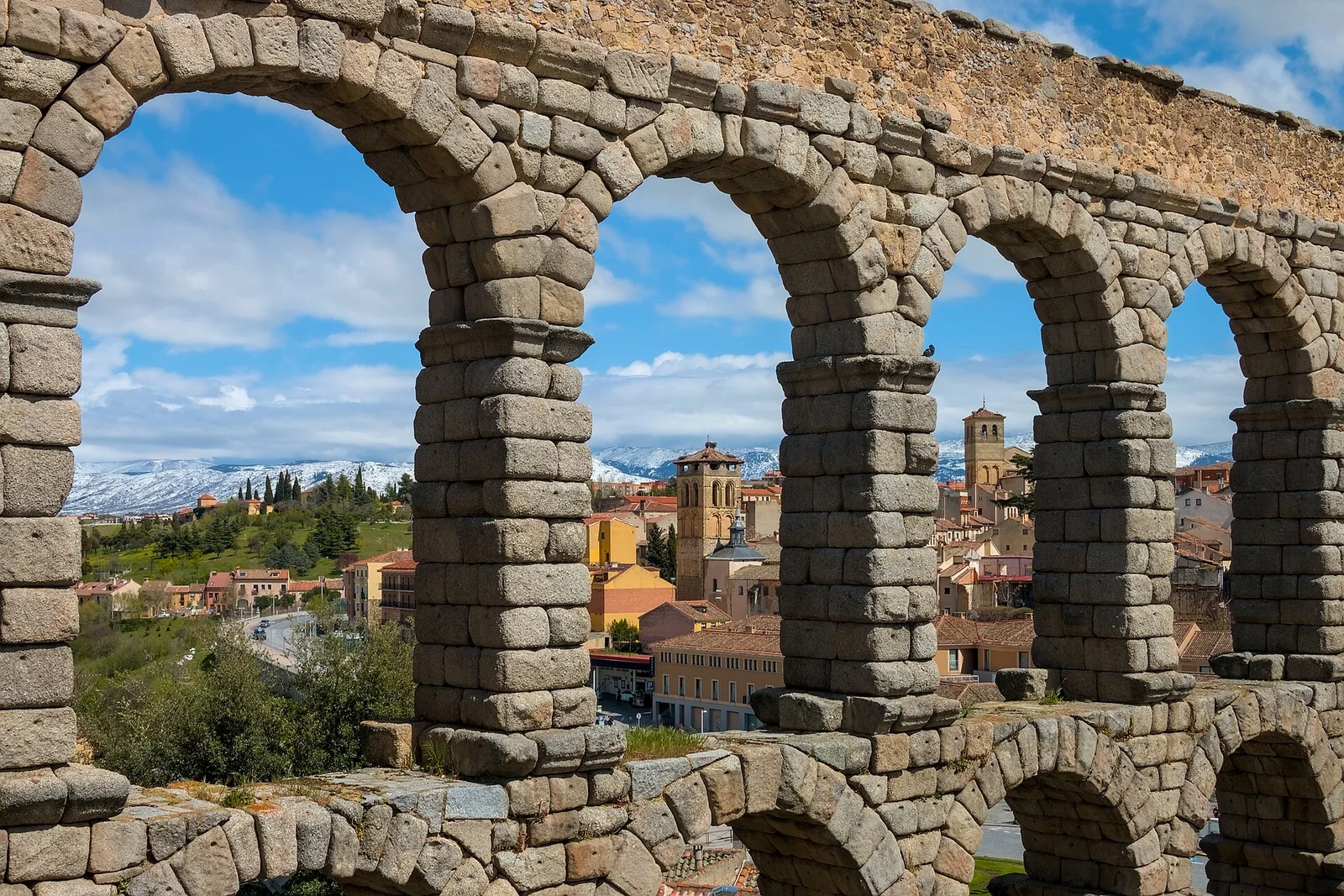
Segovia opens with one of the great entrances in Europe: the aqueduct strides into town on 167 arches of dry-stacked granite, no mortar anywhere, and travelers consistently describe standing under it as the moment the trip felt real. Above the rooftops the Alcazar perches on its rock prow like a ship's bow with turrets, the cathedral fills the Plaza Mayor with late-Gothic light, and the cochinillo restaurants have been roasting suckling pig in wood ovens for generations.
The verdict in 30 seconds
Go
Yes: the aqueduct spans the center of town with no ticket to see it from the street, it looks bigger in person than in photos, and the lanes and plazas behind it fill a relaxed half day.
Go if
- Photographers: reports point to the Mirador del Acueducto, with the east side best in the morning and the west side in the afternoon
- History walkers: a Roman monument anchoring medieval lanes, the Jewish quarter and sgraffito facades
- Slow travelers: the old town is compact and walkable, with no timed slots for the aqueduct itself
- Bus arrivals, since the main stop in the center sits right beside the aqueduct
Skip if
- Visitors who dislike crowds and can only come in the middle of the day, when tour groups are in town
- Travelers who struggle with hills, since reports call the walkable center hilly
- Anyone unwilling to watch their bags: one report flags pickpockets around the aqueduct and Plaza Mayor
What it costs
- Real Casa de Moneda incl. the Aqueduct Interpretation Center: €5 (Reduced 4 euros; free on Wednesdays that are not holidays (conditions apply); includes the museum and the Aqueduct Interpretation Center). Official source, checked Oct 2026.
- Centro Didactico de la Juderia: €3 (Reduced 2 euros; free on Wednesdays that are not holidays (conditions apply)). Official source, checked Oct 2026.
- City wall and Puerta de San Andres: €2 (Reduced 1 euro; free on Wednesdays that are not holidays (conditions apply)). Official source, checked Oct 2026.
What travelers report
Based on 10 traveler reports (Oct 2024 to Dec 2025) and the official sources linked on this page. 0 were negative.
What people like
- Scale that photos undersell: several reports say the 167-arch aqueduct is far more impressive up close
- It is woven into daily streets: buses stop beside it and walks start under the arches at Azoguejo
- The old town behind it rewards wandering: the Casa de los Picos, sgraffito facades, the Jewish quarter and Plaza Mayor
- Early starts pay off: reports recommend morning light and thinner crowds before the tour groups arrive
What people complain about
- Tour groups arrive around mid-morning and again in the afternoon, per one visitor's local driver
- One report flags pickpockets around the aqueduct and Plaza Mayor at busy times
- Parking near the center is hard, so one guide suggests a hotel with parking or leaving the car outside the old town
- Summer heat makes the hilly walk tiring, as one backpacker found
How to do it right
- Start at the Mirador del Acueducto at the top of the Azoguejo stairs; one family guide prefers the east side in morning light and the west side in the afternoon.
- Walk under the arches at Plaza del Azoguejo, then follow Calle Cervantes and Calle Juan Bravo past the Casa de los Picos toward Plaza Mayor.
- Loop the old town on foot: the Jewish quarter, Plaza Mayor and the cathedral sit within an easy walk of the aqueduct.
- Come early: reports put tour-group arrivals around 10:00 and again around 16:00.
The trap to avoid
Treating the aqueduct as a quick photo stop at midday. The arches sit in the street with no ticket, so the better move is to come early, take the Mirador view in morning light and walk the old town before the tour groups arrive around 10:00.
What to do instead
Why this verdict
The aqueduct alone justifies the trip, and the old town keeps you there. The city tourism site counts 167 granite arches, a top height of 28.10 meters at Azoguejo and about 20,400 blocks held without mortar, and travelers report the same reaction in person: one visitor called herself gobsmacked, a day-tripper found it far more impressive than any photo, and a family diary judged it in amazing shape for a structure built without mortar. It is also part of the street. The local bus from the high-speed station stops right beside it, and walks start under the arches.
Behind it, the old town is a slow-walk place rather than a checklist. Reports string together the Casa de los Picos, the sgraffito facades, the Jewish quarter and Plaza Mayor, a 42-minute walking video runs from the aqueduct through Azoguejo and Calle Cervantes to Plaza Mayor, and forum travelers describe a small, walkable town where the main sights fit one day on foot. One guide flags pickpockets around the aqueduct and Plaza Mayor and hard parking near the center, and a backpacker found the hills tiring in summer heat.
The evidence is lopsided: nine of the ten reports are positive and one is mixed, and none questions the aqueduct itself. The complaints are about timing, crowds and logistics, not the monument.
Timing and tickets
Timing is the only real skill. One visitor’s driver told her tour groups arrive around 10:00 and again around 16:00, and a day-tripper recommends the morning for light and thinner crowds; a family guide adds that the east side photographs best in the morning and the west side in the afternoon. Nothing needs booking for the aqueduct. The paid extras are the Real Casa de Moneda with the Aqueduct Interpretation Center at 5 euros, the Jewish quarter teaching center at 3 euros and the wall walk at the Puerta de San Andrés at 2 euros, all free on Wednesdays that are not holidays under the conditions the city lists.
Book or check times
Acueducto, Turismo de SegoviaHistoria del AcueductoMonument timetables and prices (PDF)
We earn a commission if you book through our links. It never changes a verdict. How this works
Book a guided old-town walkpartner site
Questions
Do you need a ticket for the Segovia aqueduct?
Not to see it: it spans the Plaza del Azoguejo and the streets of the center, and travelers walk straight under the arches. The paid add-on is the Aqueduct Interpretation Center inside the Real Casa de Moneda, 5 euros on the city tourism timetable.
How old is the aqueduct?
Roman work of the second century AD, per the city tourism site. It was declared a historic monument in 1884 and a UNESCO World Heritage site in 1985.
Did it really carry water into modern times?
Yes. The city tourism site says it kept that function until the last third of the 20th century, and travelers log it working until the 1970s.
Where is the best view of the aqueduct?
The Mirador del Acueducto at the top of the Azoguejo stairs is the classic angle. One family guide prefers the east side in morning light and the west side in the afternoon.
Is the old town walkable?
Yes. Travelers describe a small town where the aqueduct, the lanes, the cathedral and the castle are all reachable on foot, though the streets are hilly.
When is it least crowded?
Early in the morning. One visitor was told tour groups arrive around 10:00 and again around 16:00, and a day-tripper recommends morning for both light and thinner crowds.
Pack for it
Gear verdicts from our sister site, Real Buyer Experiences: