Rhodes / The verdict
Is Rhodes old town worth it?
Yes, for most visitors: you can wander one of Europe's best preserved medieval cities for free, and the 20 EUR ministry ticket adds the palace and three more monuments on top. The catch is cruise-day crowds, so treat timing as the real admission price.
By The Real Traveler Experiences team. We earn a commission if you book through our links. It never changes a verdict.
The Rhodes story
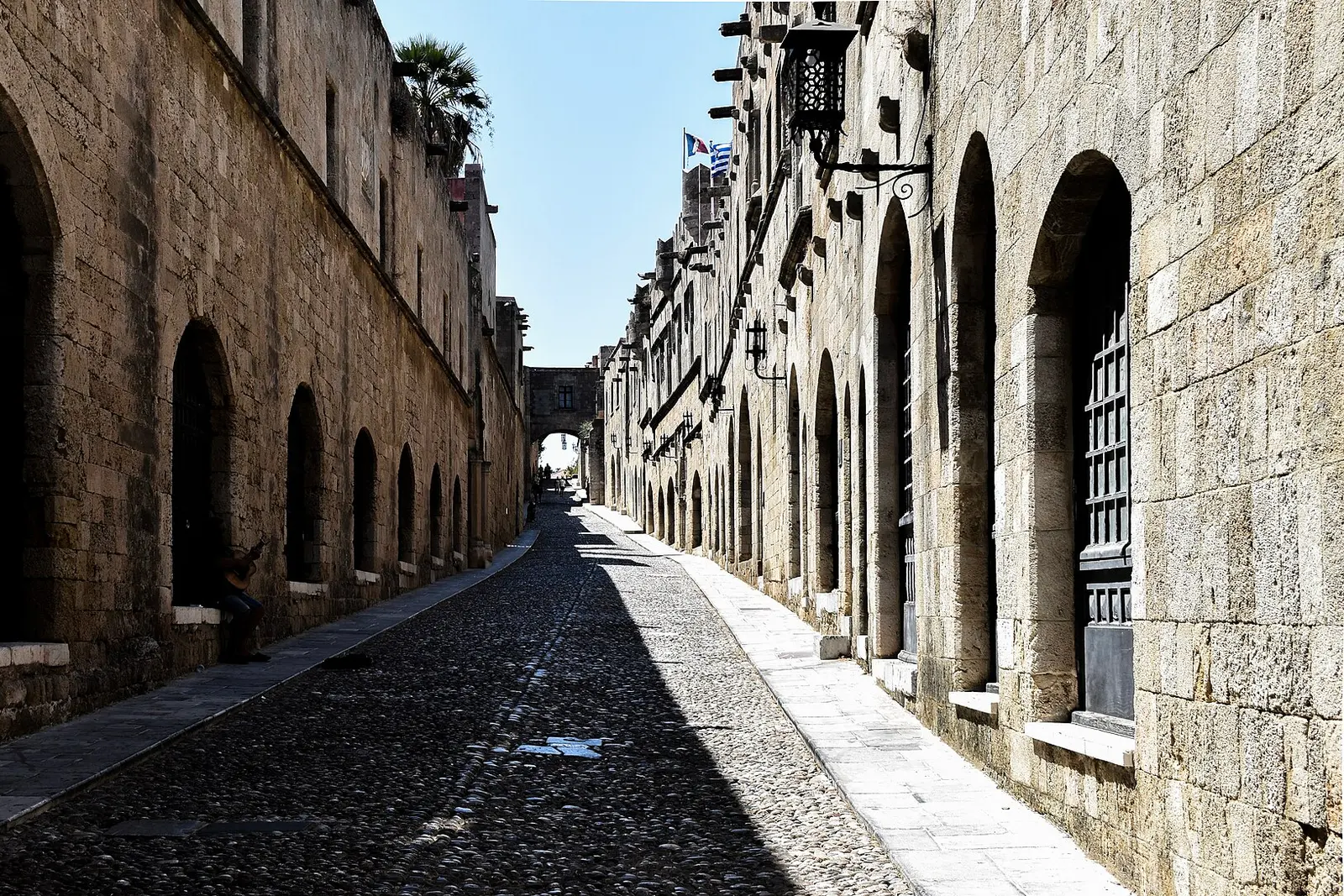
Rhodes is the Dodecanese flagship and the most complete island in Greece for a first visit: a walled medieval old town that works as a living city rather than a museum set, the acropolis-crowned white village of Lindos, a serious beach strip along the east coast, and ferries that put Symi and even Turkey inside a day trip. The Knights Hospitaller left the island its spine, and the Street of the Knights, the Palace of the Grand Master and the circuit of walls add up to Europe's best-preserved crusader city.
The verdict in 30 seconds
Go
Yes, for most visitors: you can wander one of Europe's best preserved medieval cities for free, and the 20 EUR ministry ticket adds the palace and three more monuments on top. The catch is cruise-day crowds, so treat timing as the real admission price.
Go if
- You have at least half a day in Rhodes Town
- Medieval walls, knights' halls and layered Ottoman streets interest you
- You want photos without an entry fee
- You are staying inside the walls and can explore early and late
Skip if
- You have a stroller, wheelchair or weak knees; cobbles and steps are everywhere
- You cannot shift around the cruise rush and dislike dense crowds
- Beach time is the whole point of a short island stay
What it costs
- Palace of the Grand Master and Knights' Quarter monuments, adult: €20 (Ministry of Culture ticket also covering the Archaeological Museum of Rhodes, the Decorative Arts Collection and Our Lady of the Castle). Official source, checked Oct 2026.
- Medieval city streets, gates, wall exterior and moat: €0 (the old town is a living neighborhood open around the clock; only the individual monuments charge). Official source, checked Oct 2026.
What travelers report
Based on 14 traveler reports (Apr 2025 to Sep 2026) and the official sources linked on this page. 1 was negative.
What people like
- A inhabited medieval city you can enter free and explore around the clock.
- The Street of the Knights and the palace deliver the promised knights-era atmosphere.
- The moat and the back lanes stay calm even when the main streets are packed.
- Evening brings a second crowd-free mood: lit walls, open tavernas and night strolling.
What people complain about
- Cruise-day crowds flood the main lanes; one account describes shoulder-to-shoulder hours around Hippocrates Square at midday.
- Parking outside the walls fills early and drivers report circling for a space on busy days.
- The shopping streets read as touristy, with identical souvenir stalls and restaurant barkers.
- Cobbles, steps and steep lanes make strollers and weak knees work for it.
- Interpretation inside the town is thin, which is why several reports recommend coming with a guide or a downloaded map.
How to do it right
- Enter through the Liberty or Amboise gate and climb the Street of the Knights first, before the cruise groups arrive.
- Give it half a day at minimum: the palace needs about an hour and the walls and lanes take whatever you give them.
- Buy the 20 EUR ministry ticket at the palace desk; it also covers the Archaeological Museum, the Decorative Arts Collection and Our Lady of the Castle.
- Walk the dry moat for a calm circuit below the walls, then the ticketed walls-top section for the views; reports put that ticket at about 5 EUR bought at the palace.
- Return after about 17:00 when the day-trippers leave; the lanes and tavernas stay lively late.
The trap to avoid
Trying to reach an Old Town hotel by car. The medieval city is pedestrianized: vehicles stop at the gates, so park outside and walk, or stay in the New Town streets a taxi can actually reach.
Why this verdict
The reports split in a telling way: nearly every account praises the town itself, a free-to-enter, lived-in medieval quarter on the UNESCO list, while the complaints all aim at its tourist layer. Packed lanes around Hippocrates Square at midday, souvenir rows that repeat, restaurant barkers, and parking lots outside the walls that fill early are real, but they describe when and how to visit rather than whether. One strongly negative account still concedes the medieval quarter’s beauty between the crowds.
The economics are favorable. The town itself costs nothing: gates, lanes, squares, the moat circuit and the wall exterior are open around the clock. The ministry’s 20 EUR ticket at the palace bundles the palace plus the Archaeological Museum, the Decorative Arts Collection and Our Lady of the Castle, which covers almost every paid sight inside the walls in one transaction. Reports suggest the palace and the Street of the Knights deliver the atmosphere the hype promises, while the moat and the back lanes near the gates stay calm even on heavy days.
The walls-top walk is the most complained-about logistics point: it costs a small fee, keeps narrow midday weekday hours and sells tickets at the palace, so several travelers miss it. The moat below is free, always open and gets repeatedly recommended as the crowd escape.
Timing and tickets
The town never closes, but the monuments do: the palace runs 08:00 to 20:00 in season and 08:30 to 15:30 in winter, closed Tuesdays, and the walls-top section runs roughly 12:00 to 15:00 on weekdays. The municipality expects around 500 cruise calls in 2025, so the timing that matters is ship traffic rather than the season: go before about 10:00 or after 16:00 and the lanes empty out. Buy the combo ticket at the palace desk rather than online; the same 20 EUR covers the three smaller monuments.
Book or check times
UNESCO listing for the Medieval City of RhodesMinistry of Culture palace page: tickets and hours
We earn a commission if you book through our links. It never changes a verdict. How this works
See guided old town walkspartner site
Questions
Does it cost anything to enter Rhodes Old Town?
No. The medieval city is a lived-in neighborhood with no gates or ticket of its own. Individual monuments charge separately, and the ministry's 20 EUR ticket covers the palace plus three more sites.
How long do you need in Rhodes Old Town?
Reports split between three hours for the highlights and a full day for the walls, moat, palace and museums. Most travelers find half a day the comfortable minimum.
When is Rhodes Old Town least crowded?
Before about 10:00 and after about 16:00. The municipality expects around 500 cruise calls in 2025, and on heavy ship days the main lanes fill through midday.
Can you walk on top of the walls?
Yes, on a ticketed section entered near the palace, but only in narrow midday hours: the heritage site lists roughly 12:00 to 15:00 on weekdays. Reports put the ticket at about 5 EUR. The dry moat below stays free and walkable anytime.
Is Rhodes Old Town good with kids or limited mobility?
Pedestrianized lanes suit children, though scooters do pass through. For wheels it is harder: cobbles, steep alleys and stepped monuments everywhere, with ramps only in parts of the restored areas.
Can you stay overnight inside the walls?
Yes, several reports come from travelers sleeping in restored houses on the back lanes. The upside is having the town nearly to yourself early and late; the trade-off is hauling bags over cobbles from a gate.
Pack for it
Gear verdicts from our sister site, Real Buyer Experiences: