Lille / The verdict
Is Vieux Lille worth it?
Vieux Lille is a go: the city's most atmospheric quarter costs nothing to wander, packing Flemish-gabled lanes, the 1650s Vieille Bourse courtyard with its secondhand book market, and a run of estaminets serving welsh and carbonnade. The catches are punishing cobblestones, Sunday retail closures and the weekend bar crowds on rue de Gand.
By The Real Traveler Experiences team.
The Lille story
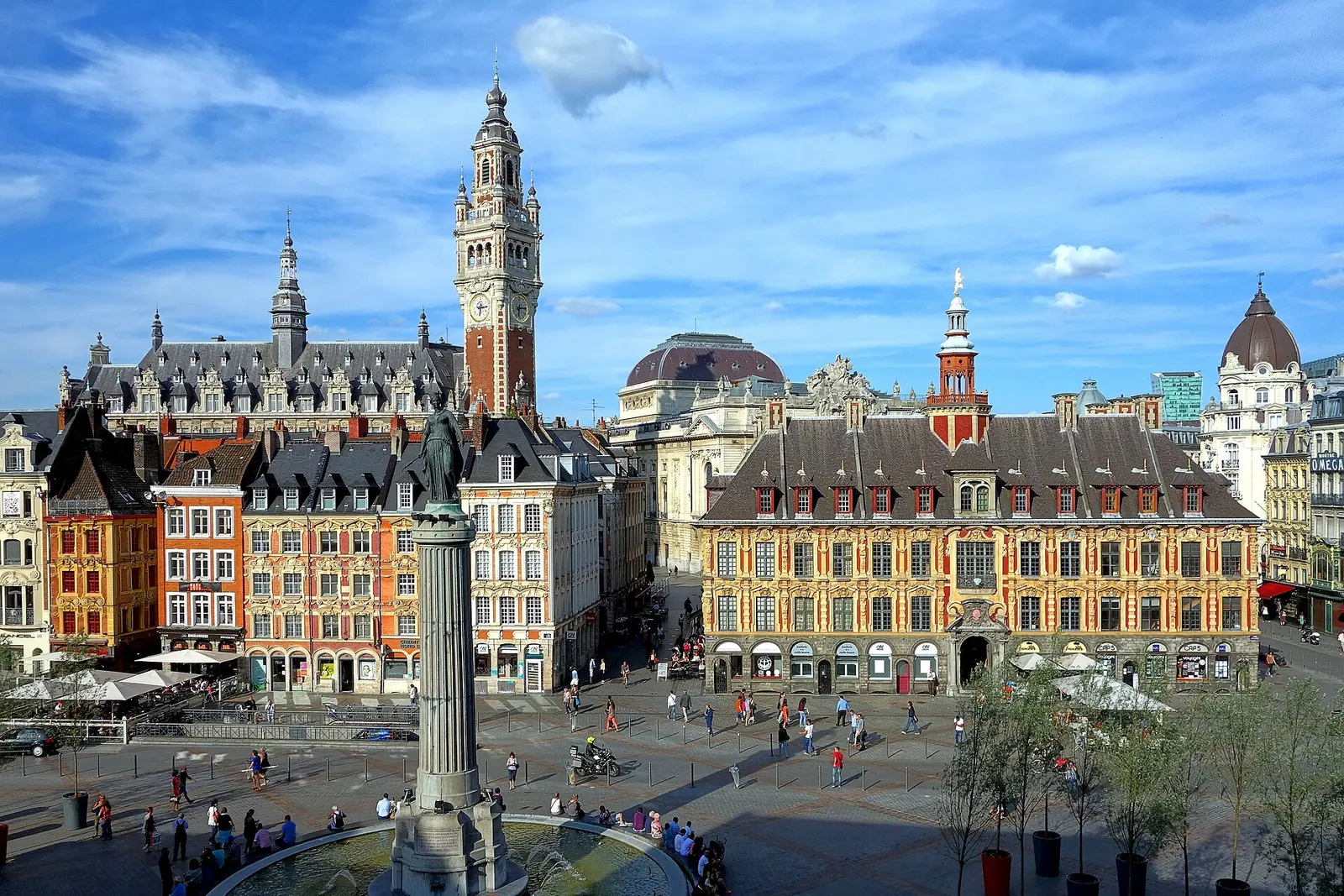
Lille is the France that feels Flemish: stepped gables and brick facades rising around the Grand Place, cobbled Vieux Lille lanes lined with estaminets pouring Trappist beer, and the Palais des Beaux-Arts holding a collection second in France only to the Louvre at a fraction of Paris prices. Twenty minutes away by metro, Roubaix's La Piscine turns an Art Deco swimming pool into one of the most beautiful museum interiors in the country, and Louvre-Lens hangs 250 Louvre works in a single chronological hall without the Paris scrum. Eurostar drops you in the centre in about ninety minutes from London, no onward transfer.
The verdict in 30 seconds
Go
Vieux Lille is a go: the city's most atmospheric quarter costs nothing to wander, packing Flemish-gabled lanes, the 1650s Vieille Bourse courtyard with its secondhand book market, and a run of estaminets serving welsh and carbonnade. The catches are punishing cobblestones, Sunday retail closures and the weekend bar crowds on rue de Gand.
Go if
- First-time visitors, since the quarter compresses Lille's architecture, food and history into a few lanes
- Walkers happy to drift without a plan; the whole area is compact and mostly pedestrian at weekends
- Shoppers and browsers, from luxury marques on rue de la Grande Chaussee to the Vieille Bourse book stalls
- Dinner planners: the estaminets around Place aux Oignons are the classic northern-French meal
Skip if
- Cobbles are a dealbreaker; reports repeatedly call the paving pretty but tiring, and wheels fight every lane
- Your only free day is a Sunday and retail shopping was the point; most shops close even though the lanes stay lively
- You want a single big-ticket sight; the quarter is an atmosphere, not a monument
What it costs
- Wandering Vieux Lille, including the Vieille Bourse courtyard: €0 (free; booksellers work the courtyard Tuesday to Sunday roughly 13h to 19h, with summer tango evenings). Official source, checked Oct 2026.
- Guided old-town walking tour in French, adult: €12 (EUR 11 reduced when booked online; about 2 hours from Palais Rihour, daily at 15h plus Saturdays at 10h30; free under 6). Official source, checked Oct 2026.
- Guided old-town walking tour in English, adult: €14 (EUR 13 reduced; English-language departures run on selected days, so check the schedule). Official source, checked Oct 2026.
- ilevia day pass for metro, tram and bus: €5.50 (only worth it if you add the citadel, Roubaix or Wazemmes; the old town itself is walkable from the stations). Official source, checked Oct 2026.
What travelers report
Based on 14 traveler reports (Feb 2025 to Apr 2026) and the official sources linked on this page. 0 were negative.
What people like
- Reports agree the Flemish-gabled lanes are Lille's most atmospheric stretch and the highlight of a first visit.
- The Vieille Bourse courtyard wins praise twice over: for its 1650s architecture and for the secondhand book market inside it.
- Estaminet cooking gets warm write-ups, especially welsh and carbonnade flamande at real prices around EUR 20.
- Travelers like the walkability: everything in the quarter sits minutes apart and much of it is pedestrian at weekends.
What people complain about
- The cobblestones tire feet quickly and turn slick in rain; wheel and heel wearers report the worst time.
- Sunday shuts the retail strip, which catches visitors who saved shopping for their last day.
- The rue de Gand bar strip and the lanes around Place Louise de Bettignies get crowded on weekend nights.
- A day-tripper warns of pickpockets working the Vieille Bourse crowds, and calls the famous patisserie queue underwhelming.
How to do it right
- Start at the Grand Place and slip through the passages beside the Vieille Bourse into its courtyard; it is the single best introduction to the quarter.
- Walk rue de la Bourse to Notre-Dame de la Treille cathedral, then loop north through rue de la Monnaie to Place aux Oignons and rue de Gand.
- Take the cobbles seriously: trainers or flat boots, and keep wheeled bags on the smoother main streets or leave them at the station lockers.
- Book the official two-hour guided walk from Palais Rihour if you want context; EUR 12 online in French, EUR 14 in English, departing daily at 15h.
- On Sunday, skip shopping plans and go for the Place du Concert market, the book stalls and a long estaminet lunch instead.
- For dinner, book an estaminet around Place aux Oignons at weekends; the good ones fill early and a welsh runs about EUR 20.
The trap to avoid
Treating Vieux Lille as easy walking. The paving is photogenic and punishing: reports call the cobbles tiring on ordinary shoes, slippery in rain and a fight for suitcases and buggies. Wear trainers, keep wheeled luggage on the main streets, and on rue de la Monnaie watch for the painted stones that mark hidden courtyards.
What to do instead
Why this verdict
Vieux Lille is the part of the city every report recommends first, and it costs nothing. North of the Grand Place the lanes turn to cobbles and the facades to Flemish gables, a mix of restored 17th-century fronts, boutiques, estaminets and small squares. The quarter’s fixed points are easy: the Vieille Bourse, whose 1652 courtyard fills with secondhand booksellers from Tuesday to Sunday afternoons and hosts tango evenings on summer Sundays; the Notre-Dame de la Treille cathedral with its modern translucent facade; Place aux Oignons, the locals’ square ringed with restaurants; and rue de la Monnaie and rue de Gand for food and nightlife.
The practical notes from reports are consistent. The cobbles are tiring, so proper shoes matter more than planning. Sunday keeps the lanes atmospheric but shuts most retail, while the Sunday-morning market on Place du Concert and the book stalls stay busy. Reports place the evening bar scene on rue de Gand and around Place Louise de Bettignies, which stay lively on weekend nights. One day-tripper flags pickpockets working the Vieille Bourse crowds and found the famous patisserie queue underwhelming, which matches a wider theme: the classic addresses reward patience rather than reverence.
For food, the estaminets around Place aux Oignons and rue de Gand serve the northern staples: welsh, carbonnade flamande, Maroilles fries, usually EUR 15 to 25 a plate. Reports that timed it well liked the official two-hour walking tour from Palais Rihour, EUR 12 booked online in French and EUR 14 in English, which folds in the Hospice Comtesse and the hidden courtyards that are easy to walk straight past.
Timing and tickets
Vieux Lille is free and open at all hours. The Vieille Bourse courtyard runs its book market Tuesday to Sunday afternoons. Guided tours leave from Palais Rihour daily at 15h and Saturdays at 10h30 in French, with English departures on selected days; book online for the reduced EUR 11 or EUR 13 rates. Metro Rihour and Gare Lille-Flandres are the closest stops, and the quarter is flat walking distance from either station.
Book or check times
Guided tour of Vieux Lille: times and bookingLa Vieille Bourse: courtyard and book market
Questions
Is Vieux Lille free to visit?
Yes. The quarter is public space: the lanes, squares and the Vieille Bourse courtyard cost nothing. Only guided tours, museums and meals charge.
How long do you need in Vieux Lille?
Two to three hours covers the classic loop at a stroll. Add an estaminet meal and the cathedral and it comfortably fills half a day.
Is Vieux Lille open on Sundays?
The lanes, book market and cafes are, and Sunday has its own rhythm with the Place du Concert market and summer tango in the Bourse courtyard. Most retail shops close, so plan wandering and eating rather than buying.
Are the cobblestones a problem?
They are the most repeated complaint: beautiful, tiring and slippery when wet. Wheelchair users, buggies and wheeled suitcases struggle; stick to the main axes or allow extra time.
Is the guided tour of the old town worth it?
For EUR 12 online it is good value: two hours covering the Hospice Comtesse quarter and hidden courtyards that solo walkers tend to miss. English-language departures cost EUR 14 and run less often.
Where is the nightlife in the old town?
Rue de Gand and the lanes around Place Louise de Bettignies hold the bars and estaminets, and reports describe the strip as lively on weekend nights. Light sleepers may prefer staying a few streets away.
Pack for it
Gear verdicts from our sister site, Real Buyer Experiences: