Ghent / The verdict
Where should you stay in Ghent?
Base yourself in the historic centre between Korenmarkt and Graslei on a first or short visit, choose Patershol for medieval streets and restaurant-heavy evenings, and only book near Gent-Sint-Pieters if the train is the point.
By The Real Traveler Experiences team. We earn a commission if you book through our links. It never changes a verdict.
The Ghent story
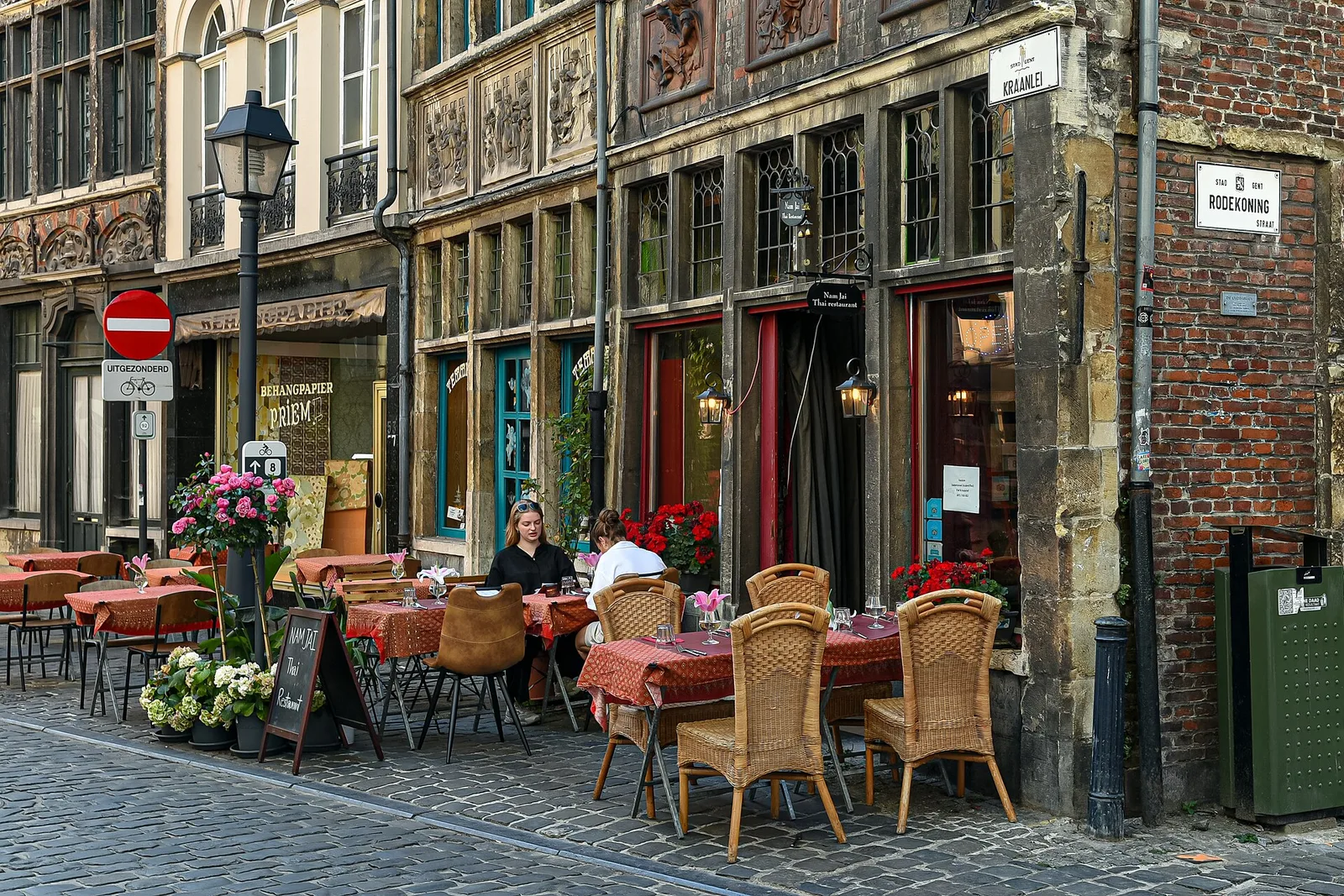
Ghent has Bruges-scale medieval drama with a real city living inside it: students on the Graslei and Korenlei quays, the Gravensteen castle on the high street, the Belfry overhead, and Van Eyck's Adoration of the Mystic Lamb in St Bavo's cathedral. It is the Flanders pick for people who want beauty without the theme-park feel, plus canal boats and food and beer at student-friendly prices.
The verdict in 30 seconds
Our pick: Historic centre: Korenmarkt to Graslei (runner-up: Patershol and Prinsenhof)
Base yourself in the historic centre between Korenmarkt and Graslei on a first or short visit, choose Patershol for medieval streets and restaurant-heavy evenings, and only book near Gent-Sint-Pieters if the train is the point.
Go if
- You are picking a Ghent base for a first or short visit and want to walk everywhere
- You plan rail day trips to Bruges, Antwerp or Brussels
- You are weighing the canal-side centre against a quieter local quarter
Skip if
- A conference or event at Flanders Expo has already fixed your hotel south of the centre
- You only need one bed next to Gent-Sint-Pieters before a very early train
The options
Historic centre: Korenmarkt to Graslei Go
You want every sight, boat jetty and tram within a ten-minute walk on a first or short stay.
Good
- Guides name the band between Korenmarkt, Sint-Baafsplein, Graslei and Gravensteen the obvious first-timer base.
- The old town is car-free, so central rooms are quieter than the location suggests.
- Tram 1 to Gent-Sint-Pieters and the canal boat jetties are both on the doorstep.
Watch out
- It is the most touristy and most expensive part of the city.
- Weekend bar noise reaches rooms over the busiest restaurant and nightlife streets.
- It sells out first around the Gentse Feesten in July and summer weekends.
See hotel options in this areapartner siteBook an airport transferpartner site
Patershol and Prinsenhof Go
You want medieval lanes and a serious restaurant scene at the centre's quieter northern edge.
Good
- Reports describe restored 11th-century lanes, a strong dining scene and an atmosphere that feels like a neighbourhood.
- Still only minutes on foot from Gravensteen, Kraanlei and the House of Alijn.
- A good fit for couples and slower weekend trips, and slightly removed from the busiest squares.
Watch out
- It sits at the centre's northern tip, the farthest point from the station and southern sights.
- Accommodation is mostly boutique hotels and guesthouses, so it books out early.
- Prices run similar to the historic centre, so it is a character choice rather than a saving.
See hotel options in this areapartner site
Kunstenkwartier and Sint-Pieters It depends
You rate museums and train access over medieval views, or you are doing heavy rail day trips.
Good
- The arts quarter around the MSK and SMAK museums is calm, green and student-priced.
- Hotels near Gent-Sint-Pieters make early trains to Bruges, Brussels or the airport painless.
- Reports stress the station district is safe, unlike many Belgian station areas.
Watch out
- The old town is a 25 to 35 minute walk, so you ride tram 1 daily.
- Evenings are quiet and residential, thin on restaurants and atmosphere.
- Most guides say it only makes sense when the train is the point of the stay.
Dampoort and the Overpoort streets It depends
You want the cheapest beds in the city and plan to be out late yourself.
Good
- Hostels and budget rooms around Gent-Dampoort run cheapest, and tram links to the centre are frequent.
- The Overpoort strip is the city's concentrated student nightlife if that is the point of the trip.
- The area keeps you within the ring road, so the centre stays reachable.
Watch out
- The Overpoort bars run Thursday to Saturday and the noise is the single most repeated stay complaint.
- Streets get scruffy at night compared with the polished old town.
- It is a nightlife base: for sightseeing, the saving is not worth the distance and noise.
| Criterion | Historic centre: Korenmarkt to Graslei | Patershol and Prinsenhof | Kunstenkwartier and Sint-Pieters | Dampoort and the Overpoort streets |
|---|---|---|---|---|
| Setting | Towers, canals and the castle | Medieval lanes and restaurants | Museums and the main station | Student bars and budget beds |
| Walk to the old town | You are in it | 5 to 10 minutes | 25 to 35 minutes or tram 1 | 15 to 20 minutes or a tram |
| Night noise travelers report | Lively; bar streets carry on weekends | Quiet lanes | Quiet and residential | Loud on student nights |
| Price level travelers report | Highest in the city | Comparable to the centre | Mid-range to value | Cheapest |
| Best for | First-time short stays | Atmosphere and dining | Rail days and museum trips | Budget nightlife |
What it costs
- Ghent city tax on a hotel or B&B stay: €4.40 (Per person per night; 2.20 EUR for hostels and campsites, 7.40 EUR for holiday homes, under-18s exempt). Official source, checked Oct 2026.
- De Lijn day ticket: €9 (Unlimited trams and buses for a day; useful only if you stay outside the ring or near the station). Official source, checked Oct 2026.
What travelers report
Based on 12 traveler reports (Aug 2025 to Aug 2026) and the official sources linked on this page. 0 were negative.
What people like
- The historic centre puts the castle, the towers, the canal jetties and the tram hub all inside a ten-minute walk.
- Patershol gets described as the atmospheric pick: medieval lanes, serious restaurants and a calm that feels local.
- The car-free old town means no traffic noise under the window, a point reports raise repeatedly.
- Ghent's position between Bruges, Antwerp and Brussels makes it the natural rail base for Belgium.
- Hotel prices in Ghent undercut equivalent Bruges rooms on the same dates.
What people complain about
- Weekend bar noise reaches rooms on the busiest central streets and around the Overpoort student strip.
- Rooms beside Gent-Sint-Pieters mean a 25-minute walk or a daily tram ride to the old town.
- Central hotels book out early for July's Gentse Feesten and summer weekends.
- The city tax of 4.40 EUR per person per night surprises travelers who did not see it in the room rate.
How to do it right
- Search first in the band between Korenmarkt, Sint-Baafsplein, Graslei and Gravensteen, the area every guide names for a first visit.
- Widen into Patershol and Prinsenhof if you want medieval lanes and restaurants on the doorstep over being beside the Belfry.
- Inside the old town the car-free zone does the work: everything is on foot or one tram, so do not pay a premium for parking.
- Check which side of a nightlife street your room sits on; reports warn of weekend noise around the busiest central blocks and the Overpoort student strip.
- If you arrive by train, ride tram 1 from Gent-Sint-Pieters straight into Korenmarkt rather than walking the 25 minutes with bags.
- Budget the city tax on top of the room rate: 4.40 EUR per person per night in hotels and B&Bs.
The trap to avoid
Booking a cheaper hotel beside Gent-Sint-Pieters station for convenience, then spending every day 25 minutes or a tram ride from the sights; the saving rarely beats a central room in a city this compact.
What to do instead
Why this verdict
Ghent is compact and flat enough that the where-to-stay question is really a which-version-of-the-centre question for nearly every visitor. On a first or short visit, take the historic core: the blocks between Korenmarkt, Sint-Baafsplein, Graslei and Gravensteen put the towers, the castle, the boat jetties and the main tram line inside a ten-minute walk, and the car-free zone keeps it calmer than the location suggests. It is the most expensive part of the city and it books out first, especially around July’s Gentse Feesten, but in a small city that premium buys real time every single day and keeps the evening walk home short.
Patershol is the near-equal alternative: restored medieval lanes and one of the city’s best dining pockets, minutes on foot from Gravensteen, at prices that track the centre. Pick it for character, quiet lanes and evenings rather than for savings.
The station quarter around Gent-Sint-Pieters is the false economy: the area is safe and hotels are cheaper, but the old town is 25 to 35 minutes away on foot, so daily sightseeing means a tram commute back and forth. Only stay there if very early departures or a train-heavy itinerary make the daily trade worth it, and the same logic applies in miniature for the Overpoort budget beds near Dampoort, where the student nightlife strip brings the weekend noise. Wherever you book, remember the city tax is charged on top of the room rate: hotels and B&Bs add 4.40 EUR per person per night, and under-18s are exempt.
Book or check times
Visit Gent accommodation and city taxDe Lijn tickets for trams and busesSNCB tickets and fares
We earn a commission if you book through our links. It never changes a verdict. How this works
See hotel options in this areapartner siteSee hotel options in this areapartner siteBook an airport transferpartner site
Questions
What is the best area to stay in Ghent for a first visit?
The historic centre around Korenmarkt, Graslei and Gravensteen. Every sight, boat jetty and tram line sits within a short walk, and most reports name it the obvious base. It is also the most expensive area, so book early in season.
Is Patershol a good area to stay in Ghent?
Yes, reports call it the pick for atmosphere: restored medieval lanes, a strong restaurant scene and a quieter feel, still only minutes on foot from Gravensteen and the centre. The trade is sitting at the centre's northern tip, slightly farther from the station side.
Is it worth staying near Gent-Sint-Pieters station?
Only if trains are the priority. The station quarter is safe but sits about a 25 to 35 minute walk from the old town, so sightseeing means a daily tram ride. Reports suggest it mainly for day-trip-heavy itineraries or early departures.
How much is Ghent's tourist tax?
Officially 4.40 EUR per person per night in hotels and B&Bs, 2.20 EUR in hostels and campsites and 7.40 EUR in holiday homes, per the Visit Gent FAQ. Under-18s and certified youth accommodation stays are exempt. Check whether the quoted rate already includes it.
Where should I avoid staying in Ghent?
There is no unsafe district to dodge, which is unusual for a Belgian city this size. The real traps are noise: rooms over bar streets in the centre and beside the Overpoort student strip pick up weekend noise, so light sleepers should ask for courtyard-facing rooms.
Is Ghent or Bruges better as a base?
Most reports land on Ghent: it is cheaper, livelier at night and a rail hub with Bruges 25 minutes away. Stay in Bruges only if its quiet, lamplit evenings are the specific experience you are after.
Pack for it
Gear verdicts from our sister site, Real Buyer Experiences: