Galway / The verdict
Is Galway's Latin Quarter worth it?
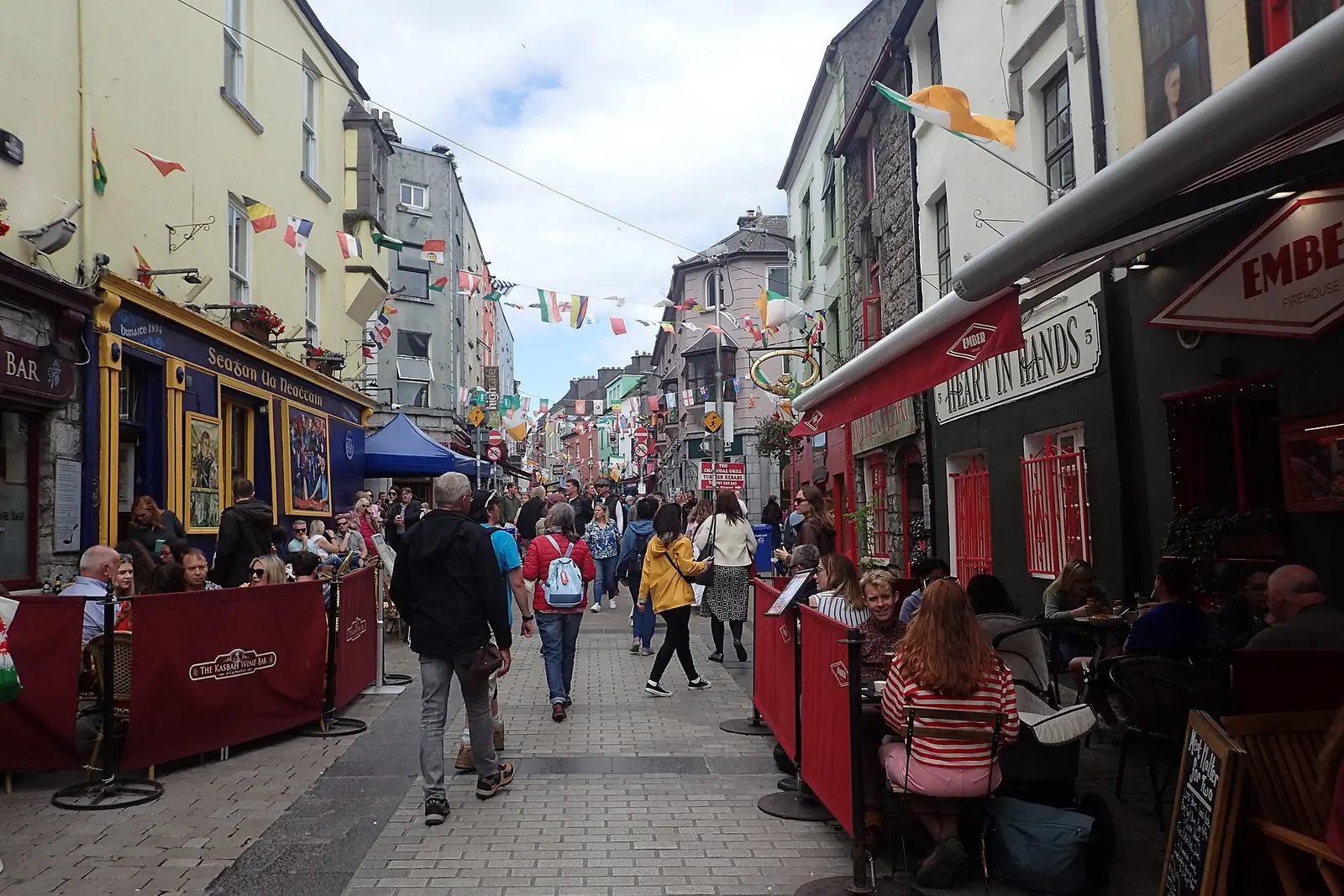
Yes, go. The Latin Quarter is Galway's pedestrianized medieval core, running from the Spanish Arch up Quay Street to St Nicholas' Church, and it is where the city's pub music, busking and independent-shop reputation actually lives. Go early for the lanes and shops, go after dark for the sessions, and expect crowds and a bit of a party-tourism feel at peak times.
By The Real Traveler Experiences team.
The Galway story
Galway is Ireland's cultural capital in miniature: a medieval Latin Quarter of buskers and pubs around Quay Street, the Claddagh and the Spanish Arch on the harbour, and trad-music sessions that outclass Dublin's. It doubles as the best base on the Wild Atlantic Way, with the Cliffs of Moher, Connemara and the Aran Islands all in day-trip reach and the oysters and west-coast food scene waiting back in town.
The verdict in 30 seconds
Go
Yes, go. The Latin Quarter is Galway's pedestrianized medieval core, running from the Spanish Arch up Quay Street to St Nicholas' Church, and it is where the city's pub music, busking and independent-shop reputation actually lives. Go early for the lanes and shops, go after dark for the sessions, and expect crowds and a bit of a party-tourism feel at peak times.
Go if
- First-time visitors who want the postcard Galway: cobbles, painted shopfronts and live trad
- Pub-goers chasing spontaneous traditional sessions rather than staged shows
- Shoppers after independent bookshops, craft stores and Aran knitwear
- Anyone who enjoys street life: buskers, performers and a crowd that gathers outside as much as inside
Skip if
- You dislike crowds: during the summer arts festivals and weekend nights the lanes jam and pubs fill
- You want quiet sightseeing before noon, when much of the quarter is still waking up
- You are after monuments rather than atmosphere: the quarter is a lived-in district, not a set-piece attraction
What it costs
- Latin Quarter streets and lanes, public access: €0 (Free public district stretching from the Spanish Arch to O'Brien's Bridge and St Nicholas' Church; pubs, shops and venues set their own prices). Official source, checked Oct 2026.
- Galway City Museum admission, on the quarter's southern edge: €0 (Free entry with a EUR 5 suggested donation; open Tuesday to Saturday 10am to 5pm, Sundays noon to 5pm in season, closed Mondays). Official source, checked Oct 2026.
What travelers report
Based on 14 traveler reports (Dec 2024 to Jul 2026) and the official sources linked on this page. 0 were negative.
What people like
- The music is the headline: reports describe trad spilling out of pubs and buskers on every corner from Quay Street to High Street (6 of 14 reports).
- The pedestrianized lanes and painted shopfronts deliver exactly the atmosphere visitors expected, even in the rain (4 of 14 reports).
- Independent shops get specific praise: pottery on Kirwan's Lane, the craft shops on Quay Street and the bookshops around them (3 of 14 reports).
- The quarter works in every season: autumn walkers and December visitors report the same atmosphere as summer (2 of 14 reports).
What people complain about
- The quarter is openly described as touristy at peak, and during the July arts festival pubs and restaurants fill completely (3 of 14 reports).
- Busking is the friction point: business owners pushed for a code of conduct after bands blocked access on Middle Street (2 of 14 reports).
- A couple of reports flag the party atmosphere tipping into exuberant crowds late on weekend nights (2 of 14 reports).
How to do it right
- Start at the Spanish Arch on the riverbank and walk up Quay Street, the quarter's spine, toward High Street and Shop Street.
- Detour down Kirwan's Lane and Cross Street for the medieval lane network and the craft shops.
- Come back after 9pm for the trad sessions: reports name the pubs around Quay Street as the reliable nightly spots.
- Allow half a day: the council counts over 50 places to eat and 15 bars inside the quarter's few streets.
- Expect cobbles: wear flat shoes, and carry a layer for weather that shifts mid-walk.
- Busking peaks late afternoon and evening; if a band blocks a lane, bear in mind a code-of-conduct trial is in force.
The trap to avoid
Treating the Latin Quarter as a medieval monument to tick off. The name is modern marketing over a real medieval street plan, and what the quarter sells is atmosphere: pubs, buskers and shops. Travelers who come expecting set-piece sights walk through in twenty minutes and miss the point; the visitors who love it are the ones who stay for a session.
What to do instead
Why this verdict
The Latin Quarter is the Galway everyone pictures. A short pedestrianized run from the Spanish Arch up Quay Street to St Nicholas’ Church holds the city’s densest knot of pubs, restaurants and independent shops, and the council counts more than 50 places to eat and 15 bars inside it. Every recent report lands on the same point: the atmosphere is the attraction. Trad spills out of pub doors, buskers work the corners, and the painted shopfronts do the rest.
What separates it from a tourist strip is that the life is real. A neighborhood guide describes nightly sessions as unplanned gatherings rather than staged shows, and a return visitor who has been back six times still leads with the cobbles and the music. Local reporting backs the texture: over a summer the council trialed a busking code of conduct precisely because the street performance economy is that busy.
The caveats are crowds and calendar. During the July arts festival, every dinner reservation and pub seat goes, and weekend nights run late and loud. If that is not your Galway, visit the lanes before noon and leave the evening to the revelers. The quarter also rewards the traveler who slows down: the medieval lanes off Quay Street, like Kirwan’s Lane, are where the craft shops and the oldest walls sit.
Book or check times
The Latin Quarter district siteGalway Tourism: the Latin QuarterThis is Galway: things to do in the Latin QuarterGalway City Museum: plan your visit
Questions
What is Galway's Latin Quarter?
It is the pedestrianized medieval heart of Galway city, a tangle of cobbled lanes running from the Spanish Arch on the riverbank up through Quay Street and High Street to St Nicholas' Church. The council counts more than 50 places to eat and 15 bars inside it.
Why is it called the Latin Quarter?
The name is modern branding for the medieval quarter around the Spanish Arch, where Spanish and other Latin-world merchants once traded. The streets themselves are medieval; the label is recent.
When is the best time to visit the Latin Quarter?
Mornings for shops and quiet lanes, evenings for the trad sessions and street performers. Reports confirm the atmosphere holds in autumn and winter too; only the crowds differ.
Is the Latin Quarter free?
Yes, it is a public district of streets and lanes. Individual pubs, restaurants, shops and venues charge their own prices, and the City Museum on its southern edge is also free with a suggested donation.
Is the Latin Quarter good at night?
That is when it is busiest. Reports describe nightly trad sessions and streets that stay lively late, especially at weekends and during the July arts festival, when everything is full.
How long do you need in the Latin Quarter?
A half day covers the lanes, shops and a pub stop; come back in the evening for the music. It is compact enough to walk end to end in fifteen minutes, but that misses the point.
Pack for it
Gear verdicts from our sister site, Real Buyer Experiences: