Catania / The verdict
Is the Monastero dei Benedettini in Catania worth it?
One of Europe's largest monasteries doubles as Catania's university, and reports rate the 10-euro guided tour as the city's best-value sight: 75 minutes through baroque cloisters, kitchens and Roman remains with a working-campus atmosphere. The catch is the interiors are guided-only, so you cannot wander them alone.
By The Real Traveler Experiences team.
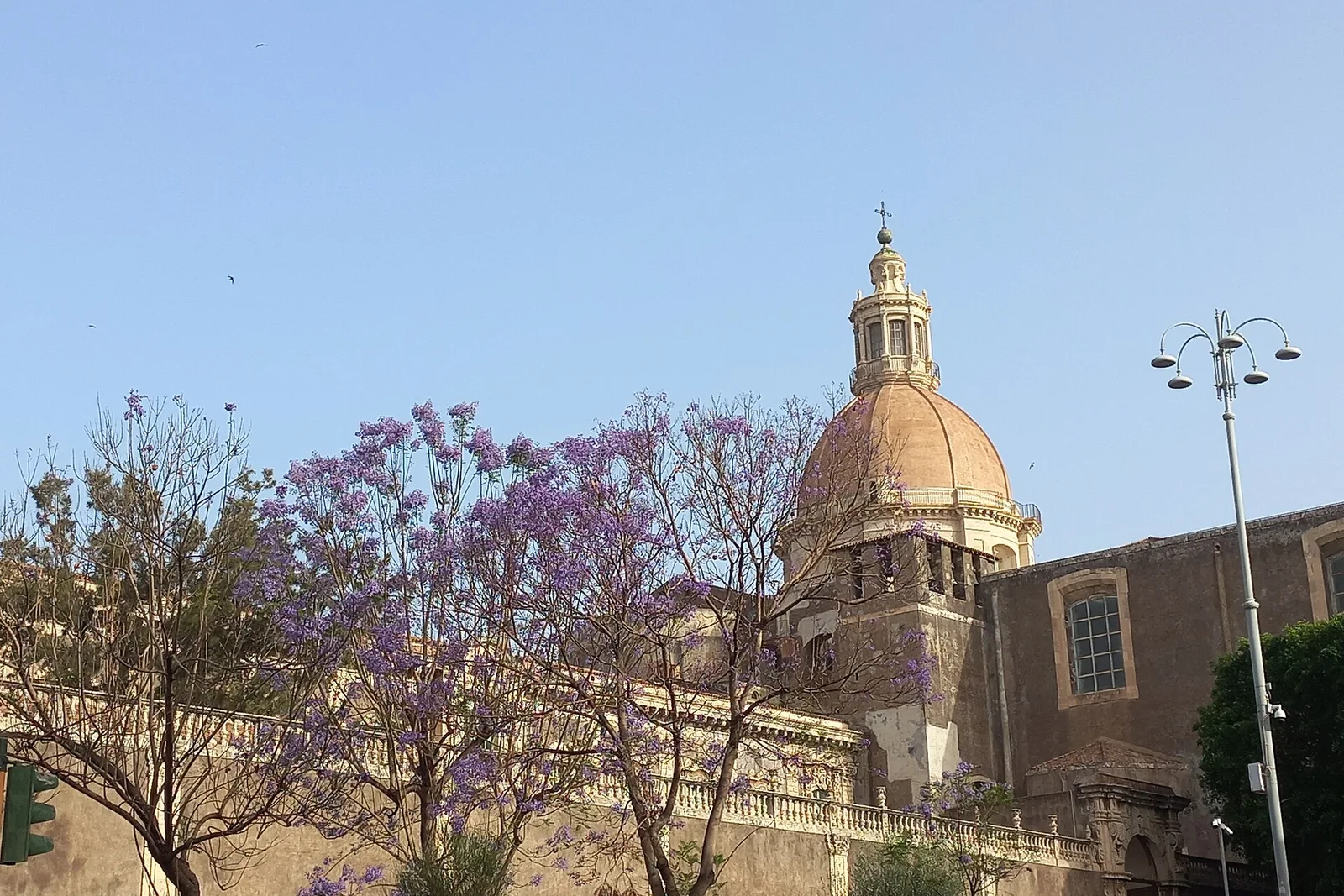
The Catania story
Catania is Sicily at full volume: a baroque centre rebuilt in black lava stone after Etna's tantrums, the fish market roaring under the Duomo square in a slice of city life nobody dressed up for tourists, the Benedictine monastery's guided labyrinth, and Mount Etna smoking on the skyline as the actual day trip, summit trek and all. Street food from arancini to granita is a genuine highlight, and Syracuse's Greek theatre and Taormina's terrace sit an easy ride away.
The verdict in 30 seconds
Go
One of Europe's largest monasteries doubles as Catania's university, and reports rate the 10-euro guided tour as the city's best-value sight: 75 minutes through baroque cloisters, kitchens and Roman remains with a working-campus atmosphere. The catch is the interiors are guided-only, so you cannot wander them alone.
Go if
- You want a monumental sight in the city center that costs a fraction of major attractions
- You like architecture with layers: a monastery rebuilt over Roman baths, damaged by lava and earthquake, now a university
- You enjoy guided tours; the interiors are only visitable with the official operator's tour
Skip if
- You dislike guided visits; there is no self-guided access to the interior rooms
- You are in a hurry and cannot commit to a 75-minute tour at a fixed slot
- Churches and cloisters do not interest you; the cloister gardens and courtyards are the free version
What it costs
- Guided tour, full ticket: €10 (about 75 minutes, daily with slots 10:00 to 17:00; booking recommended). Official source, checked Oct 2026.
- Combined ticket, monastery plus Botanical Garden: €15 (the garden is the monastery's own botanical collection a short walk away). Official source, checked Oct 2026.
- Combined ticket, monastery plus garden plus Villa Cerami: €20 (adds the neoclassical villa that hosts the university's law faculty). Official source, checked Oct 2026.
What travelers report
Based on 12 traveler reports (Mar 2025 to Sep 2026) and the official sources linked on this page. 0 were negative.
What people like
- Visitors and guides praise the tour itself: 75 minutes of architecture, history and curiosity delivered at a budget price.
- The setting earns admiration: a baroque giant rebuilt after lava and earthquake, layered directly over Roman remains.
- The monastery's second life as a university gives it a lived-in atmosphere reports find more interesting than a preserved museum piece.
- Local press calls it one of the city's most fascinating buildings, with stories 'nobody knows' behind the cloisters.
- Evening openings and cloister concerts get warm coverage as the atmospheric way to see it.
What people complain about
- The interiors are guided-only, which frustrates visitors who wanted to wander freely.
- Tour slots sell out and walk-ins can find the next English slot hours away.
- The official site's practical information is thin; reports advise booking through the operator directly rather than relying on the main site.
- Some visitors expect a solemn religious site and find a busy university instead, with students and lectures around the cloisters.
- Access can be disrupted by university events, exams or restoration work, so times shift.
How to do it right
- Book the guided tour with Officine Culturali, the official operator: about 75 minutes, daily slots roughly 10:00 to 17:00, 10 euros full price.
- Do not just show up expecting to wander: reports confirm the interior rooms are visitable only with the tour, though the monumental grounds and cloister gardens stay open daily.
- Reserve ahead in high season and on weekends; slots sell out and groups are capped.
- Consider the combined ticket with the Botanical Garden for 15 euros if you want a quieter follow-on, or the triple ticket adding Villa Cerami for 20.
- Look for the Roman city underneath: the tour descends into spaces where Roman baths and a domus sit beneath the baroque floors.
- In summer, check the evening openings: the operator runs 'Luci e ombre' night tours and the university magazine reports a growing evening-visit program.
The trap to avoid
Assuming it is a church you can walk into for free. The monumental interiors are guided-only through the official tour at 10 euros; the free version is the cloister grounds and courtyards, which are pleasant but not the reason the monastery is famous.
What to do instead
Why this verdict
This is the easy yes of Catania sightseeing. The monastery is one of Europe’s largest monastic complexes, rebuilt over five centuries through lava flows and earthquakes, and reports treat the 10-euro guided tour as a bargain for what it covers: cloisters, monumental kitchens, Roman baths underneath and the lived-in atmosphere of a working university campus. The same building hosts lectures by day and tours plus evening events around them, which visitors find more interesting than a preserved monument.
The tradeoffs are structural rather than serious. The interiors are guided-only, so there is no self-guided wandering, and reports warn that walk-ins can wait hours for the next English slot in season. The official site’s practical details are thin, so the reliable move is booking through Officine Culturali, the operator that runs the tours. And anyone hoping for a hushed religious site should know this is a university: students, corridor chatter and a building that is used rather than admired.
For 10 euros and 75 minutes in the middle of the centro storico, the reports’ verdict is consistent: this is the best-value hour-and-a-half in the city, and the combined tickets (15 for the Botanical Garden, 20 adding Villa Cerami) extend the visit cheaply. Travelers who want more substance in a visit than the baroque exterior will find the tour delivers it.
Timing and tickets
Tours run daily with slots roughly 10:00 to 17:00, lasting about 75 minutes; book ahead in season. The grounds and cloister gardens are open daily and free. In summer look for the evening ‘Luci e ombre’ visits, which reports single out as the atmospheric option.
Book or check times
Officine Culturali: monastery tours and ticketsMonastero dei Benedettini official site
Questions
Is the Monastero dei Benedettini free?
Partly. The grounds and cloister gardens are open daily and free. The monumental interiors, the kitchens, the Roman remains and the famous corridors, are visitable only on the official guided tour at 10 euros.
How do you visit the inside of the monastery?
Only on the guided tour run by Officine Culturali, the site's official operator. Tours last about 75 minutes, run daily with slots roughly 10:00 to 17:00, and reports recommend booking ahead.
Is the monastery tour worth 10 euros?
Reports call it one of Catania's best-value sights: the guides trace the building through lava, earthquake and centuries of reuse, down to the Roman baths beneath it. The price is low for what the tour covers.
What is the monastery now?
It is the University of Catania's humanities campus: lectures by day, tours and evening events around them. That double life is part of what reports find unusual about it.
How long do you need at the monastery?
The tour takes about 75 minutes; add time for the cloister gardens and, with the combined tickets, the Botanical Garden or Villa Cerami. Most visitors report two hours total.
Can you visit in the evening?
Seasonally yes. The operator runs evening 'Luci e ombre' visits and the site hosts concerts in the cloisters; local listings flag these as the atmospheric alternative to the daytime tour.