Antwerp / The verdict
Is Antwerp Central station worth a visit?
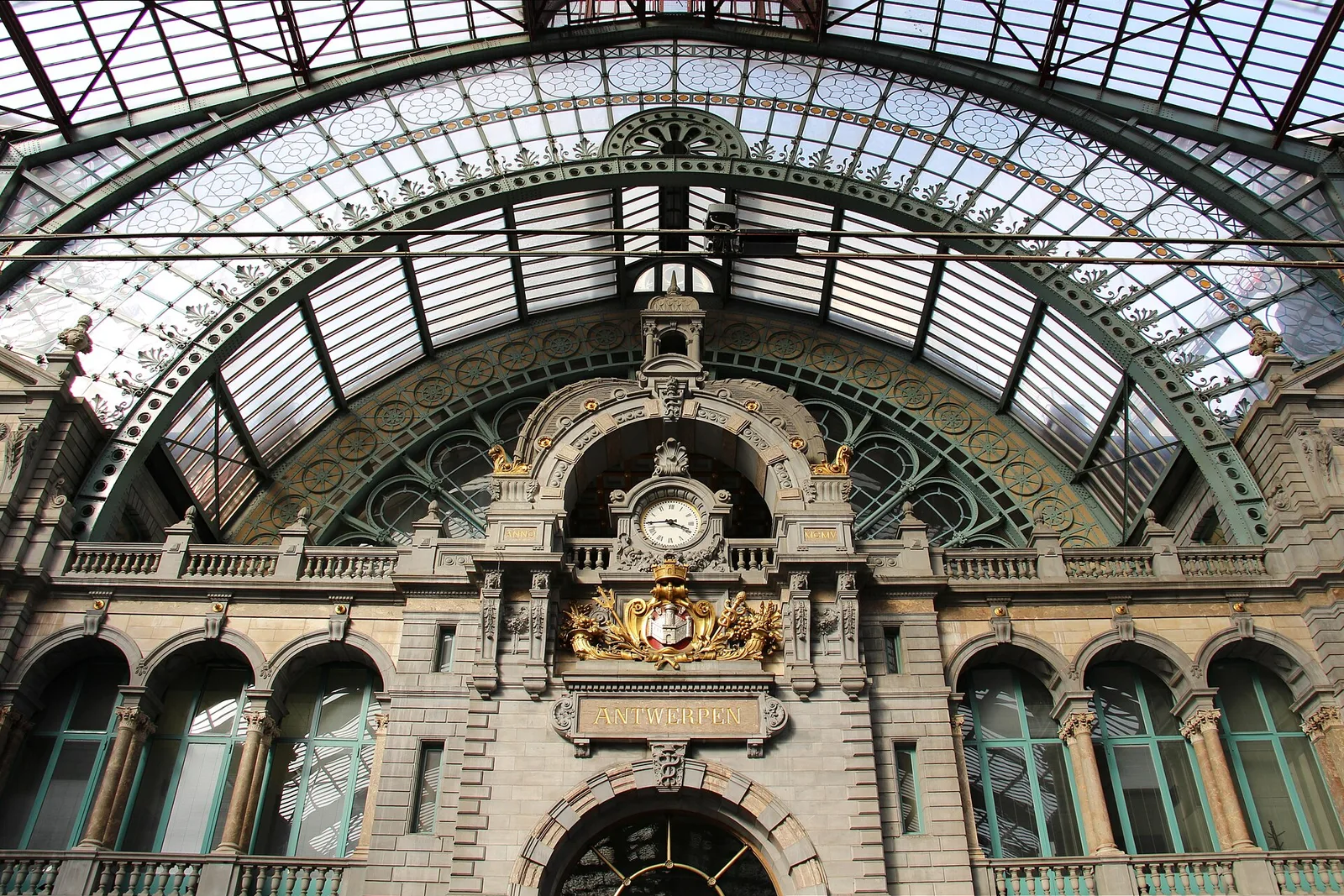
Yes: Antwerpen-Centraal is a working station that doubles as a free architectural sight, pairing Louis Delacenserie's domed main hall with a cathedral-scale iron-and-glass train shed. Twenty to thirty minutes covers the highlights, and arriving by train makes it the natural first stop.
By The Real Traveler Experiences team.
The Antwerp story
Arrive under the stone dome of Centraal station, the railway cathedral commuters rush through without looking up, and you land inside the argument for Antwerp already made. This is Belgium's coolest city in the specific sense: Rubens' Descent from the Cross hangs in the cathedral spot it was painted for, fashion students sharpen themselves on Nationalestraat, the diamond quarter trades billions by the station, and the MAS tower hands you a free rooftop panorama over the Scheldt and the biggest port after Rotterdam. It is a working city with taste, busy being itself rather than posing as a museum set.
The verdict in 30 seconds
Go
Yes: Antwerpen-Centraal is a working station that doubles as a free architectural sight, pairing Louis Delacenserie's domed main hall with a cathedral-scale iron-and-glass train shed. Twenty to thirty minutes covers the highlights, and arriving by train makes it the natural first stop.
Go if
- You are arriving by train anyway, which is the easiest way to see it
- You like architecture, railway engineering or interiors worth photographing
- You want a free sight that takes under half an hour between other stops
Skip if
- Stations and architecture do nothing for you
- Rush-hour crowds and a busy transit hall will spoil the visit
- You expected a museum interior rather than a functioning hub
What it costs
- Station entry: €0 (a working public station; the main hall and train shed need no ticket). Official source, checked Oct 2026.
What travelers report
Based on 16 traveler reports (Jan 2025 to Jun 2026) and the official sources linked on this page. 0 were negative.
What people like
- Reports call the main hall's dome, marble and staircases cathedral-like, which is where the railway cathedral nickname comes from.
- The stacked track levels and the 2007 through-tunnel make it a genuine piece of rail engineering, not just a pretty hall.
- Photographers single out the light through the iron-and-glass train shed and the balcony views over the hall floor.
- As an arrival point it doubles as the first sight of the city, for free.
What people complain about
- It is a working station first: commuters, pigeons and litter show up in otherwise glowing write-ups.
- The square approaches can feel scruffy, and the interior mixes landmark architecture with ordinary station commerce.
- Platform signage and level changes confuse some first-time transfers.
- Travelers who only change trains below ground can miss the hall entirely.
How to do it right
- If arriving by train, hold off on the exit: step off the platform, then look up inside the main hall before leaving.
- Walk the vertical stack of track levels, from the viaduct platforms up top down to the two-level through-tunnel opened in 2007.
- Pause on the balconies over the main hall, the spot photographers use for the dome, marble and staircases.
- Check the city tourist desk inside the hall for maps, passes and walking tours that cover the building.
- Exit onto Koningin Astridplein for the facade, then continue toward the Meir or the diamond district on foot.
The trap to avoid
Getting off at Antwerpen-Berchem instead of Centraal. Several intercity and international services call at Berchem, and the domed hall everyone photographs exists only at Centraal.
What to do instead
Why this verdict
Some stations are infrastructure; this one is a sight that happens to have platforms attached. The main hall is Louis Delacenserie’s eclectic 1895-1905 build with its dome, marble and monumental staircases, and behind it sits Clement Van Bogaert’s iron-and-glass train shed, 185 meters of glass and steel that photographers describe as cathedral-like. That pairing is why the railway cathedral nickname stuck, and why nearly every Antwerp itinerary opens here.
What makes the visit easy is that it costs nothing and demands almost no planning. Walk in off Koningin Astridplein or linger after your train, spend twenty minutes between the hall, the balconies and the stacked track levels, and you have seen it. The four-level layout, including the through-tunnel that turned the old terminus into a through station in 2007, is quietly the most impressive part for rail fans.
The caveats are about what kind of place it still is. This is a busy working hub: commuters surge through at rush hour, pigeons and litter show up in candid write-ups, and ordinary station retail shares the hall with the landmark architecture. A couple of reports note that travelers who only change platforms underground can leave without ever seeing the hall, which is the mistake to avoid. And if a service calls only at Antwerpen-Berchem, the famous hall is not there; it is at Centraal.
For anyone arriving by train, which is most visitors, the visit is effectively free time with a guaranteed payoff.
Book or check times
Questions
Is Antwerp Central station free to enter?
Yes. It is a working public station, so the main hall, train shed and platforms need no ticket. You only pay if you board a train.
How long should I spend at Antwerpen-Centraal?
Twenty to thirty minutes covers the dome hall, the balconies and a walk down through the stacked track levels. Photographers tend to linger longer for the light.
Is it still a working station?
Very much. It is Antwerp's main rail hub with platforms on four levels, including a through-tunnel for high-speed services that opened in 2007. The sightseeing happens around real commuters.
What is there to see besides the main hall?
The 1905 train shed by Clement Van Bogaert, the layered platform levels, the station clock and details throughout the Delacenserie building. Outside, the diamond district and the zoo entrance sit on the same square.
When is the best time for photos?
Morning light through the shed's glass roof produces the geometric shadows photographers come for. Late afternoons work too; midday rush hours mean more commuters in frame.