Aarhus / The verdict
Is Den Gamle By in Aarhus worth it?
Yes, go. The world's first urban open-air museum won European Museum of the Year 2026, and for DKK 205 you get a whole town of real buildings across four centuries of Danish life, with everyone under 18 free.
By The Real Traveler Experiences team.
The Aarhus story
Denmark's second city is also its most underrated: a compact, walkable place where a rainbow panorama rings the roof of ARoS, the open-air lanes of Den Gamle By replay centuries of street life, and Moesgaard's forest hides the Grauballe Man. A young food scene has pulled in serious fine-dining attention, and the harbour baths and Latin Quarter fill the gaps between the sights.
The verdict in 30 seconds
Go
Yes, go. The world's first urban open-air museum won European Museum of the Year 2026, and for DKK 205 you get a whole town of real buildings across four centuries of Danish life, with everyone under 18 free.
Go if
- History and architecture travelers: 75-plus buildings moved from about 20 Danish towns and rebuilt across four time zones, from a 1600s market square to a working 1974 high street
- Families: under-18s are free, and costumed interpreters, the toy museum and the bakery keep children absorbed
- Slow travelers: this rewards people who open doors, talk to the actors and lose half a day
- December visitors: the Christmas-season town and its evening openings are among Denmark's biggest seasonal draws
Skip if
- You have under three hours: the museum itself recommends four to five, and the town sprawls
- You are visiting January to March and want the full living-history show; the price drops to DKK 145 but many interiors and the costumed program mostly run from Easter to New Year
- Cobblestones, steep lanes and old staircases are a problem; mobility is possible via lifts in some buildings but the town is uneven by design
What it costs
- Den Gamle By adult admission, high season: kr 205 (28 March to 30 December; under-18s free; students 105 DKK at the entrance with valid ID; groups of 20-plus pay 175 DKK each). Official source, checked Oct 2026.
- Den Gamle By adult admission, low season: kr 145 (1 January to 27 March; students 75 DKK at the door; the winter program is reduced). Official source, checked Oct 2026.
What travelers report
Based on 12 traveler reports (Apr 2025 to Jul 2026) and the official sources linked on this page. 0 were negative.
What people like
- The living-history interpreters get the loudest praise: travelers describe chatting with shopkeepers, blacksmiths and householders who stay firmly in period.
- The 1974 quarter is the sleeper hit, turning recent decades into nostalgia that catches visitors off guard.
- Families rate it among Denmark's best days out, with free under-18 admission, hands-on interiors and the toy museum.
- The Christmas transformation earns annual raves; Danish press reviews describe the December evenings as a uniquely atmospheric dose of old-fashioned Christmas.
What people complain about
- DKK 205 in the main season is the second-priciest ticket in Aarhus, and adult groups feel it since only under-18s go free; a Dutch visitor counted it near 30 euros a head
- January to March many interiors and the costumed program scale back, so the winter visit is streets and architecture more than live town life
- Cobblestones, thresholds and steep old staircases make parts of the town hard work for wheels and bad knees
- Arrive late and the town shrinks: a German family that started at 15:30 found shops already closing and lost half the museum to the 17:00 close; December evenings book out in advance
How to do it right
- Buy tickets online at dengamleby.dk to skip the entrance queue; the same ticket covers all quarters and the specialist museums inside.
- Enter from Viborgvej through the 2023 entrance hall, grab the town map, and start at whichever period pulls you: the market square, the 1927 street or the 1974 quarter.
- Plan to talk: costumed interpreters staff shops, kitchens and workshops through the main season and happily explain their trades.
- Eat inside the town: the bakery sells wienerbrød and æbleskiver, and the old wine cellar, Simonsens garden restaurant and the Bent J jazz bar cover meals.
- In December, check the calendar for the separately scheduled Christmas evening openings at 18:00 to 21:00.
- In winter, expect shorter hours and a reduced program; the trade-off is DKK 145 entry and near-empty streets.
The trap to avoid
Underestimating the scale. The museum itself recommends four to five hours and the town covers four centuries; reports that started mid-afternoon left with half of it unseen. Arrive by early afternoon at the latest and by mid-morning in winter, when it closes at 16:00.
What to do instead
Why this verdict
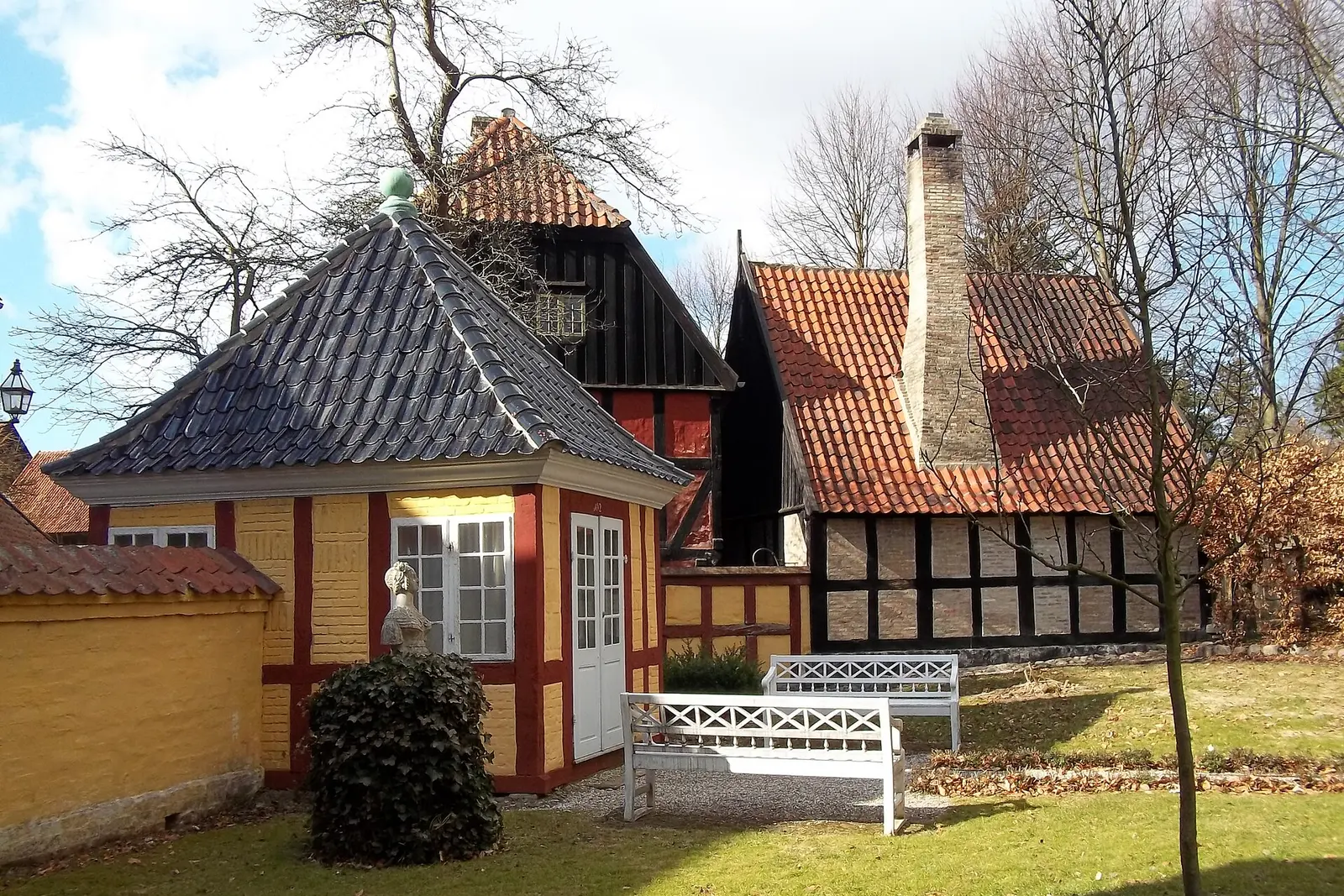
Den Gamle By invented the genre. Opened in 1914 around a rescued Renaissance mayor’s house, it was the world’s first open-air museum of urban history, and in June 2026 it took the European Museum of the Year award for redefining what an open-air museum can be. Reports from visitors keep repeating the same surprise: this is not a rope-line museum but a working little town you walk into, where more than 75 buildings moved from about 20 Danish towns run shops, workshops and kitchens in character.
What keeps it fresh is the time-zone structure. Beyond the cobbled market-town quarters of the 1700s and 1800s sits a 1927 modern street, a beloved 1974 quarter with a jazz bar and period flats, and a 2014 harbourfront stretch. New interiors keep arriving too: a Randers house opened in June 2026 telling the story of Jewish everyday life between the wars. Adults pay DKK 205 in the main season and DKK 145 in deep winter, and everyone under 18 walks in free.
The caveats are about timing rather than quality. The museum recommends four to five hours and travelers who showed up mid-afternoon report rushing. Deep winter runs a reduced program despite the lower price. And December’s Christmas-town evenings draw the biggest crowds of the year, so off-season visitors get quieter streets but less living history.
Repeat visitors, including forum regulars who go yearly, call it the first priority in Aarhus. Treat it as a day rather than a stop.
Book or check times
Den Gamle By: tickets and opening hoursDen Gamle By: explore the townDen Gamle By: European Museum of the Year 2026Den Gamle By at VisitAarhus
Questions
How much does Den Gamle By cost?
Adults pay DKK 205 from late March to late December and DKK 145 from January to late March. Everyone under 18 is free year-round, and students pay DKK 105 or 75 at the door with ID.
How long do you need at Den Gamle By?
The museum recommends four to five hours, and repeat visitors routinely spend a full day. Two hours is enough to walk the streets but not enough to go inside the houses.
Is Den Gamle By open in winter?
Yes, it is open every day of the year. Winter hours are shorter (10:00 to 16:00 in January and early February), the price drops, and the living-history program is quieter than the Easter-to-New-Year season.
Are the buildings real?
Yes. More than 75 buildings were dismantled in about 20 Danish towns and rebuilt inside the museum, starting with the 1597 mayor's house that Peter Holm saved from demolition in 1909.
What is the 1974 quarter?
A full street and apartment block recreated as Denmark looked in the 1970s, with a jazz bar, period flats and shops; visitors regularly call it the most surprising part of the museum.
Did Den Gamle By win a big award recently?
Yes. In June 2026 it was named European Museum of the Year by the European Museum Forum, praised for redefining the open-air museum genre.
Pack for it
Gear verdicts from our sister site, Real Buyer Experiences: